World
Trump declares US-Iran deal to be signed Sunday; no confirmation from Tehran

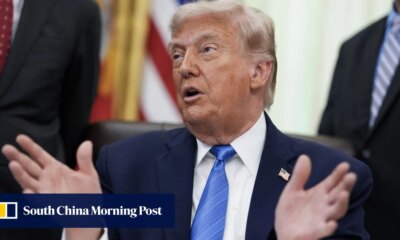
US President Donald Trump on Saturday announced that the framework for a peace deal that would end the months-long conflict was scheduled to be signed on Sunday and that the key Strait of Hormuz waterway would be immediately “open to all” after it is signed.
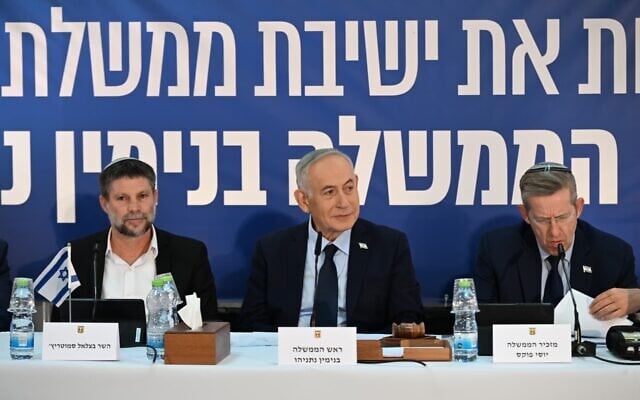
The announcement has left Israel wary, with officials warning that the terms of the Memorandum of Understanding endanger Israel’s security interests and fail to address any of the key issues. Prime Minister Benjamin Netanyahu will reportedly convene his security cabinet on Sunday evening to discuss the agreement.
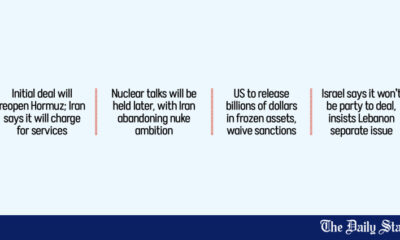
Pakistani and Qatari mediators are set to join US and Iranian officials for a virtual meeting to sign the MOU, the Axios news site reported on Saturday evening, which will extend the ceasefire by 60 days, reopen the Strait of Hormuz, and trigger negotiations over Iran’s nuclear program.
“The Deal is scheduled to get signed tomorrow, and immediately after it is signed, the Hormuz Strait is OPEN TO ALL,” Trump said in a post on Truth Social.
“At the appropriate time, when all is calm, we will go in and get the Nuclear Dust, buried deep under the powerful sunken granite mountains,” he added, referring to the hundreds of kilograms of highly enriched uranium that Iran possesses.
“We look forward to working with Iran, and the entire Middle East, long into the future. Hopefully, this process will all work out quickly, easily, and smoothly. If it doesn’t, we have the ultimate alternative, hopefully never to be used again!” he said.
Iran did not immediately confirm Trump’s statement, which ran counter to comments by Iran’s Foreign Ministry earlier in the day that the deal would not be signed on Sunday, according to state media reports.
Barack Hussein Obama’s Deal with Iran, the JCPOA, was an easy, beautiful, smooth road to a Nuclear Weapon, which Iran would have had six years ago, and would have used long before now. My Agreement with Iran is the exact opposite, A WALL TO NO NUCLEAR WEAPON! In fact, they no… pic.twitter.com/rKkla3pACZ
— Commentary Donald J. Trump Truth Social Posts On X (@TrumpTruthOnX) June 13, 2026
Iran’s Foreign Ministry spokesperson Esmaeil Baghaei said that the possibility of signing the so-called Islamabad memorandum in the coming days could not be ruled out, but caution was needed regarding any comment on the signing date due to the “hesitation of the other side,” referring to the US.
Pakistani Prime Minister Shehbaz Sharif said earlier on Saturday that a final text of the deal had been reached and that an electronic signing was expected on Sunday, followed by technical-level talks next week.
“You might call it ‘the Zoom accords,’” quipped Axios reporter Barak Ravid, who also works for Channel 12, in a report for the Israeli TV channel on Saturday evening.
The White House wanted a public ceremony in Geneva, and Pakistan wanted it in Islamabad, but the Iranians reportedly did not want either, Channel 12 reported.
Axios cited US officials confirming that the signing will be held virtually, due to logistical reasons.
The MOU itself is not believed to directly resolve any of the war’s goals — preventing Iran from attaining nuclear weapons, constricting its ballistic missile program, ending its support for terror proxies and its terrorism worldwide, and creating the conditions for the fall of the regime.
Israeli officials fear deal will endanger Jewish state
Despite the glaring issues that remain unsolved by the agreement, Trump told Netanyahu in a phone call on Thursday that the deal on the table is “an excellent deal, and it’s to end this. war,” Channel 12 reported.
Netanyahu did not try to argue in the call, the report said, despite deep opposition among Israeli officials to the reported terms of the deal.
“Bibi didn’t say much in the call. Evidently, he understood that there’s going to be a deal, and that he can’t stop it,” a US official was quoted as saying.
Senior Israeli officials quoted by Channel 12 said that the emerging agreement indicated that Washington has agreed to Tehran’s “main conditions,” adding that “the Iranians are not agreeing to this for nothing.”
The report said Israeli officials and experts who have worked for decades on the Iran file consider that the terms of the MOU “endanger Israel’s security interests.”
What will happen immediately “is the opening of the Strait of Hormuz, the resuscitation of the regime, and a slap in the face for the Iranian public,” the officials said.
Iran is “paying on credit” with this framework, the officials said, with Tehran only agreeing to discuss its nuclear program once the war formally ends and a number of other conditions are met, including the release of frozen Iranian funds.
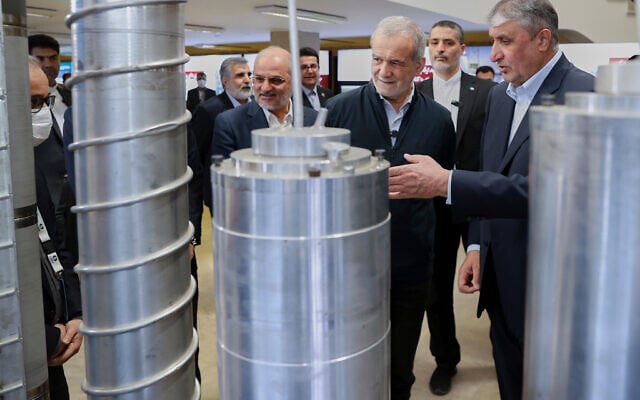
“This is the same framework as the agreement to end the war in Gaza,” an official told the TV station. “Ask yourself what has happened since then with the commitment to disarm Hamas? What will be the Americans’ essential leverage if, after 60 days of a ceasefire, the Iranians do not begin the steps required of them? The credible military threat has been all but eroded.”
“The uranium extraction has become uranium dilution and the missile system is not part of the agreement at all,” the officials lamented, noting that the main issues that Israel was hoping to deal with during the war remain unaddressed.
“All the goals that Israel set are not immediately dealt with in the agreement. Not only is Iran not required to stop supporting proxies, it is reconnecting itself with Hezbollah through the agreement,” the officials added.
Israel and the US have objected to the conflict with Iran’s terror proxy Hezbollah in Lebanon being tied to the emerging deal, while Tehran has insisted that an end to the war required an end to Israel’s attacks in Lebanon.
Despite the opposition by Israeli officials to the terms, a US official who briefed reporters on Friday insisted that the agreement accomplishes five US goals: It reopens the Strait of Hormuz and lifts the US blockade of Iranian ports; it ostensibly “leads to the dismantling of the Iranian nuclear program,” by extending the ceasefire between the sides by 60 days, during which they will hold technical discussions regarding Iran’s nuclear program; it “leads to the United States getting” Iran’s enriched uranium stockpile; it “guarantees a long-term peace in the region”; and it imposes “an inspection regime” to ensure Iran honors its commitment not to seek nuclear weapons.
Netanyahu, who campaigned for Washington’s eventual exit from the 2015 nuclear deal reached under Trump’s predecessor Barack Obama, has not directly responded to the apparent failure of the MOU to address all of Israel’s demands, and has instead focused exclusively on the nuclear issue.
“As long as I am prime minister of Israel, Iran will not have nuclear weapons,” he pledged in a statement released by his office on Friday. “There is complete agreement between President Trump and me on this issue.”
Iran has repeatedly denied seeking nuclear weapons, but has enriched and stockpiled uranium to near weapons-grade levels while openly seeking to destroy Israel.
Its highly enriched uranium is believed to be buried under rubble at sites bombed by the US during the 12-day war in June 2025.
Israel and the US launched their campaign against Iran on February 28 in a bid to destabilize the regime and destroy its nuclear and ballistic missile capacities. Iran responded with missile and drone strikes across the region, and its terror proxies in Iraq, Yemen, and Lebanon have also carried out attacks.
Iran blockaded the Strait of Hormuz, a vital conduit through which about a fifth of the world’s oil supplies are shipped, while charging tolls for vessels that wanted passage and attacking others that tried to pass.
The US, in response, blockaded Iranian ships and ports to prevent Tehran from shipping any oil itself. The halt in movement through the strait has rattled global economies.