World
Trump claims he can control IDF actions in Lebanon because Israelis respect him

US President Donald Trump said this week that he would be able to keep Israel from launching new attacks in Lebanon because the country has a lot of respect for him, thanks to his previous policies regarding the Islamic Republic of Iran.
Trump was asked during an interview with Axios — which was taped on Thursday and aired Friday — whether he’d be able to “control Israel from attacking Lebanon,” as Washington and Jerusalem have publicly disagreed about the decision to tie Israel’s offensive against Hezbollah to the controversial memorandum of understanding between the US and Iran.
“Yeah, I will be,” the president responded.
“They have a lot of respect for me, and they do as I say,” he added, recalling how he pulled the US out of the 2015 Iran nuclear deal orchestrated by the Obama administration and which Jerusalem opposed, and how he authorized a major attack on Iran’s three main nuclear sites during Israel’s 12-day war with Tehran last June.
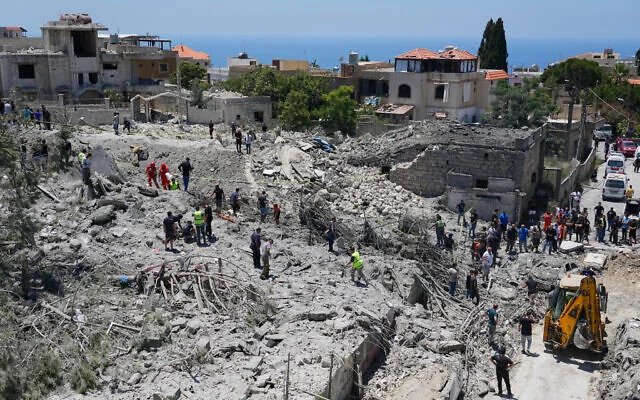
Trump has fumed over the scope of Israel’s attacks in Lebanon in recent days, insisting they have hampered efforts to reach and maintain an agreement with Iran.
Israel has agreed to refrain from attacking Beirut in response to that US anger but has kept its troops in a large buffer zone in southern Lebanon, which would appear to violate the terms of the deal that the US reached with Iran, given that the agreement states that all military operations in Lebanon must cease.
The deal signed by Trump and his Iranian counterpart, Masoud Pezeshkian, aims to end a conflict that began on February 28 with US-Israeli strikes on Iran, calling for a cessation of fighting between the US, Iran and their allies on all fronts, including Lebanon. It also provides for the reopening of the Strait of Hormuz and the launch of a 60-day negotiation period on broader issues, including Tehran’s nuclear program.
Separately from the US-Iran deal, a US official announced a truce between Israel and Hezbollah on Friday that ostensibly began at 4 p.m. local time. Although Israeli and Hezbollah sources later confirmed the agreement to Reuters, both sides continued to exchange fire on Friday evening and Saturday, with each blaming the other for violating the terms.
In response to the continued IDF presence in Lebanon and attacks on Tehran’s Hezbollah proxy, Iran announced on Saturday that it was once again closing the Strait of Hormuz, although as of Saturday evening the US had yet to publicly call on Israel to pull its forces out of Lebanon.
US officials were said to have privately made the request but were rebuffed, in what would be a direct contradiction to Trump’s claim that Jerusalem does what he wants regarding Lebanon.
The US president was also asked by Axios about his relationship with Netanyahu, to which he responded that it was “good, but we have to keep him a little bit sane.”
The relationship between the two leaders has appeared increasingly strained ever since the US imposed a ceasefire on Israel amid the fighting with Iran in April, with Trump notably calling him “fucking crazy” and saying he has “no fucking judgement,” among other things. But he has also praised their relationship, calling it “very good” and “unbelievable.”
On Friday, the US president once again appeared to attempt to calm tensions with the Israeli leader.
“We fought very well with Israel, and we’ve had a great relationship with Israel,” Trump said in remarks at the unveiling of a new Air Force One plane gifted to the United States by Qatar.
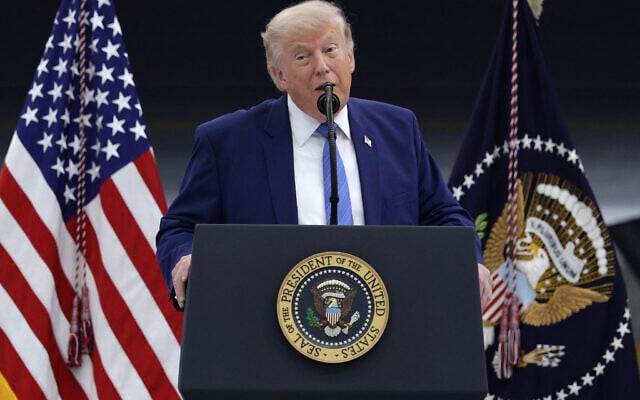
Reviewing the weeks of fighting against Iran, Trump touted Washington’s Gulf allies for “fighting with us,” as well as “warrior prime minister Netanyahu.”
“They should give him credit,” he said of Netanyahu. “We really fought hard with Israel.”
But just a day later, he shared an article on his Truth Social account headlined, “Trump holds the cards in Netanyahu’s shaky reelection chances.”
He didn’t provide any additional commentary but appeared to enjoy the article’s conclusion that he is the one who controls Netanyahu’s fate.
Indeed, on Thursday, Trump told Israel’s Kan public broadcaster that while he will “most likely” endorse Netanyahu in the Israeli elections later this year, he wants to see who else is running against him first.
“I’ll have to look at who’s running, but I like Bibi very much,” he said. “I would be most likely to endorse him.”
Netanyahu’s most formidable opponents at the moment appear to be former IDF chief of staff and Yashar party chief Gadi Eisenkot and former prime minister and Together party chief Naftali Bennett.
Trump’s remarks came after an Israeli news report earlier this week alleged Netanyahu’s Likud party had shelved a planned election campaign highlighting the premier’s ties to Trump as it was determined that it would do him no favors amid domestic fallout over the US-Iran deal.
And indeed, a poll published by Channel 12 on Thursday found that just 13% of Israelis trust Trump to look out for the interests of the Jewish state, while 71% said they did not believe he would. The poll also found that 52% of people believe Netanyahu’s conduct harmed Israeli interests in the US-Iran agreement, while 24% felt it helped and 24% said they didn’t know.
Times of Israel staff contributed to this report.