World
IDF soldier killed, 13 injured during overnight Hezbollah attack in southern Lebanon

An Israel Defense Forces soldier was killed and 13 others wounded in southern Lebanon during an attack by the Hezbollah terror group early Saturday morning.
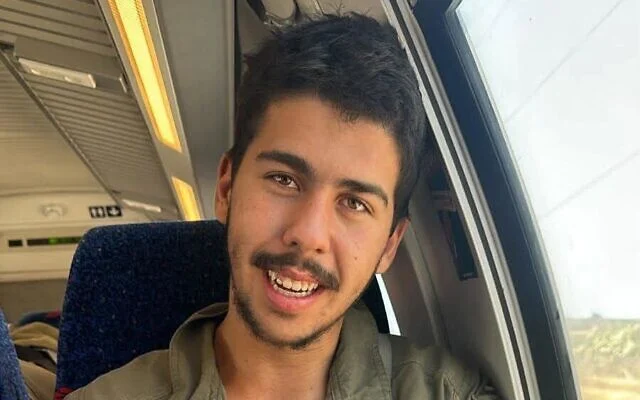
The slain soldier was named as Sgt. First Class Nir Ben Ari, 21, of the Commando Brigade’s Maglan unit, from Kerem Maharal.
He was killed amid operations to capture a major underground Hezbollah facility beneath the Ali Taher ridge. The IDF said Saturday it “halted its fire” outside its declared “security zone” in southern Lebanon, but would continue operations within it, including the ridge.
According to a military probe, at around 1:30 a.m., a barrage of rockets and an explosive drone struck a military position in the Nabatieh-area village of Kfar Tebnit.
The Iran-backed terror group’s projectiles killed Ben Ari and wounded 13 other troops, including two in serious condition, one moderately and 10 who were lightly hurt. The troops were taken to a hospital and their families were notified.
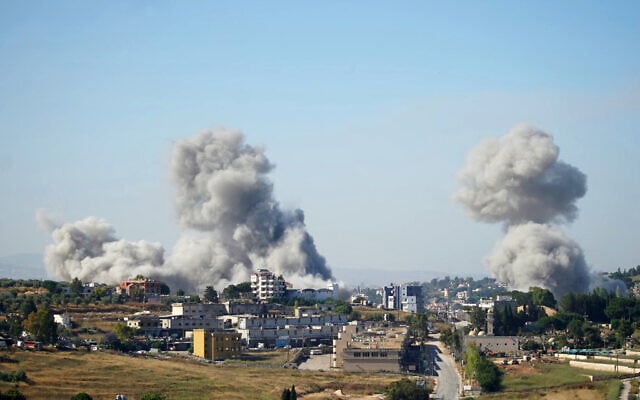
Following the deadly attack, the IDF carried out strikes on Hezbollah infrastructure in the Nabatieh area.
The attack came after four soldiers were killed in a Hezbollah attack on a tank in southern Lebanon early Friday morning, also amid operations to capture the facility beneath Ali Taher.
In that attack, IDF Lt. Col. Dor Gedalia Ben Simhon, 32, the commander of the 52nd Battalion, and three members of his crew were killed after a drone or anti-tank missile struck their tank.
Staff Sgt. Yoav Klein, 21, of the 401st Armored Brigade’s 52nd Battalion, from Herzliya, was identified by the military on Saturday as another of the slain soldiers.
The names of the other two soldiers killed in the attack have not yet been published, but are expected to be released by the military soon.
A military probe has determined that, contrary to several media reports, the tank was hit by Hezbollah fire, and the blast was not the cause of a malfunction.
The IDF has assessed that Hezbollah has a major “strategic” underground facility beneath the Ali Taher ridge, which is located near Nabatieh. According to the military, the underground site is the “nerve center” of Hezbollah’s Badr regional division.
According to the military, dozens of Hezbollah operatives remain holed up underground in the area, and fighting has taken place above and below ground in recent days.
The ridge was originally not included in the military’s security zone in southern Lebanon, but on Thursday the IDF published an updated map of the “forward defense area,” which now includes Ali Taher, along with the Majdal Zoun area.
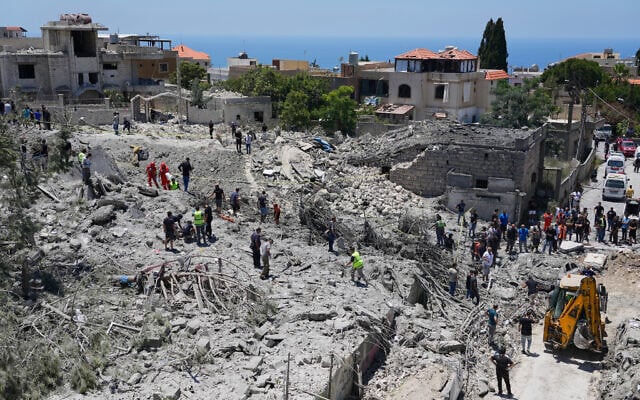
After the Hezbollah attacks that killed the IDF troops, Israel carried out a wave of strikes in southern and eastern Lebanon overnight and into Saturday afternoon.
The terror group, violating a ceasefire, had launched more than 175 projectiles at Israeli troops in southern Lebanon over the past day, according to Ambassador to the US Yechiel Leiter.
Israel’s retaliatory strikes killed at least 27 people and wounded at least 26, first responders and Lebanese media reported.
The IDF said Saturday it had “halted its fire” outside its declared “security zone” in southern Lebanon, in accordance with instructions from the political leadership, but would continue its operations within the zone.
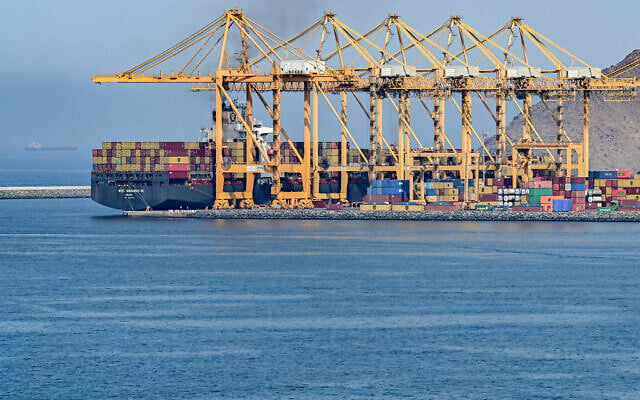
The weekend fighting came after the US and Iran signed a memorandum of understanding on Wednesday, in which the Islamic Republic agreed to reopen the Strait of Hormuz, and the US to lift its blockade on Iranian ships and ports.
On Saturday, days after the strait was reopened, Iran’s central military command claimed to have once again closed it, saying the IDF strikes in southern Lebanon violated the agreement.
The US military, however, denied the strait was shuttered, saying it remained open and that US forces were monitoring the situation to ensure that continued.
Israel was not part of the negotiating process leading up to the MoU, nor was it a signatory to the agreement; however, the memorandum purported to obligate both the US “and its allies” to “an immediate and permanent termination of military operations on all fronts, including in Lebanon.”
Hezbollah, which has kept up incessant drone and rocket attacks on Israel’s north, dragged Lebanon into the regional war with Iran in early March by firing rockets at Israel for the first time since a November 2024 ceasefire deal.
Israel responded with massive airstrikes and a full-scale invasion in Lebanon, subsequently establishing a buffer zone that currently runs up to 10 kilometers (6 miles) deep from the border into Lebanese territory.
Hezbollah’s renewed attacks on Israel came in response to the killing of Iran’s Supreme Leader Ali Khamenei at the start of the US-Israeli bombing campaign against Iran on February 28. The fighting in Iran entered a truce on April 8 even as Israel and Hezbollah continued exchanging fire.
Under the November 2024 deal, which ended over a year of earlier hostilities initiated by Hezbollah, the Lebanese army was supposed to disarm the terror group. Beirut has so far failed to do so.
In the US-brokered Israeli-Lebanese talks that began in April, the sides affirmed their support for the 2024 agreement. Hezbollah, meanwhile, has slammed the Lebanese government for negotiating directly with Israel.