World
Trump Announces Iran Deal To Be Signed Today, Says Hormuz Will Be 'Open To All'

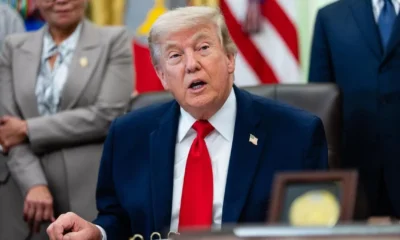
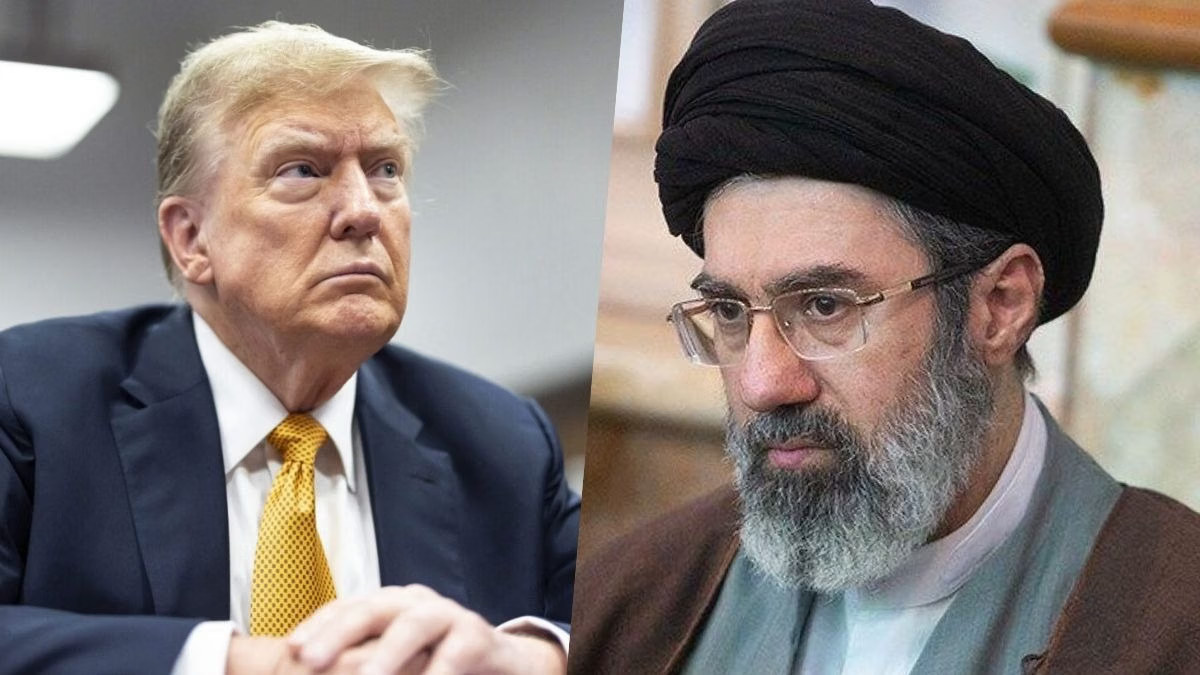
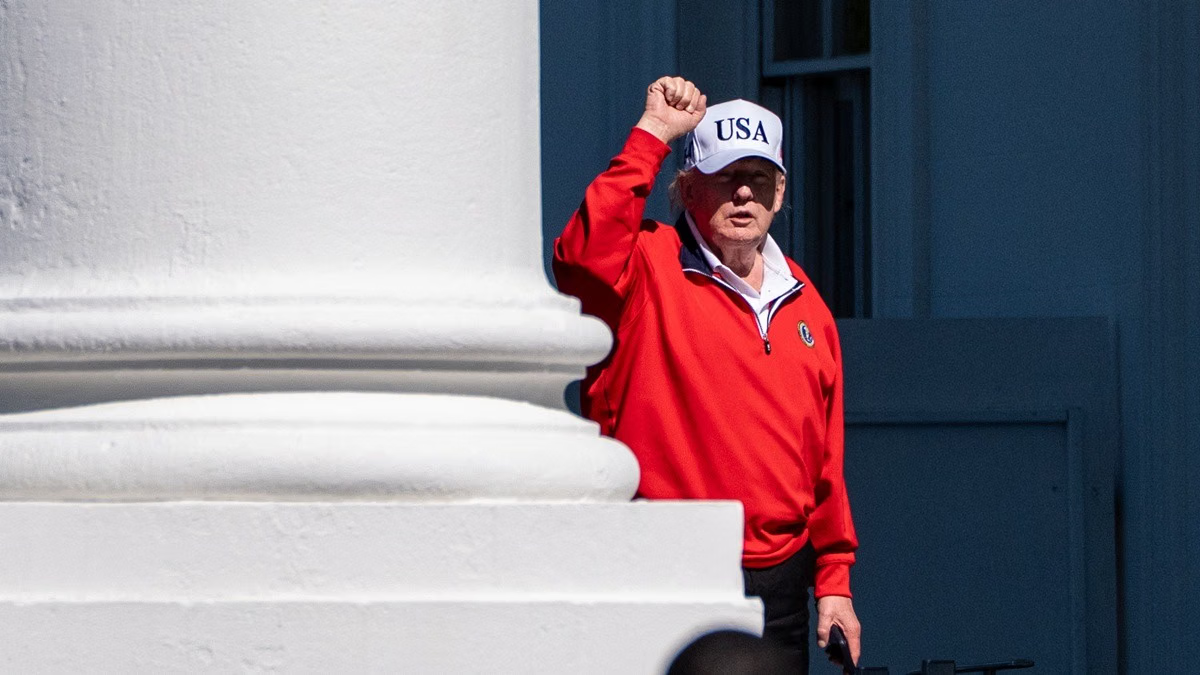
Washington: US President Donald Trump declared on Saturday that a new agreement with Iran is scheduled to be signed on Sunday, claiming that the deal will prevent Tehran from acquiring nuclear weapons and will reopen the Strait of Hormuz to global shipping immediately after. In a post on TruthSocial, Trump announced the fresh development, while taking aim at the Joint Comprehensive Plan of Action (JCPOA) negotiated by his predecessor, former US President Barack Obama. He stressed that the JCPOA would have put Iran on a path to a bomb, while his own arrangement would do the opposite.
In his post, Trump stated that Tehran has shifted its position and no longer seeks a nuclear arsenal. The statement presented the prospective deal as a complete break from the 2015 agreement, which the US withdrew from during Trump’s first term.
Donald Trump further claimed that ties with Iran under his approach are far stronger than under any previous US administration. He wrote, “Our relationship with Iran is a much different and better one than previous Administrations have had.” His remarks set the stage for a possible historic diplomatic breakthrough, though no details of the agreement, its signatories, or the venue for the signing were provided in the post.
In his lengthy post on Truth Social, the US President stressed that the arrangement would guarantee that Iran “no longer wants a Nuclear Weapon, nor will they have one, either through purchase, development, or any other form of procurement”.
Trump insisted on Saturday that “the Deal is scheduled to get signed tomorrow, and immediately after it is signed, the Hormuz Strait is OPEN TO ALL”. He even issued a warning over the failure of the accord, saying, “We have the ultimate alternative, hopefully never to be used again!” Notably, Hormuz carries around a 5th of the world’s oil and liquefied natural gas (LNG), so any change in access has direct implications for global energy markets and regional security. Trump presented the opening of the Strait as a direct result of the new deal.
Criticism Of Obama-Era JCPOA
In his post on TruthSocial, Trump once again criticised the nuclear deal struck by Barack Obama, saying it would have ultimately allowed Iran to reach weapon capability. Comparing Obama-era moves with his own initiative, insisting that the initiative is designed to ensure the opposite outcome. The comparison revived a long-running dispute over the merits of the 2015 accord, which offered sanctions relief in exchange for curbs on Iran’s nuclear programme but contained sunset clauses that were deemed too weak by Trump.
Trump summed up his view of the broader relationship with a direct comparison to past governments. “Our relationship with Iran is a much different and better one than previous Administrations have had,” he wrote. The comment frames his diplomacy as a departure from both Obama’s negotiated engagement and the pressure-heavy approach that followed the US exit from the JCPOA.
Here’s What Trump Said In His TruthSocial Post:
Trump framed his proposed deal compared to the 2015 JCPOA negotiated under Barack Obama. He wrote in his social media post, saying, “Barack Hussein Obama’s Deal with Iran, the JCPOA, was an easy, beautiful, smooth road to a Nuclear Weapon, which Iran would have had six years ago, and would have used long before now. My Agreement with Iran is the exact opposite, A WALL TO NO NUCLEAR WEAPON! In fact, they no longer want a Nuclear Weapon, nor will they have one, either through purchase, development, or any other form of procurement. The Deal is scheduled to get signed tomorrow, and immediately after it is signed, the Hormuz Strait is OPEN TO ALL. Our relationship with Iran is a much different and better one than previous Administrations have had. Unlike Obama’s Hundreds of Billions of Dollars in payments to them, including 1.7 Billion Dollars in green, cold cash, no money will exchange hands. At the appropriate time, when all is calm, we will go in and get the Nuclear Dust, buried deep under the powerful sunken granite mountains, thanks to our beautiful B-2 Bombers and their brilliant pilots, and downblend and destroy it, whether in Iran, or the United States. We look forward to working with Iran, and the entire Middle East, long into the future. Hopefully, this process will all work out quickly, easily, and smoothly. If it doesn’t, we have the ultimate alternative, hopefully never to be used again! Thank you for your attention to this matter!!!”
Cautious Optimism From Tehran, Signing Timeline Remains Uncertain
On the other hand, the optimism from Washington was tempered by mixed signals from Tehran and regional capitals. Notably, a tenuous ceasefire has held since April 7, but Iran has remained cautious, citing past negotiations that ended in US and Israeli strikes. Though Trump asserted “signed tomorrow”, Iranian foreign ministry spokesperson Esmail Baghaei told state media that “the signing will not happen tomorrow”, though “the likelihood of finalizing the memorandum of understanding in the coming days is high”.
Earlier, Pakistani Prime Minister Shehbaz Sharif also said that a deal was expected within 24 hours with electronic signatures, and Pakistan’s foreign ministry confirmed a Sunday ceremony without giving details. Iranian Foreign Minister Abbas Araghchi posted on X on Friday that an agreement “has never been closer”, even as Trump on Thursday claimed progress hours after threatening to seize Iran’s oil industry.
Maritime Blockade And Strait Security
The talks take place as the Strait of Hormuz remains a flashpoint, with the US CENTCOM saying that it has redirected 141 commercial vessels and disabled 9 to enforce the blockade against Iran. In a post on X, CENTCOM shared an image of “An MH-60 Sea Hawk helicopter lifts off from the flight deck of USS Delbert D. Black (DDG 119) as the ship transits the Arabian Sea in support of the blockade against Iran. As of June 13, CENTCOM forces have redirected 141 commercial vessels and disabled 9 to ensure compliance.”
The UKMTO Operations Centre previously reported a tanker struck by an unknown projectile in the Port Bow. CENTCOM also said in the early hours of Saturday that it had neutralised all Iranian attempts to hit commercial ships transiting the strait.
Meanwhile, Trump is expected to raise demining of the Strait of Hormuz at the G7 Summit starting on Monday. A senior US official, briefing journalists anonymously, stated that the President plans meetings on the sidelines with the leaders of Egypt, Qatar, the United Arab Emirates (UAE), France and India to discuss winding down the conflict. Britain and France have shown interest in helping with demining once hostilities pause. The number of mines in the strait, which Iran has effectively controlled since the war began, remained unclear, and the US forces have blockaded Iranian ports in response.
Nuclear Dispute And Regional Fallout
Amidst a shifting scenario in West Asia, the nuclear question remains unresolved, as Iran’s foreign ministry spokesperson asserted that the memorandum under discussion focuses on ending the war and that “at this stage, it has been decided that there will be no discussion of the nuclear issue”. Iran’s uranium enrichment has long been a source of friction with Washington and Israel. Trump asserted on social media that “when all is calm”, the US would intervene to “downblend and destroy” enriched uranium. The apparent breakthrough followed an exchange of fire between Iran, the US and Israel earlier in the week that threatened to collapse the ceasefire.
Meanwhile, Iran’s state television announced that funeral ceremonies for former Supreme Leader Ayatollah Ali Khamenei, killed in the war’s opening attack, will take place from July 4 to 9 during Muharram. He is succeeded by his son Mojtaba, seen as less compromising and who has not appeared publicly since the conflict began. The ceremonies will move from Tehran to Qom and then to Mashhad, where Khamenei will be buried at the Imam Reza Shrine. Khamenei governed longer than Ayatollah Ruhollah Khomeini, expanding the Shiite clerical class and building the Revolutionary Guard into a military and economic powerhouse that now heads Iran’s ballistic missile arsenal.
Further details regarding the development in West Asia are awaited.