World
Trump accuses Iran of ‘foolish’ ceasefire violation by firing on ships in Hormuz

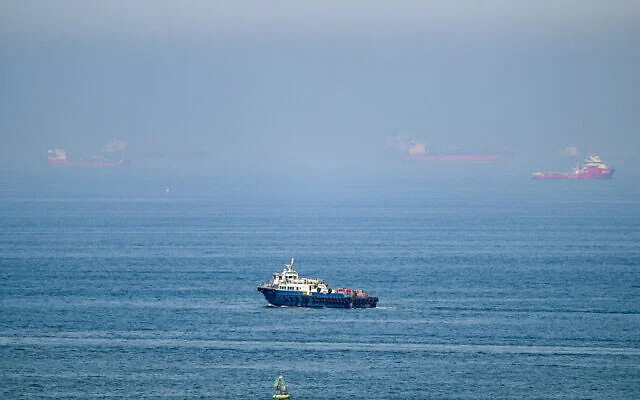
US President Donald Trump on Friday accused Iran of violating the ceasefire memorandum of understanding that the sides signed last week, saying Tehran shot at least four “attack drones” at ships in the Strait of Hormuz.
“One of the drones solidly hit the upper deck of a large and very expensive cargo carrying Ship. Damage was done, but the ship was able to proceed on its way,” Trump wrote on Truth Social. “We knocked down three other drones.”
“Obviously, this is a foolish violation of our ceasefire agreement,” Trump said, without specifying whether there would be any consequences.
In a speech in Washington, Trump admitted that Iran still retained “some” military capability following the US-Israeli war against Tehran, but he insisted that it was “not much.”
The drone attacks came after Iran expressed anger at what it said was an “interventionist, irresponsible and provocative” statement by the United States and six Gulf states that rejected its assertion that it could charge tolls on vessels transiting the strait.
“Safe passage through the Strait of Hormuz cannot be guaranteed under ambiguous arrangements, parallel routes or decision-making that does not take Iran’s role as a coastal state into account,” Iranian Deputy Foreign Minister Kazem Gharibabadi said on X.
Bloomberg News said Oman, which lies on the opposite side of the strait from Iran, had told allies ships going through Hormuz may have to pay. Reuters could not immediately confirm the report.
The foreign minister of fellow Gulf state the United Arab Emirates held his first announced phone call with his Iranian counterpart since the start of the conflict, UAE state news agency WAM said, underlining efforts of Gulf countries to overcome tensions with Tehran.
It said Sheikh Abdullah bin Zayed underlined the need to ensure freedom of navigation through the strait, where shipping had picked up pace before a new slowdown after the ship attack.
Iranian state TV said three foreign tankers attempting what it called an “unauthorized passage” of the strait were turned back after a warning from the Islamic Revolutionary Guard Corps. It gave no further details.
Asked about the matter, a US official said: “We are aware of these reports and looking into them. President Trump has been clear that Iran cannot subvert the free flow of traffic in the strait.”
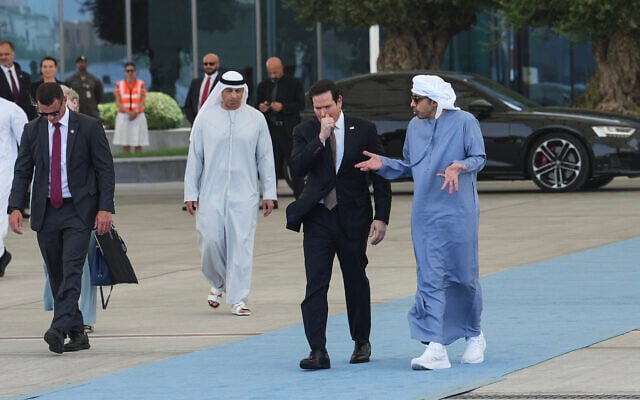
US Secretary of State Marco Rubio — wrapping up a tour of the Gulf to reassure nervous regional allies about the interim pact — had told reporters on Thursday that if Iran threatened or blocked ships in the strait, “we’re going to have a problem.”
In a joint statement, Rubio and the Gulf Cooperation Council called for “free, unconditional, and unrestricted navigation” in the strait without tolls or “attempts to assert control.”
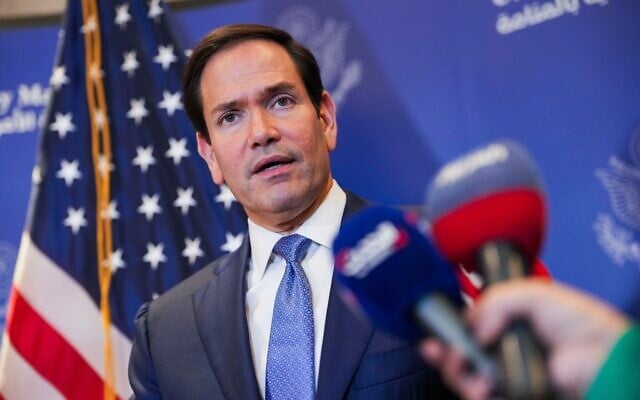
Iran’s foreign ministry responded on Friday by saying the US military presence in the Gulf was the source of regional insecurity and division, and that the waterway should be governed by Iran and Oman in line with the terms of the interim deal.
“We warn against the continuation of hostile and interventionist policies in the region,” it said.
Oil prices dropped by about 3 percent on Friday, on course for steep weekly losses despite the conflicting interpretations of last week’s interim deal between Iran and the US and renewed questions over the strait, where a fifth of global oil and liquefied natural gas supplies typically pass.
Saudi Aramco resumed crude loadings on Friday at its Ras Tanura terminal in the Gulf, the world’s biggest oil port, after a nearly four-month halt, shipping data showed.
Fertilizer shipments through the strait have also picked up, helping to assuage concerns about a spike in global food prices because of the waterway’s prolonged closure.
South Korean President Lee Jae Myung said three South Korean ships would leave the strait over the weekend after the Oceans Ministry reported eight more South Korean vessels had exited. He added that this would leave five South Korean cargo ships trapped in the key waterway since the war’s start.
Tehran took effective control of the waterway after the US and Israel launched strikes on Iran on February 28. Iranian forces also fired at Israel and Gulf states that host US bases, and the Iran-aligned Hezbollah terror group fired on Israel from Lebanon, reigniting conflict there.
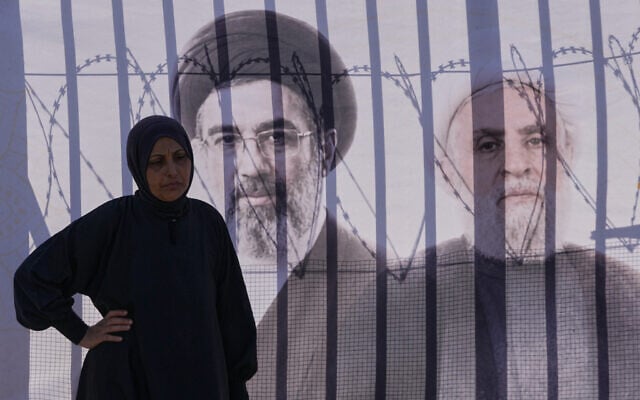
Fighting in Lebanon has persisted to some degree despite the US-Iran ceasefire and several US-brokered truces meant to stem the conflict between Hezbollah and Israel.
Iran’s Quds Force commander Esmail Qaani said Thursday that if Israel did not withdraw voluntarily from south Lebanon, it would eventually be forced to leave in defeat.
On Friday, Defense Minister Israel Katz responded on X, writing in Persian that any Iranian attack on Israel would be Tehran’s “biggest mistake.”
The US and Iran last week reached a memorandum of understanding that kicked off 60 days of negotiations to end hostilities across the region.
Israel is not a party to the MOU or the negotiations, and Israeli officials have criticized the agreement, which requires from the US “and its allies” a halt to fighting on all fronts, including Lebanon, but contains no concrete concessions from Iran on its nuclear or ballistic missile programs, or its support for regional proxies.