World
The not-so-secret Israeli strategy: This is the real Gaza plan

Here is the bottom line: Israeli Prime Minister Benjamin Netanyahu has no intention of leaving Gaza, either before Israel’s general elections—likely to be held in October—or after. Conceding an inch from the roughly 70 percent of the territory his army currently occupies in Gaza will be considered a weakness by the majority of Israeli voters and would result in an open revolt within his extremist coalition.
He has made his intentions clear time and again. Recent statements by Israel’s political leadership have only reinforced that reality, with officials insisting that Israel must maintain indefinite military dominance over the Strip and explicitly rejecting any framework that requires a full withdrawal of troops. To Netanyahu, the military footprint in Gaza is a permanent fixture, not a temporary bargaining chip.
Some may argue that Netanyahu’s statements are merely political fodder aimed at prolonging his career and avoiding the disastrous outcomes awaiting him—in terms of state investigations and court trials—should he be ejected from power. However, his extremist policies throughout his entire career at the helm of Israeli politics say otherwise.
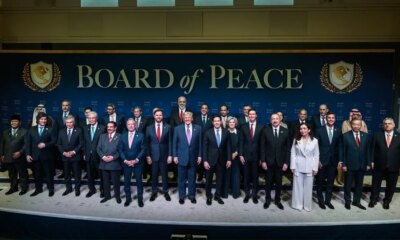
This reduces the point of the Washington-led Board of Peace and its subsequent administrative bodies to near irrelevance. These entities—including the National Committee for the Administration of Gaza (NCAG) and a multinational International Stabilization Force (ISF)—were supposedly assembled with the sole aim of managing a transitional phase, delivering humanitarian aid, and deploying a peacekeeping buffer to facilitate a gradual Israeli military withdrawal.
Israel debated: Why Palestine is rewriting the rules of domestic US politics
Yet even with its obvious limitations, the Gaza plan’s first phase theoretically promises a phased Israeli military repositioning, a sustainable ceasefire, a massive influx of reconstruction aid, and the gradual handover of civil administration to a non-factional Palestinian authority.
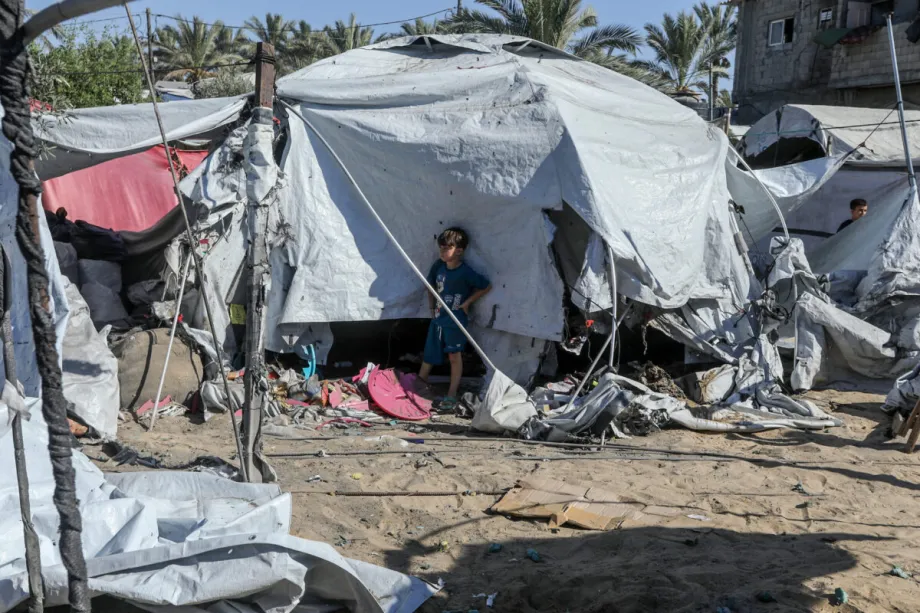
Little of that has actually been delivered. While the United States and international envoys claim the ceasefire hinges on disarmament, Israel has used the diplomatic deadlock to advance its troops further into the Strip rather than withdrawing them. Aid remains choked at the borders, and the promised reconstruction has not even begun.
Indirect talks are ongoing in Cairo, though it seems that only Palestinians are being held accountable or expected to carry out heavy concessions. Moreover, after 19 years of Hamas governing Gaza, the movement announced on 6th July that it has officially dissolved the Emergency Committee that has been administering the Strip. The movement declared its full readiness to transfer governance to the National Committee, intended to administer Gaza under the framework of the US-brokered plan.
On paper, this suggests that a political transition is finally underway. In reality, no such transition is taking place.
Israeli Foreign Minister Gideon Sa’ar openly labeled the move a “trick,” arguing that a technocratic administration would merely be responsible for municipal tasks like garbage collection while allowing resistance networks to persist.
Instead, Israel’s military strategy continues to fuel conditions that undermine any possibility of stabilizing the devastated Strip. Its objective is not merely to reject an alternative Palestinian administration, but to ensure that no functioning Palestinian governing authority can emerge at all. By doing so, Tel Aviv wants to create a permanent governance vacuum, sowing further chaos and fragmentation.
If no alternative Palestinian political body is permitted to stabilize Gaza, the default collapse will inevitably force local factions to reassert control over daily survival, thus giving Israel yet more pretenses to exact more punishment on a helpless population.
Right to breathe: Unfiltered messages from Gaza to President Catherine Connolly
Following the Hamas political move, Israel simply responded with its standard currency: immediate violence. This was starkly illustrated on 9th July, when Israeli forces carried out a targeted airstrike on a vehicle in Gaza City in a failed attempt to assassinate Hamas spokesman Hazem Qassem. Though the assassination attempt failed, the strike sent a clear message that Israel has no intention of respecting political transformations or ceasefires.