World
US strikes on Iran prepare ground for more intense operations, officials say

WASHINGTON — Recent waves of US strikes on Iran aimed at forcing open the Strait of Hormuz are also targeting Iranian military capabilities that the US would want to destroy before executing more complex operations against Iran, three US officials told Reuters on Wednesday.
The officials, who were granted anonymity to discuss military matters, said the strikes effectively strengthen additional military options for US President Donald Trump, who has kept the world guessing about his next steps after notifying Congress last weekend of a formal resumption of conflict with Iran.
Now in its fifth month, the Iran war continues to rage after the unraveling of a memorandum of understanding that was meant to stop the fighting and pave the way for a peace agreement. Israel had no part in negotiating the Iran-US memorandum of understanding, and Israeli officials have criticized the document for failing to secure a concrete concession from Iran on its nuclear program.
Despite heavy blows to Iran’s military since the start of the US and Israeli campaign on February 28, Tehran retains significant drone and missile capability and has attacked passing tankers in the strait as well as its Gulf neighbors.
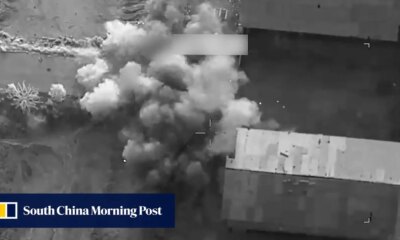
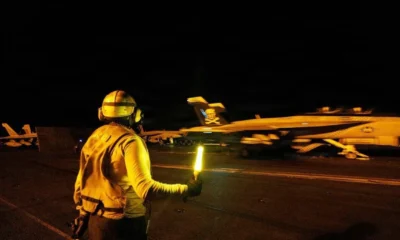
The US military has said its latest bombings have targeted Iranian air defense systems, coastal radar, missile and drone sites, as well as small boats and other maritime assets.
One of the US officials said the strikes could be seen as “shaping operations” that are degrading Iranian defenses in case the US military is ordered to carry out more intensive operations in the future.
“This is helping set the stage, if needed,” the official said.
The Pentagon did not immediately respond to a request for comment.
Military options
Reuters in March reported on US military planning to create options to deploy US troops to Iran’s shoreline to better secure the strait. At the time, officials said the Trump administration had also discussed sending ground forces to Iran’s Kharg Island, the hub for 90 percent of Iran’s oil exports. Such an operation would be risky, since Iran could shower the island with missiles and drones from the mainland.
Trump said on Tuesday he had ordered his military to avoid striking Iran’s oil facilities during previous strikes against Kharg Island. But he has left open the option of taking the island.
“If we degrade them far enough and deep enough back, I would do that,” he told Fox News.
Trump has also threatened to attack a site linked to Iran’s nuclear program known as Pickaxe Mountain, a fortified facility buried deep underground near one of Tehran’s main nuclear sites.
Mark Cancian, a retired US Marine officer at the Center for Strategic and International Studies, said Trump’s willingness to publicly discuss military options like seizing Kharg Island was a double-edged sword.
It could aid diplomacy by putting the Iranians on edge. But it’s “bad for the military, because we’re saying where we might be going,” he said.
Tactical wins, strategic stalemate
Critics of Trump’s war with Iran, including within the US Congress, say that while it achieved tactical victories that destroyed big swaths of Iran’s conventional military and defense industrial base, it failed strategically to win concessions from Tehran.
It also prompted Iran to exert unprecedented leverage over the Strait of Hormuz, a critical chokepoint for a fifth of the world’s crude output. Even if its conventional navy was largely destroyed, it could still attack commercial vessels using capabilities like drones and rockets.
That has led to a debate within the Trump administration about the best way forward, US officials say. A fourth official said US Defense Secretary Pete Hegseth has been an advocate of escalating the military operation against Iran.
Imran Bayoumi, a former Pentagon official now with the Atlantic Council, said Trump’s sweeping comments in recent days on Iran appeared to be aimed at pressuring Iran in negotiations and keeping Tehran unsure about the military’s next steps.
“I would separate the noise from the actions,” Bayoumi said. “I would expect the discussions between him and his national security team are looking a bit different than what he’s posting online.”