World
The battle of Palestinian and Israeli narratives in Indonesia

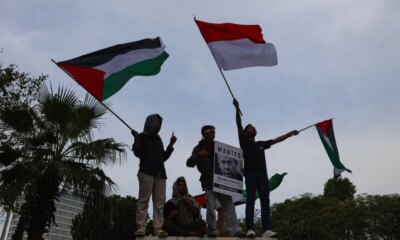
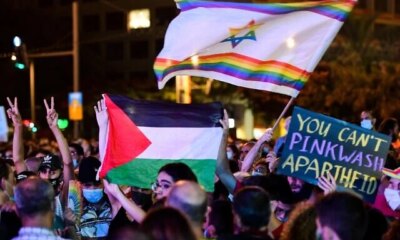
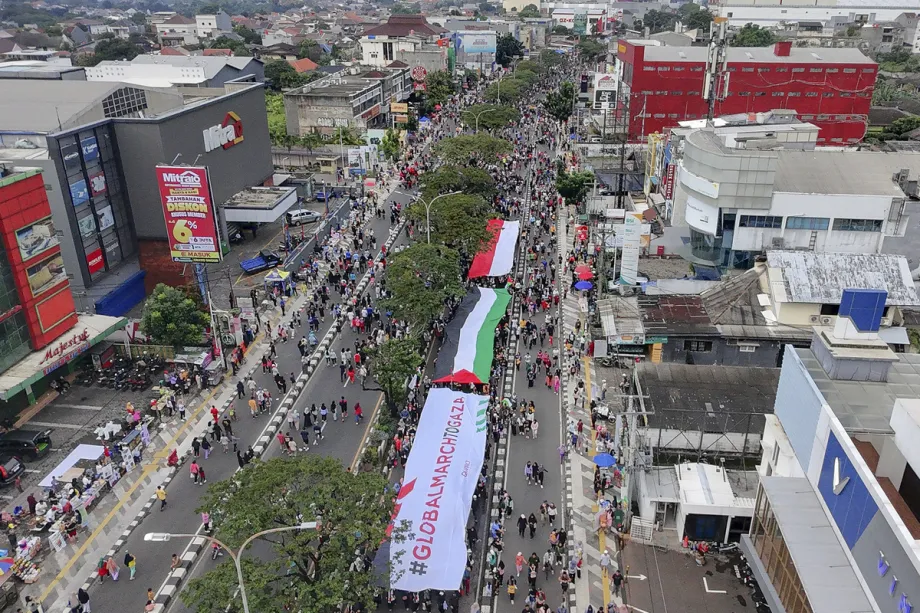
The Middle East conflict, particularly the long-running struggle between Palestine and Israel, has never been a distant geopolitical issue for Indonesia. At the state level, Jakarta’s position has remained remarkably consistent since independence: rejecting colonialism and supporting Palestinian sovereignty within the pre-1967 borders. This constitutional commitment has served as one of the pillars of Indonesia’s foreign policy on the global stage. Yet beneath the formal diplomatic posture, the issue has evolved into a noisy and increasingly polarised contest of narratives across Indonesian society and the digital sphere.
This became particularly visible after the escalation of 7th October 2023. While some Indonesian media outlets consistently framed the conflict through the lens of civilian suffering and humanitarian concerns, others attempted to maintain a more neutral editorial position. In practice, however, these nuanced approaches were frequently overwhelmed by social media discourse dominated by binary theological sentiments, exposing a wide gap between the state’s formal diplomacy and the emotional instincts of the public. As a result, a global humanitarian tragedy is often repackaged as a commodity in local political battles.
Support for Palestine in Indonesia is far from monolithic. Instead, it is deeply fragmented along ideological lines. Constitutional nationalists tend to approach the issue through the framework of international law and the Two-State Solution, often identifying with the Palestinian Authority and Fatah in the West Bank. By contrast, Islamist ideological groups see the conflict primarily as a religious obligation, leading many of them to sympathise with armed resistance movements such as Hamas. For this constituency, physical struggle is regarded as the only legitimate path toward liberation. Following the Beijing Declaration of July 2024, public reactions reflected this divide: some viewed it as an opening for formal diplomacy, while others interpreted it as an effort to strengthen the armed resistance camp.
The complexity is compounded by Middle Eastern sectarian dynamics that increasingly spill over into Indonesia, particularly regarding Iran’s role. Solidarity with Palestine is frequently tested by the Sunni-Shia divide. When Iran launched direct missile strikes against Israel, scepticism emerged among many Indonesian Sunni Muslims. Islamist figures such as Felix Siauw argued that Tehran’s actions were driven by tactical revenge rather than genuine concern for predominantly Sunni Gaza. Meanwhile, Nahdlatul Ulama adopted a more cautious and normative stance, aligning itself with the government’s calls for de-escalation. The episode underscored how deeply theological boundaries continue to shape public perceptions at the grassroots level.
The forced removal of beauty pageant finalist Merince Kogoya after a video surfaced showing her waving an Israeli flag illustrated the high social costs faced by those who openly express such sympathies. The controversy revealed the narrow limits of public tolerance.
A second fragment is represented by the small Jewish community in Tondano, North Sulawesi, which worships legally at the Sha’ar Hashamayim Synagogue under the leadership of Rabbi Yaakov Baruch. To preserve social harmony, the community carefully distinguishes its religious identity from political Zionism. The third consists of a pragmatic urban technocratic elite that approaches Israel through a utilitarian lens. This group argues that a policy of total rejection undermines Indonesia’s economic and technological interests, particularly in areas such as cybersecurity, financial technology, and precision agriculture. External engagement in this sphere is driven more by the facilitation of religious pilgrimages than by direct political or financial lobbying.
The greatest paradox in Indonesia’s position lies in the widening gap between official rhetoric and informal backchannel relations. On one hand, Indonesia’s humanitarian commitment is unmistakable. The country has delivered aid by air, converted the naval vessel KRI dr. Radjiman Wedyodiningrat-992 into a military hospital ship, supported the construction of the Indonesian Hospital in Gaza through MER-C, and, under the initiative of President Prabowo Subianto, provided scholarships for 22 Palestinian military cadets to study at the Indonesian Defense University. Indonesia has also maintained diplomatic relations with Palestine’s regional allies, including Iran, primarily within the framework of protecting citizens and preserving diplomatic channels.
At the same time, however, commercial transactions with Tel Aviv have continued quietly in the background. Direct trade between the two sides reportedly reached US$240.3 million by October 2025, suggesting that economic pragmatism often transcends formal diplomatic barriers. These commercial realities operate largely outside the moral debates that dominate the public sphere.
The existence of these discreet contacts became more visible when Indonesia intensified its campaign to join the Organisation for Economic Co-operation and Development (OECD) as part of its ambition to become a developed nation by 2045. Because accession requires unanimous approval from all 38 member states, Israel, an OECD member since 2010, effectively holds veto power. In response to Jakarta’s vocal support for South Africa’s genocide case against Israel at the International Court of Justice, Tel Aviv reportedly obstructed Indonesia’s accession process.
After three months of quiet negotiations mediated by OECD Secretary-General Mathias Cormann and then-Israeli Foreign Minister Israel Katz, reports emerged of a written understanding requiring Indonesia to establish formal diplomatic relations with Israel before its membership could proceed. Indonesia’s Foreign Ministry quickly denied the existence of any such agreement, seeking to prevent domestic political turbulence.
READ: Indonesia’s half-hearted response to Khamenei’s funeral undermines its own foreign policy
The presidency of Prabowo Subianto appears to mark a more realist phase in Indonesia’s foreign policy. Addressing the 80th United Nations General Assembly in New York in September 2025, Prabowo argued that Israel’s safety and security must be recognized and guaranteed as a prerequisite for lasting peace, concluding his remarks with the word “Shalom.” He also proposed deploying up to 20,000 UN peacekeepers to Gaza. This diplomatic approach departs from Indonesia’s traditional anti-Israel rhetoric. Instead, it seeks to leverage strategic engagement as a form of soft power, enabling Jakarta to influence the peace process from within rather than from the sidelines.
Yet this pragmatic strategy must contend with a growing struggle for influence among external actors seeking to shape Indonesian public opinion. Iran-backed alternative media networks promote the narrative of the “Axis of Resistance,” framing the conflict through the language of anti-imperialism. China, meanwhile, uses its role in brokering the Beijing Declaration among Palestinian factions to strengthen its multilateral credentials in Southeast Asia. On the other side, the United States, under the renewed momentum of the Abraham Accords framework, offers significant economic incentives and diplomatic guarantees to encourage Indonesia to normalise relations with Israel. This competition among foreign powers leaves Indonesia’s public sphere increasingly vulnerable to external influence campaigns.
Looking ahead, Indonesia’s domestic debate is likely to shift from questions of morality and theology toward more technocratic arguments. The government may eventually package any move toward normalisation under what could be described as a “Prabowo Accords” framework, a narrative that portrays official engagement with Tel Aviv not as a betrayal of Palestine, but as an active diplomatic instrument for advancing the Palestinian cause in more practical ways.