World
The banker of Baghdad: How Tom Barrack plans to starve Iran’s militia machine

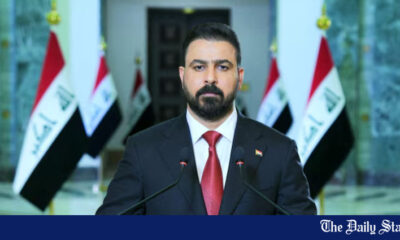
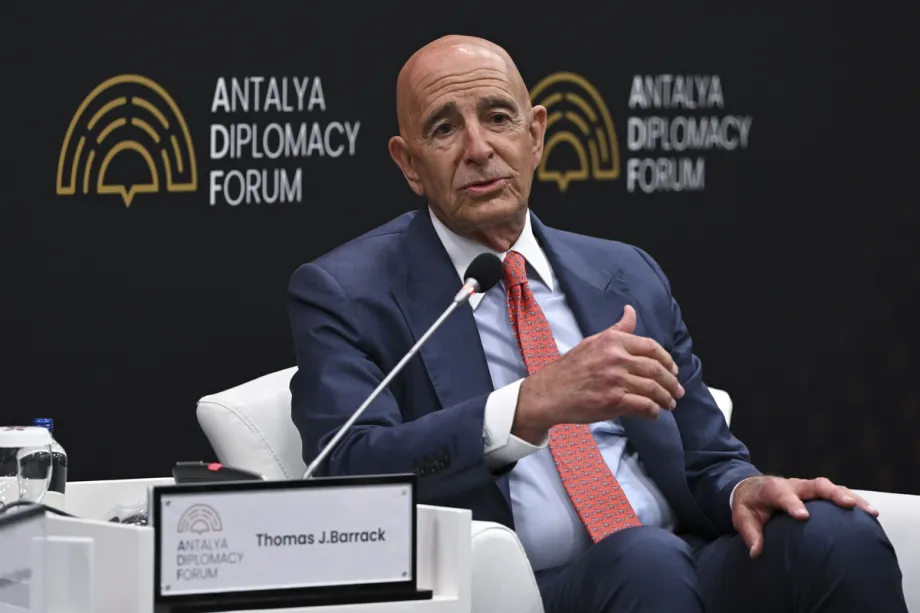
When President Donald Trump announced on 31 May that Tom Barrack would serve simultaneously as US Ambassador to Ankara, Special Presidential Envoy to Syria, and now Special Presidential Envoy to Iraq, the diplomatic community in Baghdad greeted the news with the mild interest one accords a routine reshuffling. They were wrong. Barrack is not arriving in the Iraqi capital with a briefing book and a handshake. He is arriving with a vault key — and the vault holds Baghdad’s oxygen.
Since 2003, Iraq’s hydrocarbon revenues have been deposited into a dedicated account at the Federal Reserve Bank of New York. When Baghdad needs hard currency, the Treasury arranges for physical dollar banknotes — sometimes as much as $13 billion in a single year — to be flown on cargo planes from New Jersey to the Central Bank of Iraq. It is an arrangement born of post-invasion necessity, designed to shield Iraq’s new government from Saddam-era creditors and reparation claims. It has since become something else entirely: the master switch of Iraqi political economy, controlled from lower Manhattan.
In April, the Trump administration quietly demonstrated just how absolute that control is. The Treasury blocked a cargo-plane delivery of nearly $500 million in US banknotes — proceeds from Iraqi oil sales — and simultaneously suspended security cooperation programs with the Iraqi military. A senior Kurdish official, speaking to Fox News, offered the most frank assessment heard in months: “The dollar pause is the nuclear option in the Treasury Department’s arsenal, and the Americans have always been reluctant to leverage it.” Barrack’s appointment signals that the reluctance is over.
To understand what Barrack is up against, one must first understand the architecture of Iran’s position in Iraq, because it is not a foreign occupation in any conventional sense. It is an inside job. The Popular Mobilization Forces (PMF), an umbrella of some 238,000 fighters drawing $3.6 billion in annual state funding, was enshrined into Iraqi law in 2016 under Law No. 40. Its most powerful components — Kataib Hezbollah, Asa’ib Ahl al-Haq, Harakat Hezbollah al-Nujaba — were IRGC-Quds Force proxy formations long before they were absorbed into the Iraqi state payroll. In Tehran’s strategic calculus, the PMF is the Hezbollah model, replicated on a state budget.
The war on Iran: Through the lenses of pragmatism and realpolitik
In Tehran, IRGC commanders have understood precisely what is at stake. According to reporting by Critical Threats, senior IRGC officials briefed President Masoud Pezeshkian that US and Israeli military pressure on Iran had paradoxically unified the population behind the regime, framing the entire confrontation, Iraq included, as a civilizational struggle rather than a policy dispute. That framing serves a purpose: it raises the psychological cost of compliance for PMF factions, as it can be recast as ideological betrayal. In this sense, the IRGC’s most effective weapon in Iraq is not a drone — it is a narrative.
Barrack is no career diplomat, and that is almost certainly the point. He is a private equity dealmaker who described Iraq, in an unguarded moment, as a “failed political experiment” — and Lebanon as “a farce.” Translated into policy, those are not insults but diagnostics: Washington no longer views Iraq as a political negotiating partner to be flattered, but as a malfunctioning security file to be restructured. His instrument of choice is the one he knows best — leverage. And the leverage is staggering. Oil export revenues fund an estimated 90 percent of the Iraqi government budget. A prolonged dollar shortage would not merely inconvenience Baghdad’s ministries; it would ignite inflation, destabilize the Iraqi dinar, and hollow out the very state salaries that keep the PMF nominally loyal to Baghdad rather than exclusively to Tehran.
There are early signs the strategy is drawing blood — or at least a strategic retreat. In late May and early June 2026, Muqtada al-Sadr dissolved his Saraya al-Salam militia, and Asa’ib Ahl al-Haq and Kataib Imam Ali announced they would hand their weapons over to state control. Barrack’s response on X was carefully calibrated — congratulatory but conditional. He told Iraqi Prime Minister Ali Falih al-Zaidi that the move represents the “nascent foundation for renewed Iraqi self-governance” — and then added the pointed rider: “Prime Minister Al Zaidi’s confidence is well-placed, for this marks only the beginning.” The subtext was unmistakable: the dollar tap remains in American hands.
But the hardest cases remain unmoved. Kataib Hezbollah and Harakat Hezbollah al-Nujaba — the formations most directly under IRGC command — have declined to disarm. The Middle East Forum has warned that what appears to be a militia shake-up may in fact be an Iranian adaptation: superficial compliance by manageable factions, preservation of the core command-and-control network. On 17 April, the Treasury designated seven senior commanders across four Iran-backed groups for attacks on US personnel — a signal that financial and kinetic pressure will run in parallel. The US conducted 138 strikes inside Iraq in April alone, killing 73 PMF members.
Tom Barrack enters Iraq carrying three portfolios — Ankara, Damascus, Baghdad — and one overarching thesis: that the architecture of Iranian influence in Iraq runs on American dollars, and that architecture can be disassembled the same way it was built, through the banking system. Lebanon took decades and a catastrophic financial collapse before Hezbollah’s model showed its limits. Iraq, with its oil revenues hostage to a New York account number, may face a compressed timeline. The barista who once claimed he was merely “bringing temperatures down and logic back together” in Kurdistan oil negotiations has a different mandate now. He holds the purse. And in Baghdad, the purse is the power.
READ: The next Iran? Why Israel’s Turkey anxiety is becoming doctrine
The views expressed in this article belong to the author and do not necessarily reflect the editorial policy of Middle East Monitor.