World
The assassination of Iran’s supreme leader: America’s strategic miscalculation under the shadow of Israeli narratives

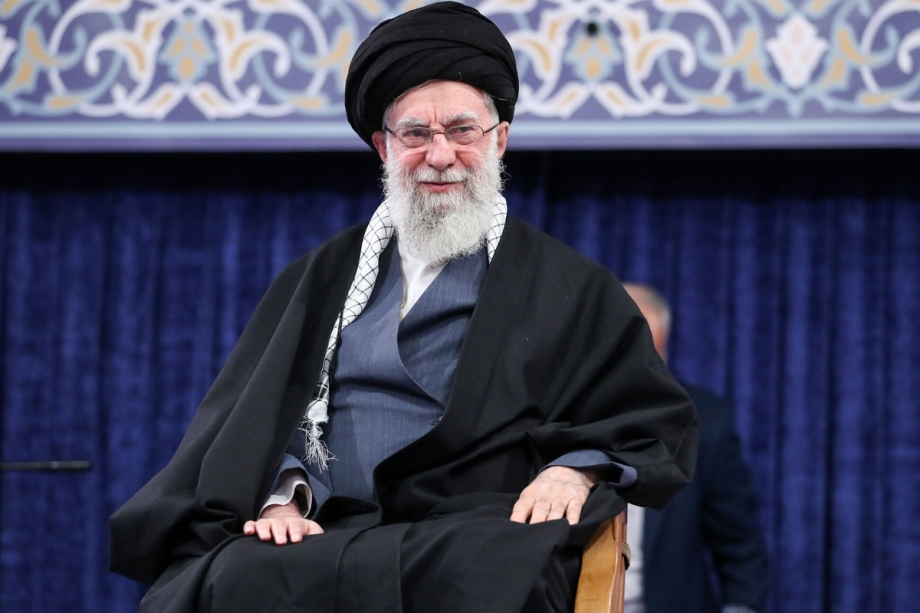
As Iran prepares for the funeral ceremonies of Ayatollah Seyyed Ali Khamenei, the former Supreme Leader of the Islamic Republic, the scale of anticipated public participation indicates that they are set to become one of the most significant mass gatherings in contemporary Iranian history. Reports indicate that vast crowds are expected to arrive from across the country, alongside official delegations from numerous states. This moment offers a clear opportunity to assess the U.S. and Israeli decision to assassinate him in February 2026. The operation rested on a flawed assessment of Khamenei’s real role and standing within Iran’s social and political structure. In this regard, the United States was shaped largely by Israeli media narratives and intelligence assessments—accounts that substantially underestimated Ayatollah Khamenei’s popularity, institutional influence, and capacity for social mobilization. The preparations already underway and the expected scale of the turnout make this analytical failure harder to ignore. They show how far American policymakers relied on an incomplete and one-sided picture of Iranian reality.
To understand this miscalculation, it is necessary to return to the framework that had cast a long shadow over analyses of Iran before the attack. For years, Israeli media outlets and a number of research institutions close to Israel’s political and security establishment portrayed Khamenei as a leader with limited social backing, governing a society marked by deep divisions, economic discontent, and generational distance. These narratives repeatedly suggested that removing him could trigger serious instability, or even a fundamental transformation of Iran’s political system. Such an image aligned with the stated purpose of the joint U.S.-Israeli operation: weakening and destabilizing Iran’s political order. Yet this analysis ignored the more complex realities of Iranian society and politics. In assessing Khamenei’s structural position and the attachment of significant parts of society to ideas such as independence, security, and resistance to external pressure, Washington effectively accepted a narrative that minimized decisive factors. The result was an expectation that his removal would rapidly expose internal fractures. Developments since then—including a relatively orderly leadership transition and the continued functioning of core institutions—have pointed in the opposite direction.
These priorities helped produce a measure of institutional resilience and measurable progress in certain sectors. Iran has, of course, faced genuine social discontent, economic pressure, and political divisions. But that did not mean Khamenei’s role had been reduced to personal isolation, nor that his removal would necessarily paralyze the country’s political machinery. Israeli media coverage generally emphasized critical currents and visible signs of dissatisfaction while downplaying evidence of broader attachment to ideas such as independence, national sovereignty, and security. This selective emphasis produced an image of fragility and isolation that did not correspond to the durability of Iranian structures after his assassination. America’s acceptance of that image represented a serious intelligence and analytical failure in understanding the depth of Khamenei’s place within Iran’s political structure.
The February attack was accompanied by public statements from American and Israeli officials describing it as a decisive blow. The initial expectation appears to have rested on the assumption that the vacuum created by eliminating the leader would intensify internal divisions or create opportunities for greater outside leverage.
From a broader policy perspective, this episode reveals the dangers of excessive reliance on particular intelligence and media sources. In Iran’s case, cultural, religious, and historical forces shape political loyalties and behavior in ways that demand a more precise understanding of the country’s internal realities—not broad, externally produced narratives. Analyses that overlook these factors are vulnerable to strategic error. What was supposed to weaken Iran’s political structure instead reinforced commitment to established principles, heightened sensitivity to foreign intervention, and underscored the perceived necessity of institutional continuity. The forthcoming ceremonies, with their extensive organization, will serve as a visible corrective to assessments shaped by one-sided reporting.
In conclusion, the assassination of Ayatollah Khamenei and the domestic and international response to it expose the limits of policymaking built on incomplete information and politically shaped interpretations. The forthcoming funeral ceremonies and the anticipated exceptional public turnout will offer a vivid illustration of social cohesion in Iran—one that stands in clear contrast to earlier predictions of rapid collapse or internal rupture. This expected turnout suggests that America’s assessment of Iran’s Supreme Leader and the degree of public support he commanded was significantly influenced by Israeli media and intelligence narratives, and ultimately proved mistaken. Rather than producing the disruption that had been anticipated, the process has highlighted Iran’s institutional continuity and social resilience.
The views expressed in this article belong to the author and do not necessarily reflect the editorial policy of Middle East Monitor.