World
The 5 passages of the US-Iran peace deal that worry critics the most

Five passages of the 14-point memorandum of understanding that was released Wednesday are giving critics particular concern because they leave so much room open for negotiation and interpretation.
The agreement, which President Trump signed on Wednesday, will serve as the basis for 60-day negotiations that will hammer out the fine details of a plan to end Iran’s nuclear ambitions and reopen the Strait of Hormuz.
US officials described the framework as a pathway to ending hostilities and reopening negotiations.
But some observers pointed to vague language involving Lebanon, Iranian assets, the Strait of Hormuz and future US policy toward Iran.
“There will be differences of understanding, and this can bring a new misunderstanding, and there is a potential for clash,” said Beni Sabti, an Iranian and Iran expert for Tel Aviv University’s Institute for National Security studies.
He added: “The Iran regime always tries to get more from what’s written.”
Here are the biggest potential stumbling blocks:
“The United States of America and the Islamic Republic of Iran and their allies in the current war, by signing this MOU, declare the immediate and permanent termination of military operations on all fronts, including in Lebanon, and undertake from now on not to initiate any war or any military operation against each other, and to refrain from the threat or use of force against each other, and ensuring the territorial integrity and sovereignty of Lebanon. The final deal will confirm the permanent termination of the war on all fronts, including in Lebanon, and other provisions of this paragraph.”
The language about Lebanon has raised concerns in Israel, which is not a party to the agreement and has repeatedly carried out military operations against Iranian-backed Hezbollah in the country.
“At the end of the day, if Israel wants to defend itself or attack someone or something, it will do that,” Sabti said.
“Sometimes, many times, Israel doesn’t listen to the US in these issues of security.”
The Jewish State has refused to withdraw its forces from Lebanon, which some Iranians argued should be required before the Iran inked the document, two regional sources told The Post.
It also remains unclear how such a commitment would be enforced, who would determine if violations occurred and whether future Israeli strikes against Hezbollah infrastructure would be viewed as undermining the agreement.
“The United States of America and the Islamic Republic of Iran undertake to respect each other’s sovereignty and territorial integrity and to refrain from interfering in each other’s internal affairs.”
The text makes no mention of protesters against the regime after Islamic Republic thugs killed roughly 30,000 civilians who took to the streets in January to protest the cost of living crisis.
The passage suggests it would tie US’s hands if Tehran launches more mass murders of its people.
Because the text does not specify what activities would constitute prohibited interference, the provision prompts questions over whether Washington would limit support for Iranian opposition movements, democracy activists or anti-regime protesters in the future.
Successive US administrations — including the current White House — have publicly backed the rights of Iranian demonstrators and condemned Tehran’s crackdowns, with President Trump cheering on the protesters in January in a Truth Social post.
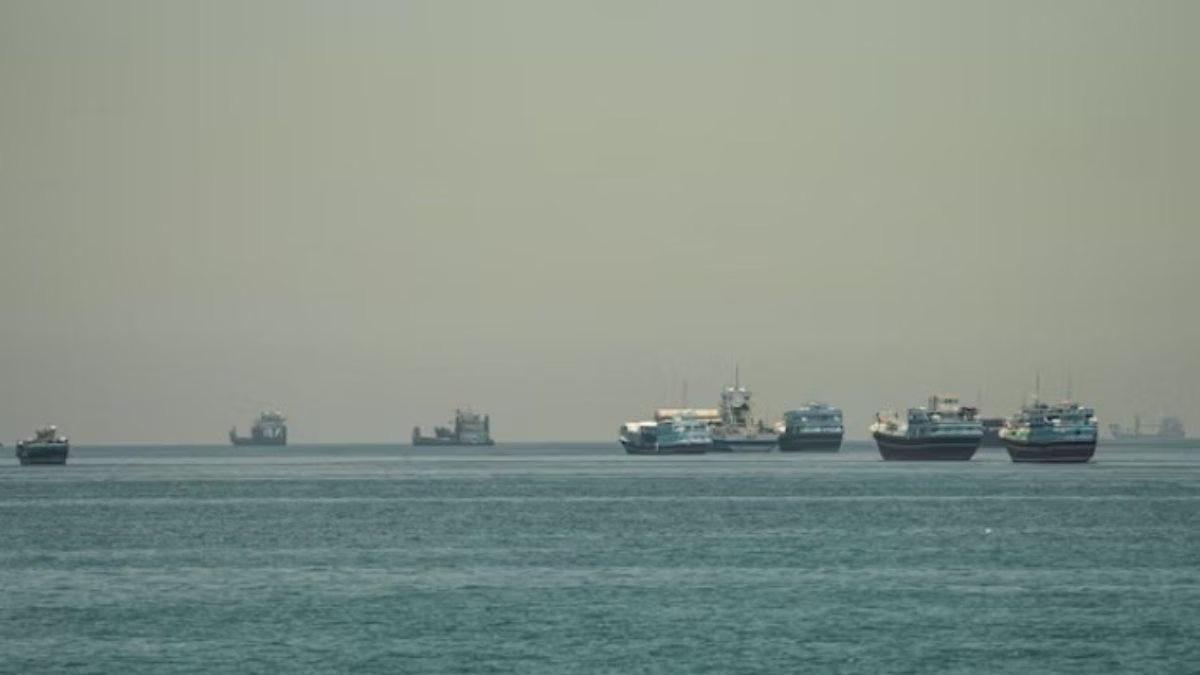
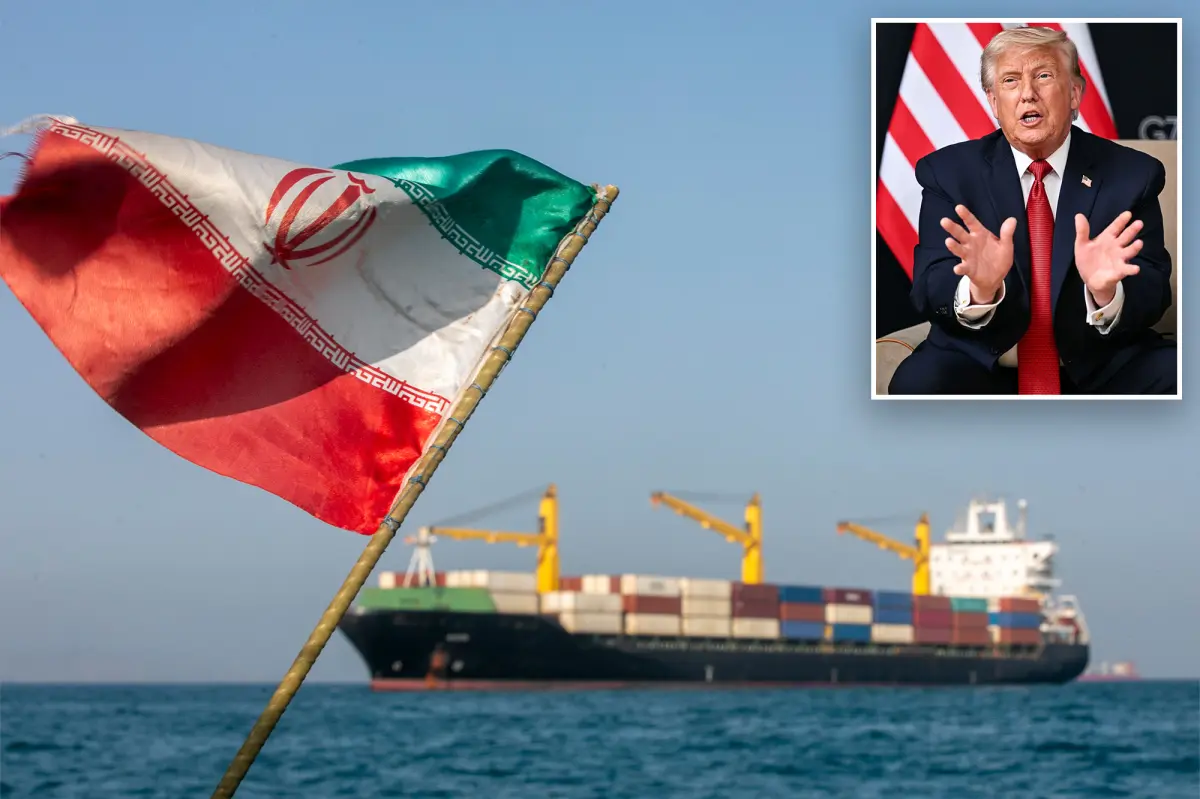
“The Islamic Republic of Iran will conduct dialog with the Sultanate of Oman to define the future administration and maritime services in the Strait of Hormuz in discussion with other Persian Gulf or [Gulf] states in line with the applicable international law and the sovereign rights of coastal states of the Strait of Hormuz.”
The mention of “administration and maritime services” leaves open the possibility that Iran and Oman could charge service fees to ships that want to access the strait.
Legally, the Strait of Hormuz is an international waterway, and vessels cannot be tolled under international law. They can, however, be required to pay fees for services provided.
Iran and Oman as recently as Monday were discussing how they could implement a service fee, a source familiar with mediations told The Post.
The Iranian Foreign Ministry also spoke openly about its desire to charge ships for navigational assistance, environmental protection and insurance-related services.
“United States of America undertakes with regional partners to develop a definitive, mutually agreed plan with at least USD $300 billion for the reconstruction and economic development of the Islamic Republic of Iran.”
The memorandum does not specify where the $300 billion would originate, leaving unanswered whether the funding would come primarily from Gulf states, as previously mentioned by senior US officials; private investments as described by US and regional official; individuals; or international financial institutions.
President Trump has repeatedly insisted American taxpayer dollars would not be used to fund Iran, but that is not enumerated in the MOU. Meanwhile, the size of the proposed package would rank among the largest economic development initiatives ever contemplated for the region.
But Hudson Institute senior fellow Rebecca Heinrichs, who led the Pentagon’s 2024 Strategic Posture Commission on US nuclear strategy, told The Post it “doesn’t matter” where the funds come from — they shouldn’t be offered on principle.
“It doesn’t matter that this money isn’t American taxpayer dollars. That’s about the cost of the damage the US and Israel did to Iran and this feels like reparations,” she said
“The Iranians are responsible for billions of dollars of damage to US aircraft, to US basing and ally basing and equipment.”
“[Treasury] Secretary Bessent mere days ago said that frozen Iranian funds could be used to repay the damage they caused. I think for most Americans that makes a lot more sense, and from a strategy perspective, it does send a message to would-be aggressors that we would make them pay,” she added.
The text also makes clear that the details of the initiative have not yet been established, so many of the questions are unanswerable at this time.
“The United States of America undertakes to make fully available for use the frozen or restricted funds and assets of the Islamic Republic of Iran. Upon the implementation of this MOU, the United States of America and the Islamic Republic of Iran will mutually agree on the procedures related to the release of these funds during the negotiations.”
The provision does not identify how much money would ultimately be released and when. While dollar figures ranging from $6 billion to $24 billion have been mentioned by sources in the lead-up to the MOU’s finalization, the total could be much higher thanks to the vague point.
Iran is estimated to have more than $100 billion in total frozen or restricted funds abroad.
It also does not restrict where the unfrozen funds may be spent, which Sabti predicted will mean the regime will pocket the cash — or spend it on terrorism, which also is not banned in the text.
“The billions of dollars will go to the Iran regime — the people won’t see $1 from that. It will all go to the regime and the terror program and missile program and other evil programs that they have,” he said.
Already, regional sources told Reuters that Tehran said it would use some of the cash to pay terror proxy Hezbollah in Lebanon.
Tehran has long sought access to the funds, and the US has previously refused to unfreeze any amount without demonstrable changes to Iran’s nuclear program. However, the MOU leaves unresolved whether the release would occur immediately, in phases tied to Iranian compliance, or only after a final agreement is reached.