World
Tanker traffic slows in Strait of Hormuz after US and Iran clashes

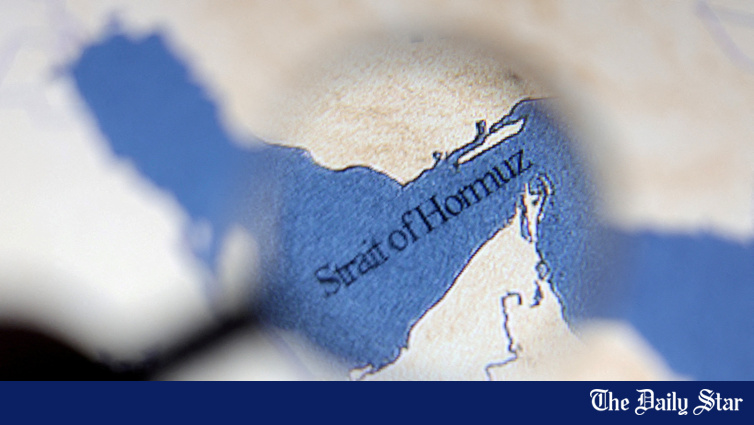
Daily tanker traffic in the Strait of Hormuz appeared to have slowed today, after the US and Iran exchanged hostilities this week and renewed their arguments over who was in control of passage through the critical waterway.
The attacks renewed concerns about the recovery of global oil supplies and shipping, and highlighted the fragility of an interim truce while the US and Iran hammer out a lasting agreement.
Oil prices eased today but remained on track for weekly gains of 4-5% after the flare-up.
GLOBAL OIL SUPPLY UP BUT STILL BELOW PRE-WAR LEVELS
The International Energy Agency said global oil supply rose by 4.1 million bpd in June as shipping through the strait resumed, but remained 9.4 million bpd below pre-war levels.
It warned of tight diesel and gasoline supplies, and said refineries were slower to react to the reopening of the strait than crude prices.
The Strait of Hormuz handled about a fifth of global oil supplies before the war. Tehran has since largely taken control of the waterway, forcing a stalemate in its confrontation with the world’s most powerful military.
Under the interim deal, the US ended its naval blockade of Iranian ports, and Iran agreed to ensure the safe passage of commercial vessels.
However, this week, Washington accused Iranian forces of attacking three tankers in the area and struck military sites on Iran’s southern coast and eastern provinces in response. While Iran has not claimed responsibility for those attacks, analysts say Tehran uses such actions to gain leverage in negotiations.
Iran then attacked US military sites in Gulf states yesterday.
The US said its action aimed to keep the strait open and that Iran did not control the waterway. Tehran warned, however, that the strait would only be reopened on its terms, and any US intervention would draw a “crushing response”.
The attacks on the three Qatari and Saudi shipping vessels prompted US President Donald Trump to declare the truce “over,” but a US official later said Washington was still committed to finding a resolution with Iran, and “technical talks continue”.
The New York Times reported that Qatar had been in talks with Washington and Tehran to de-escalate the crisis.
Prior to this week’s attacks, daily tanker traffic had risen to its highest since the war began, averaging 40 ships transiting the strait. That was still far off the pre-conflict average of 125 to 140 daily sailings.
CONDOLENCE CEREMONY FOR KHAMENEI
Iran yesterday buried its slain Supreme Leader Ayatollah Ali Khamenei at the country’s holiest shrine in Mashhad, capping a week of funeral processions and rallies.
Khamenei was killed in an airstrike on the first day of the war on February 28, as part of a US-Israeli barrage against Iran that set off a months-long conflict killing thousands and throttling worldwide energy supplies.
A condolence ceremony will be held today after sunset prayers on behalf of Supreme Leader Mojtaba Khamenei for his father in the city of Qom, his office announced. Mojtaba Khamenei, who was injured in the strike that killed his father, has still not appeared in public.
ENDING THE WAR
Trump’s inability to end the war has frustrated the president, whose Republican Party faces midterm elections later this year amid high gas prices and voter discontent.
US Central Command said on Wednesday its forces had struck approximately 90 Iranian military targets. Iranian state media said those attacks killed 14 people and injured 78.
Iran’s army said it had launched attacks on US Patriot systems in Kuwait, an early-warning site in Qatar, and a US Army fuel depot in Bahrain. The Revolutionary Guards later said Iran had fired 10 ballistic missiles at Jordan’s Azraq military base, used by US forces.