World
Scientists turn yeast found in gut of ancient mummy into ‘very good’ sourdough bread — beer’s next

Very mummy in my tummy.
Scientists used yeast found in an ancient Iceman’s guts to bake “very good” sourdough bread and have beer-making next on their list.
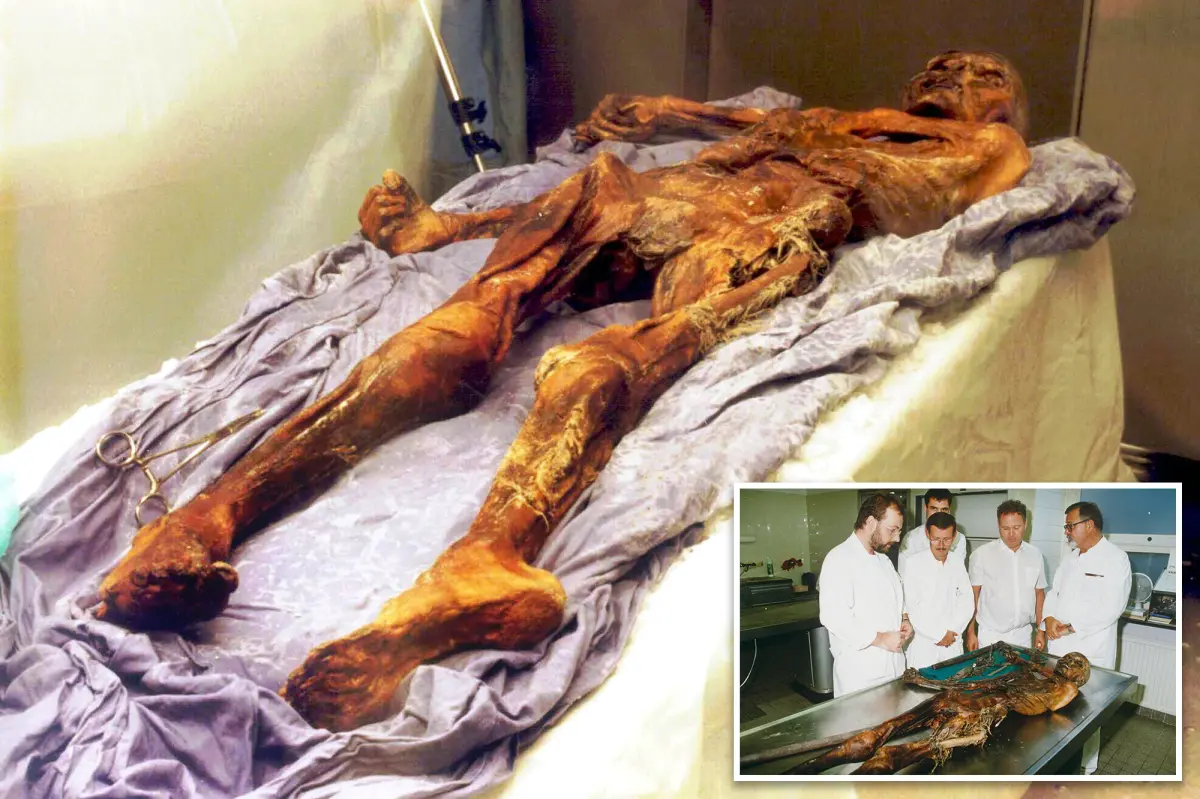
German hikers stumbled upon the mummified remains of Oetzi in northern Italy in 1991 — roughly 5,300 years after he was killed by an arrow while strolling through the Alps, according to scientific journals.
His body — extremely well preserved from being entombed in glacial conditions — has provided researchers with a window into life during the Copper Age.
Findings published in the Microbiome journal on Wednesday revealed that scientists found a stunning array of ancient and modern microbial life inside Oetzi’s body.
These include gut bacteria from his microbiome during his lifetime, cold-adapted microorganisms from his glacial tomb, and modern microbes from his decades of conservation, the findings said.
“Our study reveals that Oetzi is not a static, biologically inert relic – he is a dynamic ecosystem,” microbiologist and lead author of the study, Mohamed Sarhan of Eurac Research’s Institute for Mummy Studies in Bolzano, Italy, told Reuters.
Researchers also uncovered that yeasts survived sub-zero temperatures in Oetzi’s guts, skin, and the “brownish water” from his thawing body — offering an opportunity to bake bread with the ancient strains, AFP reported.
“If you tell anyone you have yeast, they immediately ask: Can we use it for bread?” Sarhan told the outlet.
Initially, the sourdough load didn’t work, but after three months of trying, the team made a loaf of “very, very good sourdough,” Sarhan said.
The scientists have also added beer brewing to the list of possibly mummy-derived food and beverage items.
The remarkably preserved gut microbes also showed Oetzi had a fiber-rich diet.
“Their disappearance from Western guts is likely linked to dietary shifts, antibiotic use, and reduced exposure to natural environments,” Sarhan told Reuters.
“Oetzi essentially shows us what we have lost, and potentially what we might one day want to restore for health reasons,” Sarhan said.
With Post wires