World
Rockets, drones trigger warnings in north after Hezbollah rejects Lebanon ceasefire proposal

Hezbollah on Thursday rejected a ceasefire plan agreed by the Lebanese and Israeli governments in US-mediated talks, as the terror group kept up rocket and drone attacks targeting troops and northern Israel, and the IDF continued to strike in southern Lebanon.
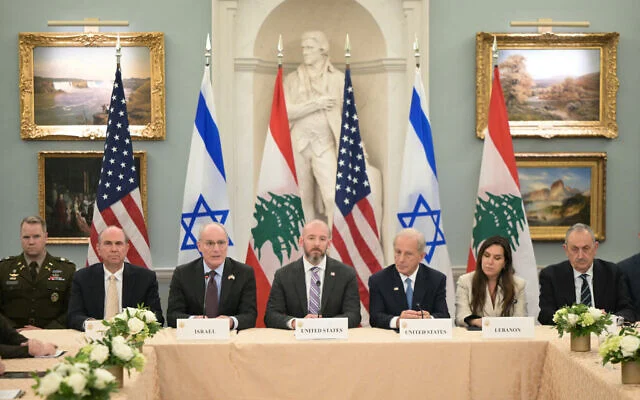
The night before, Jerusalem and Beirut agreed on a ceasefire contingent on Hezbollah halting attacks, and planned for the Lebanese army to deploy to “pilot” zones in southern Lebanon free from both Hezbollah operatives and IDF troops.
But the terror group’s chief, Naim Qassem, rejected the deal as “surrender.” Qassem said that his group would keep bombarding northern Israel as long as strikes continue in Lebanon. Qassem also urged the Lebanese government to quit the “farce” of direct talks with Israel.
In a written statement read on Hezbollah’s Al-Manar TV on Thursday, Qassem said the agreement’s demand that Hezbollah fighters leave southern Lebanon under fire would mean “surrender, defeat and achieving the enemy’s goals.”
As long as Lebanese villages are being bombed and people are being killed, northern Israel will not be safe, he said. Israel says it is striking terror operatives plotting attacks against troops and Israeli communities.
“What we are concerned about is an end to the aggression, ceasefire and Israel’s withdrawal,” Qassem said. “We did not make any commitment to any party to stop resisting as long as there is occupation.”
The fighting did continue on Thursday, as sirens sounded across northern Israel. Hezbollah launched two rockets at IDF troops in Lebanon, causing no injuries.
In the afternoon, Prime Minister Benjamin Netanyahu was visiting the northern town of Shlomi some 30 minutes before drone warning sirens sounded in the community, the Prime Minister’s Office confirmed to The Times of Israel. The premier was unharmed and later left the area.
In a meeting with northern leaders in Shlomi, Netanyahu said Israel was “committed to northerners’ security,” promising to invest in their recovery, “just as we did in the south,” according to the Ynet news site.
“We will continue to act decisively against all threats,” Netanyahu was quoted as saying.
Defense Minister Israel Katz on Thursday said Israel “will, for the time being, continue its fire and operations on the ground.” Lebanese state media reported more than a dozen Israeli strikes on Thursday, and said five people were killed. The IDF did not immediately comment.
Aoun speaks of ‘last chance’ for truce
Israel and Lebanon have formally been at war since the Jewish state’s establishment in 1948.
On Wednesday, Israeli and Lebanese envoys held a fourth round of talks in Washington, agreeing to create a number of “pilot” security zones inside Lebanon from which Hezbollah terrorists would be banned. It was not immediately clear how the security zones would be established, but the agreement calls for the Lebanese army to take full control of those areas.
Before that statement was issued, Iran said Thursday that Hezbollah’s baseline demand is for Israel to withdraw to positions it held prior to the US-Israeli war on Iran, according to comments attributed to Revolutionary Guards’ Quds Force Commander Esmail Qaani and published in state media.
For its part, Beirut hailed the deal, with Lebanese President Joseph Aoun saying Thursday that an agreement with Israel was the “last chance” to reach a comprehensive truce.
“The results of the fourth round of negotiations, and the statement issued from it, which included very important points in Lebanon’s favor, represent the last chance to enter into a final, comprehensive ceasefire,” he said, adding that “each party bears responsibility” if it fails to respond positively.
Aoun said Lebanon would inform the US of its position “as soon as responses are received from the concerned internal parties, particularly Hezbollah,” adding that the US would determine the ceasefire’s start date and “Trump will be the direct guarantor of its implementation.”
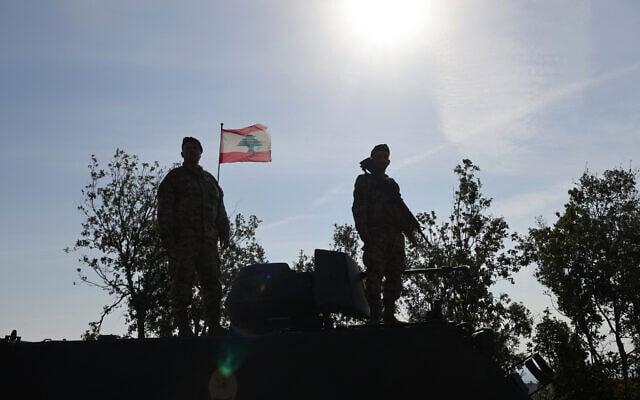
Meanwhile, the European Union signed off on a new €100 million ($116 million) support package for the Lebanese army, which it seeks to bolster.
“The latest ceasefire between Israel and Lebanon offers a chance to prevent a return to full-scale hostilities,” EU foreign policy chief Kaja Kallas wrote online.
Five said killed in eastern Lebanon
The IDF said “the fighting in southern Lebanon is ongoing,” with army spokesman Col. Avichay Adraee warning residents that “the IDF continues to target Hezbollah facilities and infrastructure located in and near your villages.”
He warned residents of southern Lebanon not to travel south of the Zahrani River “until further notice.”
“Anyone traveling south is putting their life at risk,” Adraee added.
Lebanon’s state-run National News Agency (NNA) reported some 20 strikes in Lebanon’s south and east on Thursday, some causing casualties, including a couple and their daughter who were wounded in an attack on their car.
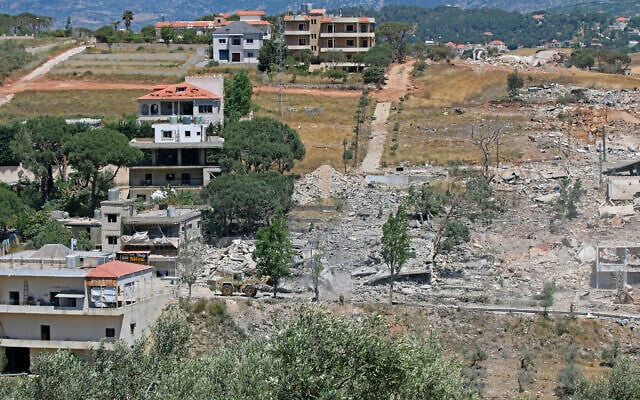
It also reported that five people were killed in an IDF strike in the eastern Lebanon town of Sohmor, outside of the warned evacuation zone. The strike in the Beqaa Valley town reportedly wounded several others.
The IDF did not immediately issue statements on the targets of Thursday’s strikes.
The military said that on Wednesday, Israeli troops killed a Hezbollah operative in an exchange of fire during ground operations north of the Litani River in southern Lebanon. According to the IDF, the Hezbollah gunman was armed with an AK-47 rifle. Troops of the Givati Brigade’s Reconnaissance Unit identified and then killed him in a close-quarters fight.
PM reportedly balks at expanded ground op
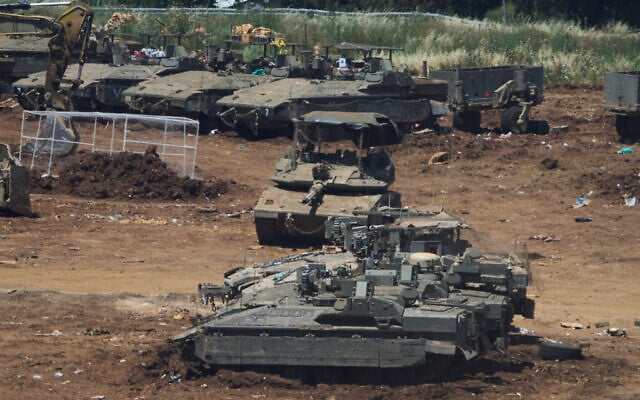
Netanyahu convened a security consultation late Wednesday night to discuss the situation in Lebanon, where he reportedly balked at plans for a large-scale ground maneuver in the country, citing US pressure against such moves.
During the meeting, the IDF presented the premier and other ministers with a proposal for a large-scale operation in Lebanon, but Netanyahu expressed reservations, Army Radio reported. The report came after US President Donald Trump intervened earlier this week to stop planned strikes on Beirut and castigated Netanyahu for looking to expand operations against Hezbollah, which the US feels could jeopardize its talks with Iran.
Katz and National Security Minister Itamar Ben Gvir supported the proposal, the report said.
The Prime Minister’s Office did not immediately comment on the Army Radio report or further clarify the ceasefire understandings.
Ben Gvir said a truce was a “grave mistake.”
“The state of Lebanon is a partner of Hezbollah,” he said. “There are ministers in its government representing Hezbollah, and the families of Hezbollah members serve in the Lebanese army.”
“There are moments when you must say ‘no,’ even to the president of the United States, and when we don’t do that — we’ll meet Hezbollah next time, when it’s stronger and more dangerous,” he warned, calling for a full cabinet meeting and vote on the ceasefire.
UN peacekeeper killed by mortar; IDF blames Hezbollah
On the ground, a Serbian peacekeeper stationed with the United Nations Interim Force in Lebanon (UNIFIL), was killed late Wednesday after mortars hit a UN base in southern Lebanon.
The UN did not issue blame for the strike, though the IDF said its launch trajectory proved it came from Hezbollah.
UNIFIL said mortar shells struck one of its positions near Marjayoun, critically injuring one member of the observer force, who was flown to a hospital in Beirut, where he succumbed to his wounds Thursday morning.
“Two other peacekeepers, who also sustained injuries, are being treated at a medical facility in the UNIFIL base,” it said.
UNIFIL said it launched an investigation “to ascertain the exact circumstances that led to this tragic incident.” The statement did not mention either Hezbollah or the IDF.
Serbia’s defense ministry said in a statement that “Senior Sergeant Milovan Jovanovic was given emergency medical care at a hospital inside the base after being wounded and then transported by helicopter to the University Medical Centre in Beirut, where he died.”
❗️ Hezbollah launched mortar shells that hit a UNIFIL position and killed a UN personnel member in southern Lebanon
Overnight, Hezbollah launched several mortar shells that landed inside a UNIFIL force position in the Dibbine area in southern Lebanon—killing a UN personnel… pic.twitter.com/vQ3YnnNWZZ
— Israel Defense Forces (@IDF) June 4, 2026
Commenting on the incident, the IDF said it identified several mortar launches “from the Qotrani area, carried out by the Hezbollah terror organization, which fell inside a UNIFIL outpost in the Dibbin area in southern Lebanon.”
“An examination of the launch trajectory clearly indicates that the fire was carried out by the Hezbollah terror organization,” the IDF said.
In late March, an Indonesian peacekeeper was killed and another later died of his wounds after a projectile hit their base, with a preliminary UN investigation blaming an Israeli tank shell.
Shortly after, two more Indonesian Blue Helmets were killed by an improvised explosive device, which the same UN investigation found was likely planted by Hezbollah. In April, two French peacekeepers were killed in an ambush that French authorities and the UN attributed to Hezbollah, which denied involvement.
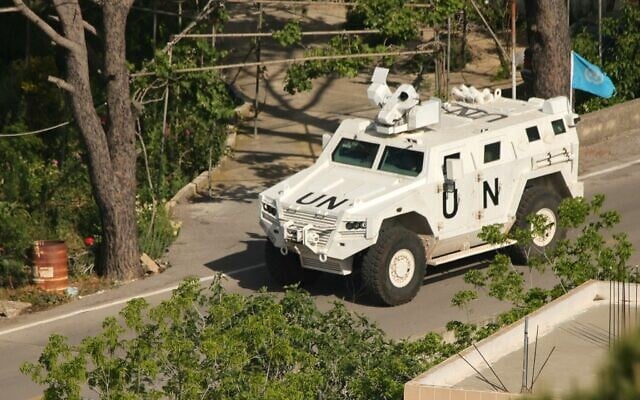
On Monday, UN chief Antonio Guterres said peacekeepers would still be needed in Lebanon after UNIFIL’s mission expires at the year’s end — a suggestion likely to face opposition from the United States and Israel.
IDF says Hezbollah drone nearly hit top officer
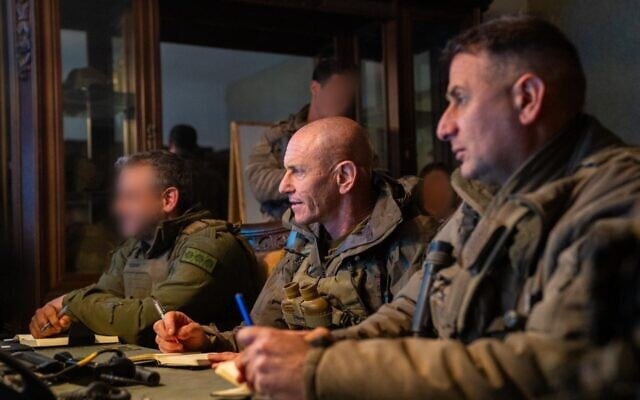
Separately, the IDF revealed Thursday that an explosive-laden first-person view (FPV) drone launched by Hezbollah struck near IDF Northern Command chief Maj. Gen. Rafi Milo as he was visiting southern Lebanon several weeks ago.
The IDF said that “no damage was caused and there were no casualties” in the incident. However, reports indicated that the drone hit Milo’s vehicle shortly after he exited his car.
Since the incident, the IDF has changed its protocols for visits by senior officers to southern Lebanon.
The latest round of fighting between Israel and Hezbollah began on March 2, when Hezbollah fired rockets into northern Israel two days after the US and Israel attacked its main backer, Iran.
Since then, 26 IDF soldiers and one Defense Ministry civilian contractor have been killed in southern Lebanon, 14 of them since a ceasefire was introduced on April 16. Two civilians were also killed by Hezbollah rockets, and an Israeli civilian was mistakenly killed in the north by Israeli artillery shelling.
In Lebanon, the Israeli military has said that it has killed over 2,500 Hezbollah operatives, including hundreds of members of the terror group’s elite Radwan Force, since early March.