Trends
President Tinubu Gives Reasons To Oppose US Court Release Of Alleged FBI Records

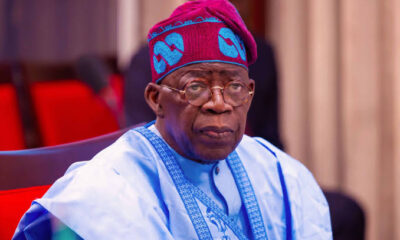
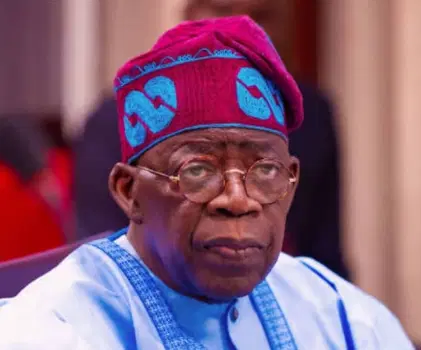
President Bola Tinubu has given the United States District Court for the District of Columbia four reasons why his unredacted records with the Federal Bureau of Investigation and Drug Enforcement Agency should not be released to the public.
The President, in filings made by his lawyers and published on Saturday, noted that the US Freedom of Information Act and Privacy Act precluded disclosure and there was no public interest in the matter.
Tinubu also said there was no public interest to balance and the plaintiff had ulterior motives for demanding documents with his name on them.
His lawyers were identified as Christopher Carmichael, Victor Henderson, and Oluwole Afolabi.
The President’s submission was in response to a request by an American transparency activist, Aaron Greenspan, which sought the disclosure of the records under the US Freedom of Information Act.
But opposition parties in the country kicked against the move, saying Nigerians deserved to know about the president’s past.
The controversy surrounding Tinubu’s US law-enforcement history became a major issue in the buildup to the February 25, 2023, presidential election after documents relating to a 1993 US civil forfeiture proceeding surfaced.
A US District Court in Illinois had ordered the forfeiture of $460,000 held in an account in Tinubu’s name after the US alleged that the funds represented proceeds of narcotics trafficking or were involved in prohibited financial transactions.
The All Progressives Congress, however, maintained during the presidential election petition proceedings that the case was a civil forfeiture proceeding and not a criminal conviction.
The Labour Party and then presidential candidate Peter Obi argued that the forfeiture amounted to a disqualifying conviction under the Constitution.
The Presidential Election Petition Court held in September 2023 that the petitioners had failed to establish that Tinubu was arrested, arraigned, convicted, or sentenced in a criminal case in the US.
Ever since, the opposition and other interested parties have been making moves to get official information relating to Tinubu from the US.
Greenspan had argued that his requests concerned the “sitting President of Nigeria…” and “a nation of over 230 million people whose daily lives are directly affected by President Tinubu’s decisions.”
In his rejection of the FOIA request, Tinubu, according to the filings by his lawyer, urged the US District Court to reject the bid because it amounted to an attempt to obtain private information for political purposes in Nigeria.
The president’s lawyers noted that the request was made to provide access to information about government activities.
They specifically rejected the argument that the interest of Nigerians in Tinubu’s background constituted public interest recognized by US laws.
The team also rejected an argument on the president’s fitness for office, stating that “the asserted ‘public interest in Tinubu’s own fitness for office’ is not an interest FOIA recognizes or one that needs to be balanced.”
The lawyers further argued that the records sought were protected by privacy provisions under FOIA and the US Privacy Act.
“The redacted information sought by the plaintiff is exempt from disclosure,” they stated, citing Exemption 7(C), which protects personal information contained in law-enforcement records.
The President’s legal team relied on a 1989 US Supreme Court decision, Department of Justice v. Reporters Committee for Freedom of the Press, to argue that FOIA was designed to allow the public to know “what the government is up to” rather than provide access to information about private citizens.
They argued that Greenspan was seeking “disclosure of information about private citizens that is accumulated in various governmental files,” which, they said, “reveals little or nothing about an agency’s own conduct.”
Tinubu’s lawyers also challenged what they described as the political dimension of the request, arguing that Greenspan’s filings demonstrated a focus on obtaining documents containing the president’s name.