World
Palestinians allege methodical, ‘coordinated’ attack after sheep stolen, residents hurt

Saeed Hamous has been on edge since Saturday. That day, he said, Israeli settlers who rampaged through his town, Huwara in the West Bank, stole dozens of sheep from him.
Hamous had bought the sheep and began raising them as his main source of income after no longer being allowed to work in Israel, which dramatically reduced the number of Palestinian workers allowed into the country from the West Bank in the wake of Hamas’s October 7, 2023, massacre.
The 37 sheep the settlers made off with had comprised most of his flock, the 63-year-old said.
“When someone comes and takes your livelihood, you are destroyed. Your soul is completely destroyed,” Hamous told The Times of Israel during a meeting at Huwara’s town hall this week.
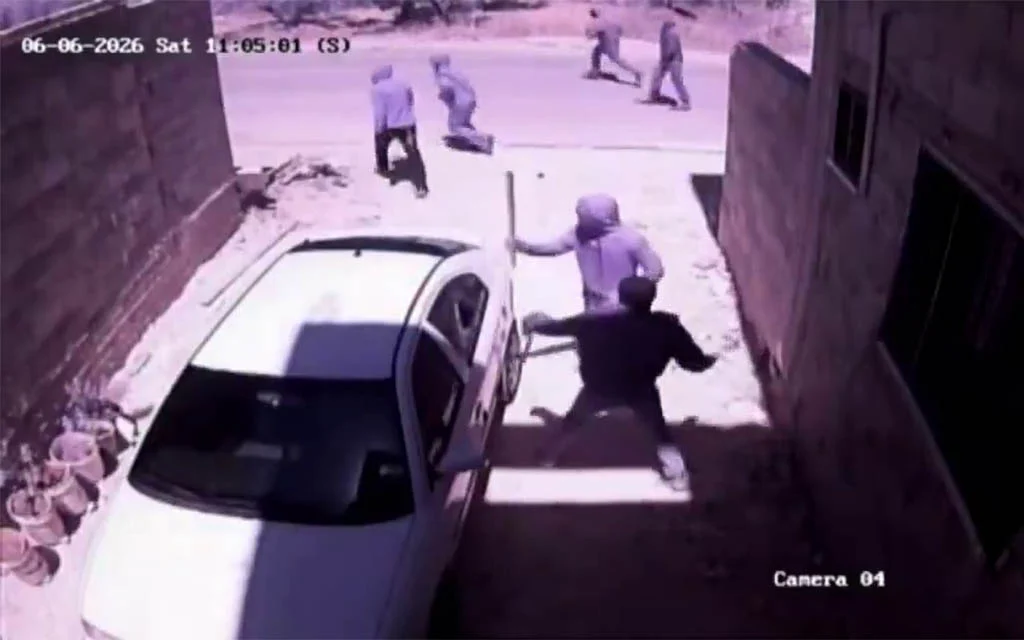
Extensively documented on video, Saturday’s raid appeared to bear the hallmarks of settler violence that has become devastatingly common across the West Bank. Footage showed dozens of masked settlers riding in on pickup trucks, taking livestock, beating residents and throwing stones at locals and motorists passing through the town, which straddles a main West Bank artery.
But according to residents, the raid appeared to be more organized than the seemingly haphazard violence, harassment and theft of previous confrontations and settler rampages.
Settlers first entered Huwara and carried out inspections of livestock pens, claiming that they were searching for stolen sheep, locals say. When they returned to take the animals by force, others carried out acts of violence across the town, in moves that appeared to have been pre-planned.
The incident was “organized and coordinated, not a random attack,” Huwara Mayor Kamal Odeh told The Times of Israel. “They knew where the sheep were, saw how many, and took them.”
Odeh said that residents lost roughly 60 sheep during the attack, not including lambs, at an estimated value of NIS 300,000 (around $100,000). In addition, a jeep worth approximately $20,000 was stolen from a local garage.
According to media outlets affiliated with the settler movement, Israelis had entered the town to retrieve sheep they allege were stolen from a nearby outpost. Clashes broke out when Palestinians began throwing stones at the settlers, the reports claimed.
However, on Sunday, the Kan public broadcaster reported that the owner of the supposedly stolen sheep had told the Israel Defense Forces on Saturday morning that his sheep had not been taken, but had escaped from their pens.
No arrests were made during the Huwara violence, though two suspects in their 30s were arrested the next day over alleged involvement in the attack. “Additional arrests are expected,” police said Sunday.
The next day, the detention of the two suspects — residents of a nearby outpost — was extended by three days.
At the conclusion of the detention hearing, the suspects’ attorneys said that the shepherds had been in mortal danger inside the town while trying to retrieve sheep allegedly stolen from them, and that they had no connection to the violence that took place at the same time.
The Honenu legal aid organization, which represents the two suspects, did not respond to a request for comment from The Times of Israel regarding the claim that the attack had been organized and coordinated.
Counting sheep
Residents of Hawara said settlers took sheep belonging to two residents from three separate locations. Both victims described a similar pattern: Early Saturday morning, individual settlers showed up and demanded to inspect the sheep pens, alleging that stolen livestock were there.
Hamous told The Times of Israel that at around 7 a.m. he received a phone call from his daughter-in-law saying settlers were near his son’s home, which is located next to one of the two family sheep pens.
He arrived and saw two settlers sitting at the entrance to the house “as if they owned it.”
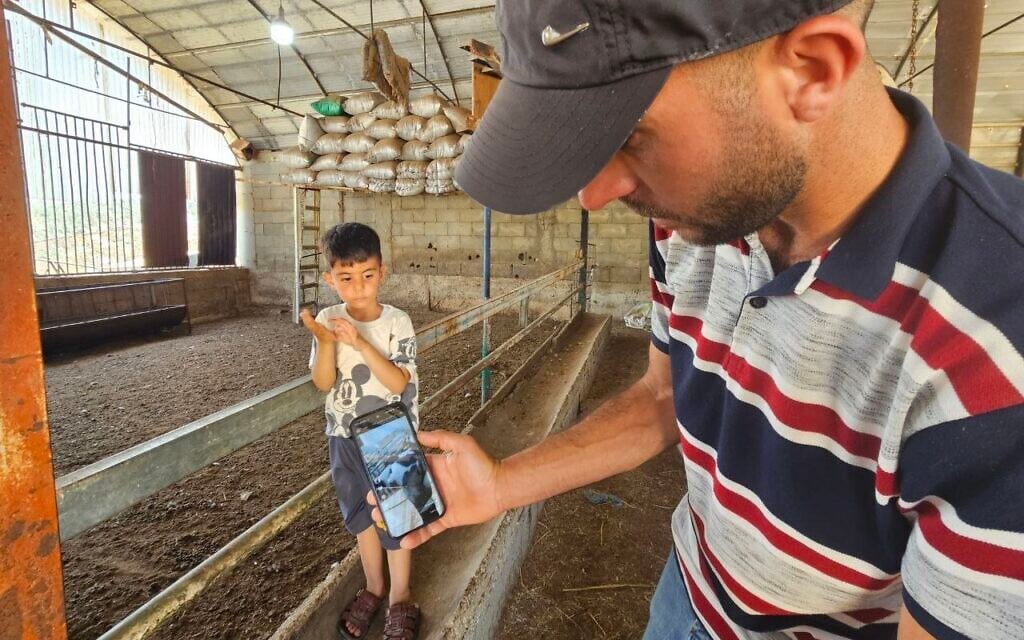
“I know a little Hebrew, so I asked them, ‘Can I help you with something?’ They told me, ‘Go away, go home,’” he said.
Fearing they would assault him, Hamous went inside and began calling people in the town to update them on the situation.
After some time, he said, a patrol of four soldiers arrived. According to Hamous, the force belonged to the local Israeli defense unit, or Hagmar — a type of IDF reserve unit made up of settler residents that has been linked to rising West Bank violence.
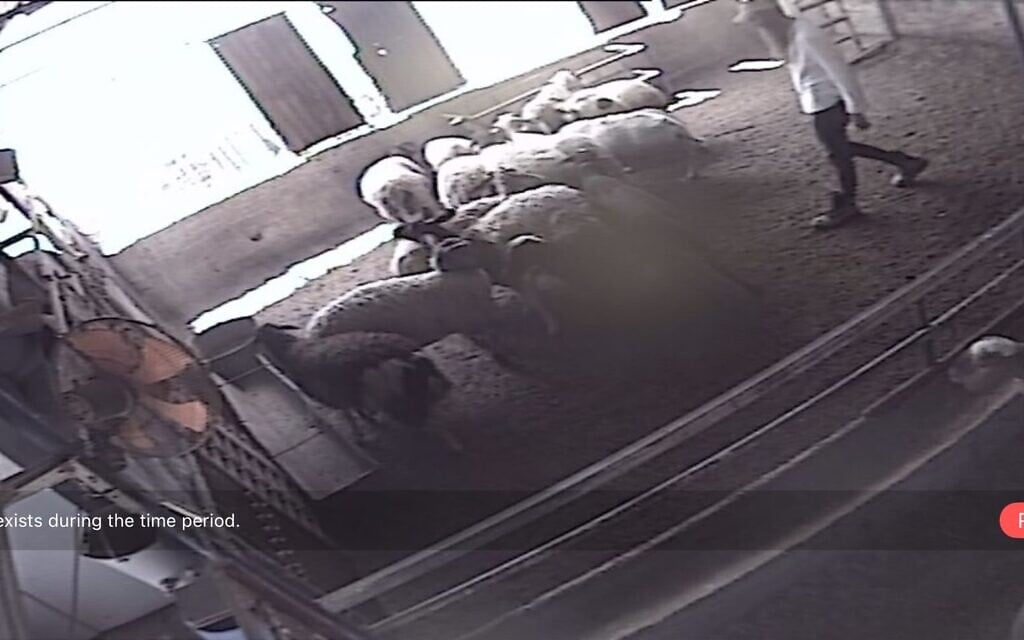
The soldiers told him they wanted to inspect the sheep. Hamous said he opened the pen and showed them the animals. According to him, the settlers accompanying the soldiers then selected 10 sheep, separated them from the rest and ordered him back into the house.
“I went inside and closed the door because I know what they are like. They want to beat people, and I’m the one who would lose if I stayed,” he said.
Standing next to his now-empty sheep pen, Saeed Odeh, 75, told The Times of Israel that he was feeding his 25 sheep from inside the shed at around 7:30 a.m. that same morning when he looked out the window and saw settlers approaching.
“My heart dropped,” he said. “I saw a large black pickup truck with four [settlers]. Three were masked and carrying clubs, and one had his face uncovered.”
The settlers demanded to inspect the sheep. Odeh said he opened the pen and showed them the animals, after which they left. “I said to myself, ‘That’s it, it’s over.’”
It was not over.
About 15 minutes after they left, dozens of people arrived — all masked, carrying clubs and some armed — accompanied by IDF forces, and again demanded he open the pen.
“They said in Arabic: ‘Open the pen or you will die.’”
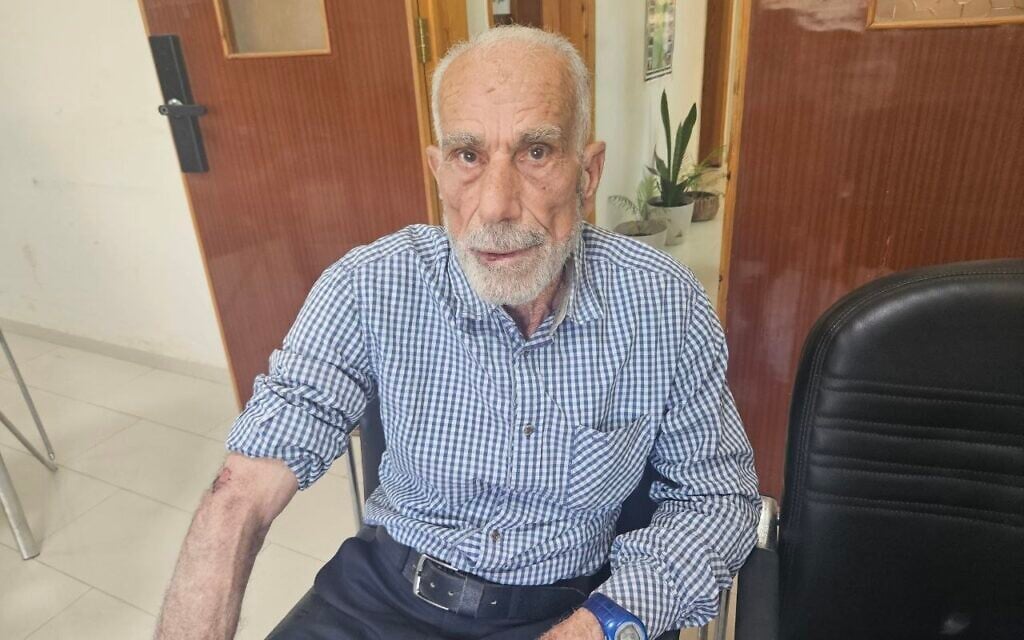
Odeh said settlers beat him as he tried to open the pen because they were impatient. “I tried to open the door and they tried to break it down. I said, ‘Don’t break it,’ and they punched me in the hand and in the face. They have no morality, no humanity.”
He showed The Times of Israel injuries to his mouth and hand.
According to Odeh, the group removed all of the sheep and took them toward the nearby outpost.
יהודים נכנסים לחווארה, יוני 2026 pic.twitter.com/0IFZ5mBCLq
— דורון קדוש | Doron Kadosh (@Doron_Kadosh) June 6, 2026
At roughly the same time, Hamous — still inside his son’s house — said friends called him to report that settlers were taking sheep both from his son’s pen nearby and from another pen he owned near his own home.
He left the house, went down to the pen near his home and found vandalized equipment and much of his flock gone, with signs of animal abuse on those left behind.
“They beat the sheep in the head and took 37 sheep — 27 from the lower pen and 10 from the upper one.” The family was left with several chickens and calves, as well as around 14 sheep that the settlers did not take.
Residents assaulted
Odeh, the mayor, said other groups of settlers poured into the town on ATVs and in cars alongside the roughly two dozen who came for the livestock.
He asserted that the arrival of such a large group, seemingly mustered within a short time, showed that the assault on the town had been preplanned.
IDF forces were present at the scene and arrived together with them, he claimed, but used tear gas to keep residents away from the settlers even as they took livestock. According to the mayor, some settlers were armed and opened fire at residents, wounding several people.
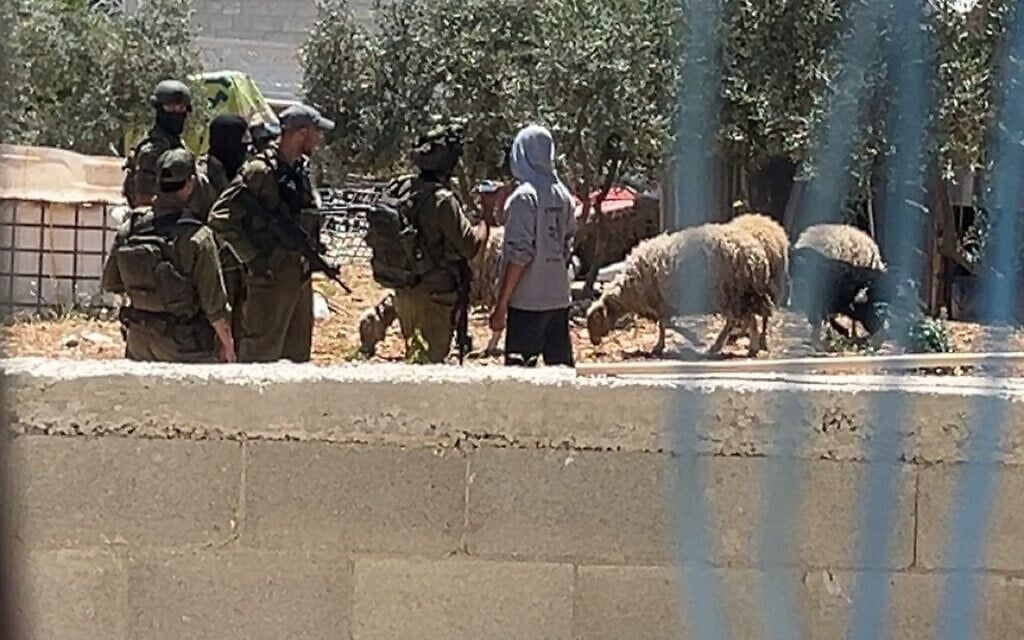
The Palestinian Red Crescent reported on Saturday that nine residents were wounded, one of them by live fire.
Odeh said that contrary to those figures, he counted 23 residents injured in total, including from tear gas inhalation, beatings, fractures and gunfire.
Odeh claimed the armed men were members of the local Hagmar unit.
The IDF said in response that “forces acted to disperse the gatherings using riot dispersal means.”
The military did not respond to questions from The Times of Israel regarding the alleged involvement of Hagmar unit soldiers in the incident, the escorting of settlers, or reports of gunfire at residents.
נזקי הפשיטה בחווארה: 9 פצועים, בהם אחד שנפצע בראשו. במקרה אחד שתועד גם יחד עם חייל צה”ל. מצה”ל נמסר כי “המקרה מתוחקר ויטופל משמעתית ופיקודית”. חוץ ממכות תועדו ודווחו גם גניבת צאן, יידוי אבנים על מכוניות וגניבה של מכונית ואופנוע. היה גם ניסיון לגניבת צאן בעינבוס באזור. טרור pic.twitter.com/OE23T2UPzr
— Nurit Yohanan (@nurityohanan) June 6, 2026
One Huwara resident remained hospitalized in intensive care as of Monday. He was filmed being beaten by settlers and by a soldier who appeared to assist them, and suffered a head injury.
In the video, armed settlers and a soldier are seen demanding that a Palestinian man get out of his vehicle. As he argues with a settler holding a club, a soldier throws him to the ground and repeatedly strikes him in the head for several seconds before another settler gets them to stop. Meanwhile, settlers scuffle with another Palestinian, clubbing and punching him until he collapses onto the road.
The IDF said in response to the footage: “The actions seen in the video are severe and do not align with IDF values. The incident is under investigation, and once the soldier is identified, he will face disciplinary action and command measures in accordance with the findings.”
A history of friction
Hawara has long been a flashpoint for both settler violence and Palestinian terror attacks against Israelis due to its location along Route 60, the main north-south highway crossing the West Bank. Until recent years, both Israelis and Palestinians traveling through the West Bank were forced to pass directly through the town.
In the most widely known incident, on February 26, 2023, two Israeli brothers, Hillel and Yagel Yaniv, residents of the nearby settlement of Har Bracha, were killed in a shooting attack while driving through the town.
That evening, hundreds of settlers entered Hawara, torching homes and cars, assaulting residents and throwing stones.
In November 2023, the first section of the “Hawara bypass road” was inaugurated, diverting the main traffic route away from the town. Since then, there have been repeated reports of settlers throwing stones at Palestinians in the area and setting property on fire, though no incidents on the scale of the February 2023 violence had occurred until Saturday.
According to the mayor, settlers roamed through the town for around three hours Saturday morning before leaving around noon.
Even after they left, Hagmar soldiers remained in the town, Odeh said.
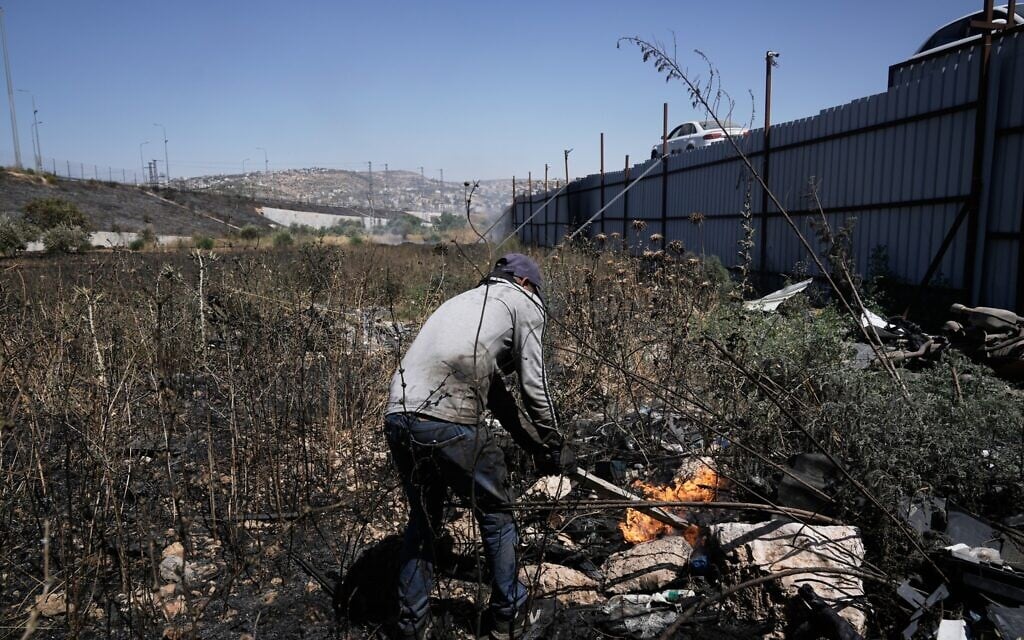
On Saturday night, residents said, more soldiers arrived alongside representatives of the Civil Administration, the Defense Ministry unit that deals with Palestinian civilian affairs in parts of the West Bank. The Israelis questioned residents and confiscated security cameras from one of the sheep pens.
Odeh said residents intend to file a complaint in the coming days with the Israeli police regarding the damage caused during the attack.
He added that the European Union had contacted the town and would gather information about the attack in order to submit an official complaint to the State of Israel.
But he expressed little confidence that anything would come of it.
“Today in the West Bank, it’s the settler who gives the orders, not the police and not the army,” he said.
Squatting in unfinished homes
Huwara residents said some of the attackers came from an outpost established in April 2025 on what they say is privately owned land belonging to local Palestinians.
Part of it lies in Area C, where Israel has full security and civilian control, and part of it lies in Area B, where Israel maintains security control while the Palestinians holds civilian authority.
On April 2025, the Israeli legal rights organization Yesh Din sent a letter demanding the evacuation of the outpost to Central Command chief Maj. Gen. Avi Bluth, the legal adviser for the West Bank, the head of the Civil Administration and the Defense Ministry’s legal adviser.
Most of the officials did not respond. The Civil Administration said only that the matter had been transferred to its inspection unit, which handles enforcement against illegal construction, and that “they will respond.”
No further response was received and the outpost remains in place.
Zidan Hamis, Saeed’s son, whose home is located only a few hundred meters from the outpost, showed The Times of Israel unfinished homes nearby belonging to residents of Huwara that he claimed settlers from the outpost had taken over.
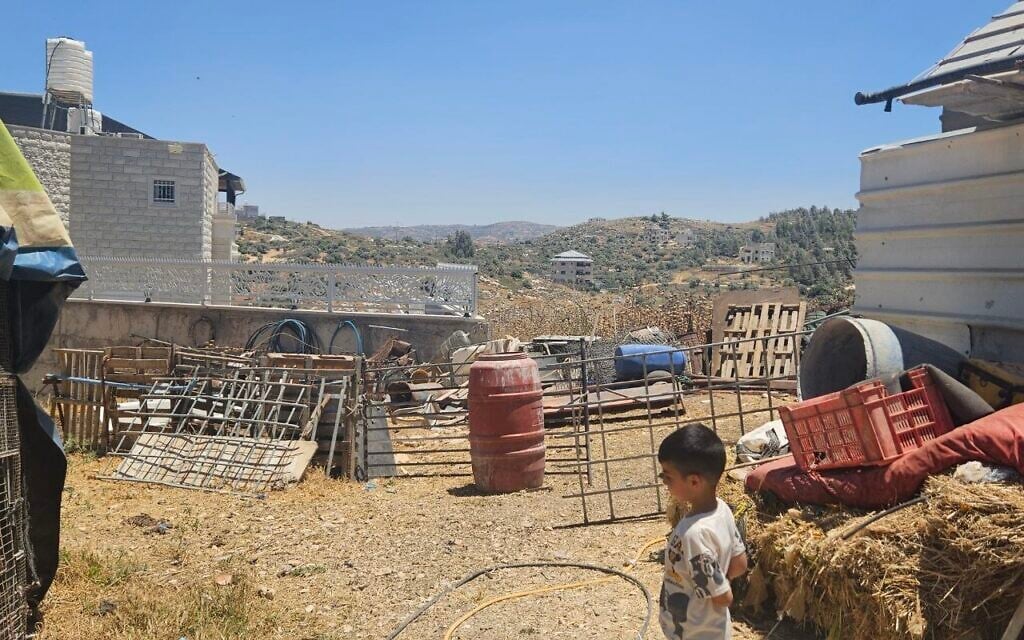
In a letter sent by Yesh Din in April 2026 to the IDF, the Civil Administration and the defense establishment, the organization alleged that the outpost was also stealing electricity and water lines from one of those homes, which are in the final stage of construction.
Again, the Civil Administration replied that the issue had been forwarded to its inspection unit.
Zidan’s wife Iman Hamis said she had not slept since the incident.
Throughout the attack, she said, she remained trapped inside her home while trying to calm her 4-year-old son.
“He told me, ‘I’m afraid of the settlers.’ I told him, ‘Don’t be afraid, you’re a man.’ Since then I keep looking at the windows to see who is coming. I told Zidan, ‘Don’t leave me alone in the house,’ because I was alone when the settlers arrived.”
She said she fears what the future may bring. In the past, settlers had come near the house, but this was the first time they had taken livestock and attacked people, she said.
“Our house is the last one in the village, and their way is very barbaric,” she alleged. “Maybe they will smash things, maybe they will burn the house.”