World
Netanyahu avoids criticizing US-Iran deal, claims war’s main goals have been achieved

Prime Minister Benjamin Netanyahu held a press conference on Monday evening, his first in three months, following the signing of a Memorandum of Understanding between the US and Iran to end the war, during which the prime minister asserted that the fighting was successful but admitted he still does not know what is written in the deal.
Israel was sidelined entirely throughout the negotiating process, a fact that was highlighted when Netanyahu informed a reporter that Israel does not yet know the details of the deal, which is to be formally signed in Switzerland on Friday after a digital signing on Sunday night.
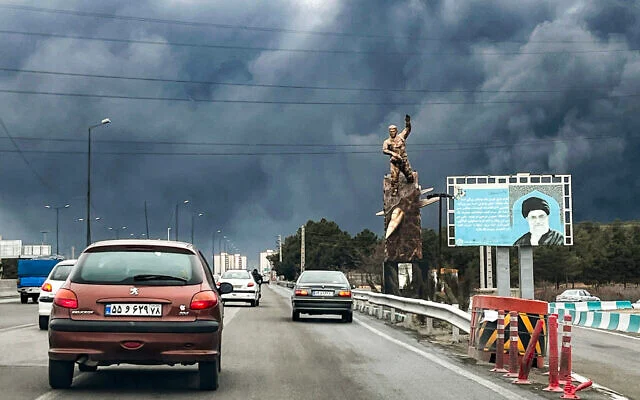
Despite being forced by US President Donald Trump to halt fighting against Iran and acquiesce to the whims of Washington, Netanyahu opened his press conference with an assertive defense of what he portrayed as the success of the six-week US-Israeli offensive against Iran, vowing that because of it, the Islamic Republic would not have nuclear weapons.
“With an agreement or without an agreement, Iran will not have nuclear weapons — not today and not tomorrow. As long as I am prime minister of Israel, it will not happen,” he declared, insisting that this was his “life’s mission.”
The premier, who is facing mounting domestic backlash — including from within his own government — over the apparent end of the war, reiterated his assertion that the nuclear threat from Iran had been an “immediate danger,” which Israel successfully removed “together with our American friends.”
“We launched the largest attack operation in Israel’s history,” Netanyahu bragged, listing what he said were Israel’s accomplishments.
“We targeted the nuclear scientists; we eliminated the leaders of the terror regime; we crushed the nuclear facilities; we destroyed missiles and the vast majority of the factories that produce missiles,” he said. “We struck countless military industries and infrastructures. We destroyed their navy, their air force. We eliminated base commanders who massacred the Iranian people. We caused enormous damage — [some] estimate it in the hundreds of billions of dollars, some estimate it at even close to a trillion dollars — to Iran’s economy.”
His remarks echoed a previous speech he gave just under a year ago in June 2025, following the conclusion of Israel’s first, 12-day war with Iran.
At the time, the prime minister asserted that Israel had “sent Iran’s nuclear program down the drain,” and scored a “historic victory” that would “abide for generations.”
Less than 12 months later, Netanyahu declared that Israel had once again “removed, for years to come, this danger hanging over us of the elimination of Israel’s population.”
“This is what we did,” the prime minister continued, “we saved the State of Israel from annihilation.”
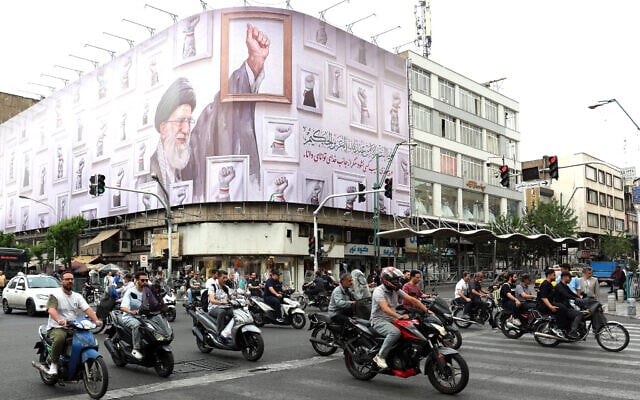
Asked by a reporter about his apparent objective of removing the threat “posed by Iran’s regime” — and why, three months later, the end of the campaign is being declared while that regime remains intact — Netanyahu rejected the premise that things went wrong and that a core goal of the campaign had gone unfilled.
“It did not go wrong at all. I defined the goals — and the cabinet defined the goals — differently from what you said,” Netanyahu told the reporter.
“We said we wanted to remove an existential danger from over us: first, the nuclear danger — and we did that. We said we wanted to remove from over us the [ballistic missile] danger — and we did that. And we said we wanted to create the conditions that would allow the Iranian people, should they wish, to remove from themselves this terror regime,” Netanyahu said.
“Iran is in a very difficult economic situation. We struck every possible infrastructure there. The damage is enormous. There are cracks within this regime as well,” he added. “Can I tell you when this regime will fall? I do not know. Could I have told you when the Soviet regime would fall? No. I cannot tell you.”
Both the US and Israel had been somewhat vague when laying out war aims at the outset of the campaign, but Israel consistently stressed the threat from Iran’s nuclear and ballistic missile capabilities, as well as from its proxy network, at times, adding the goal of “creating the conditions” for regime change in Iran.
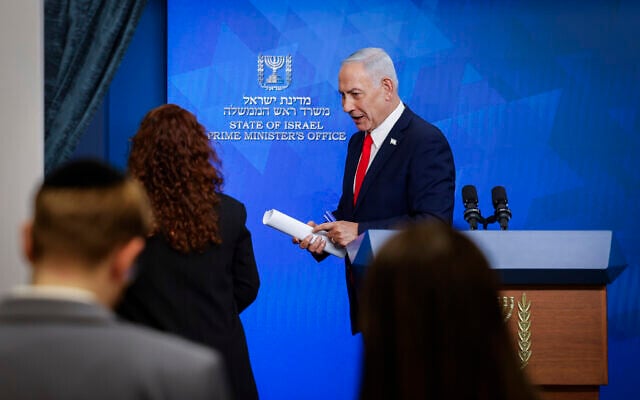
The prime minister on Sunday also pushed back against the idea that Israel had lost its autonomy in strategic decision-making, after it was forced to stop fighting, was shut out of talks with Tehran, and most recently was publicly lambasted by Trump for striking a Hezbollah target in Beirut on Sunday.
“In the US, they say that President Trump does everything I ask, and in Israel, they say the opposite, that I do everything he asks,” he said in response to a question. “Neither is true.”
“We have a relationship of partners who know each other,” Netanyahu insisted. “Many times, we agree; sometimes we don’t agree. That happens in the best families.”
Israel “has to take into account” what the US says, Netanyahu argued, noting that Trump “brought the US military to fight with us against our common enemy.”
“That’s a big deal,” he said. “I respect it.”
“Just as it’s impossible to say we are totally ignoring what is happening in the world, or geopolitical considerations, you can’t say we are totally bound by these considerations,” Netanyahu continued, “because under my leadership, Israel has proven that it does major things and it leads many things.”
“We are initiating, we are operating, we are surprising, and we are also winning,” he said.

Speaking about his relationship with Trump, Netanyahu said that “many times we see eye to eye, and there are also cases in which we see less eye to eye. I am responsible for Israel’s security interests. I stand up for them.”
Netanyahu declined during the press conference to say whether he would permit Israel to strike Iran alone or act independently against Hezbollah in Lebanon, but he said that Israel “will do what is necessary” to prevent Iran from obtaining a nuclear weapon, stressing that “I am not limiting myself in any way regarding this goal.”
He also said that Israeli troops will remain in the buffer zone in southern Lebanon “for as long as necessary.”
“Iran wanted us to withdraw from there. That did not happen. Do you know why it did not happen? Among other reasons, because I stood very, very firm. I was very, very resolute on this matter. And I think our American friends respect that resoluteness and that firm stance,” he said.

Netanyahu also declined to criticize the agreement between the US and Iran, acknowledging that Israel does not yet know its details, but nevertheless insisting that he was “not limiting” himself in acting to prevent Tehran from obtaining a nuclear weapon or in preserving Israel’s freedom of action against Hezbollah in Lebanon.
Pressed by a reporter about concerns over potential similarities between the US Obama administration’s 2015 nuclear deal with Iran and reported details of the emerging US-Iran framework, Netanyahu said he would not compare the two, as “we do not know what the agreement was.”
“I can say that the fundamental difference between the situation then and the situation today is that any agreement must be accompanied by a credible military threat,” he explained. “Back then, there was no credible military threat. Today, because of what we did — not only the United States, but also because of us, because we entered there with 14,000 sorties — that is the biggest difference,” he said.
According to Netanyahu, the 14,000 sorties were split “roughly half and half” between the US and Israel.
The prime minister emphasized that Israel is not a signatory to the US-Iran deal, and distanced himself from Trump’s decision to sign an agreement.
“This agreement was made by the United States, by the president of the United States. And he believes that he can truly combine both the opening of the [Strait of Hormuz] and the cancellation of the nuclear program… And I repeat and say that this is his decision, and he is leading it,” Netanyahu said.
“Of course, I expressed my view in various conversations. On the other hand, I said that we have our own interests – first of all, regarding the nuclear threat. I am committed that there will not be such a threat facing us.”
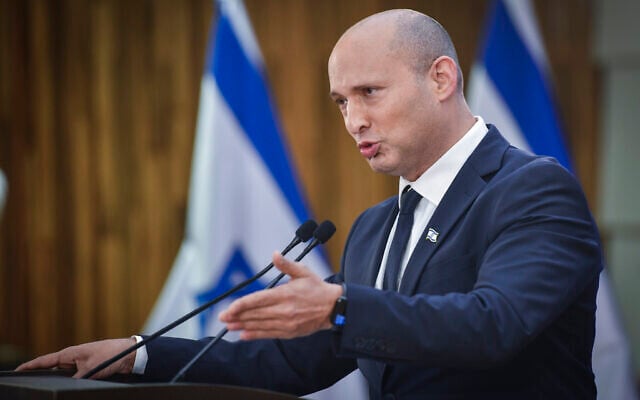
Opposition figures sharply criticized Netanyahu following his press conference, assailing his claims that the recent war against Iran saved Israel from nuclear annihilation and that its main goals were achieved even though Tehran’s regime was not replaced.
“The term of this Netanyahu government began with a civil war, continued with the October 7 massacre, and is now ending with a historic failure against Iran,” former prime minister Naftali Bennett told reporters at a press conference in Tel Aviv.
Promising to “restore security for Israel,” Bennett says that he would have done “everything” differently, including diplomatically by using his “credit with the president most sympathetic to Israel that we have ever had, solely for the benefit of Israel’s national interests,” an apparent dig at Trump’s repeated calls to pardon Netanyahu in his ongoing criminal trial.
“The countdown to replacing the regime in Iran will begin as soon as the government in Israel is replaced,” Bennett asserted.
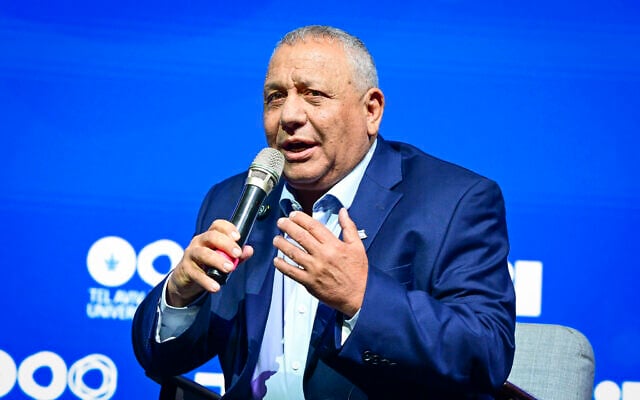
Yashar party leader Gadi Eisenkot said that it would have been better for Netanyahu “to say, ‘I erred, I set false goals that I wasn’t able to achieve. This would have given Netanyahu much more credit and respect from the people, if he had admitted he made empty declarations.”
Eisenkot, increasingly seen as likely to be Netanyahu’s main rival in the upcoming election, also accused the premier of denying war goals he previously set and providing “zero real answers to a nation that has gone through the toughest years in its history.”
Opposition Leader Yair Lapid tweeted: “You can argue that we are a power that is close to regional dominance, you can argue that we are in danger of annihilation and one step away from mass death, but you can’t make both arguments, and definitely not one minute apart.”
And The Democrats party leader Yair Golan said that “If you dedicated most of your life to fighting the Iranian threat, and you say we came close to being annihilated, then you failed at your life mission. We appreciate the honesty.”