World
Middle East shipping crisis elevates China-Europe railway’s profile

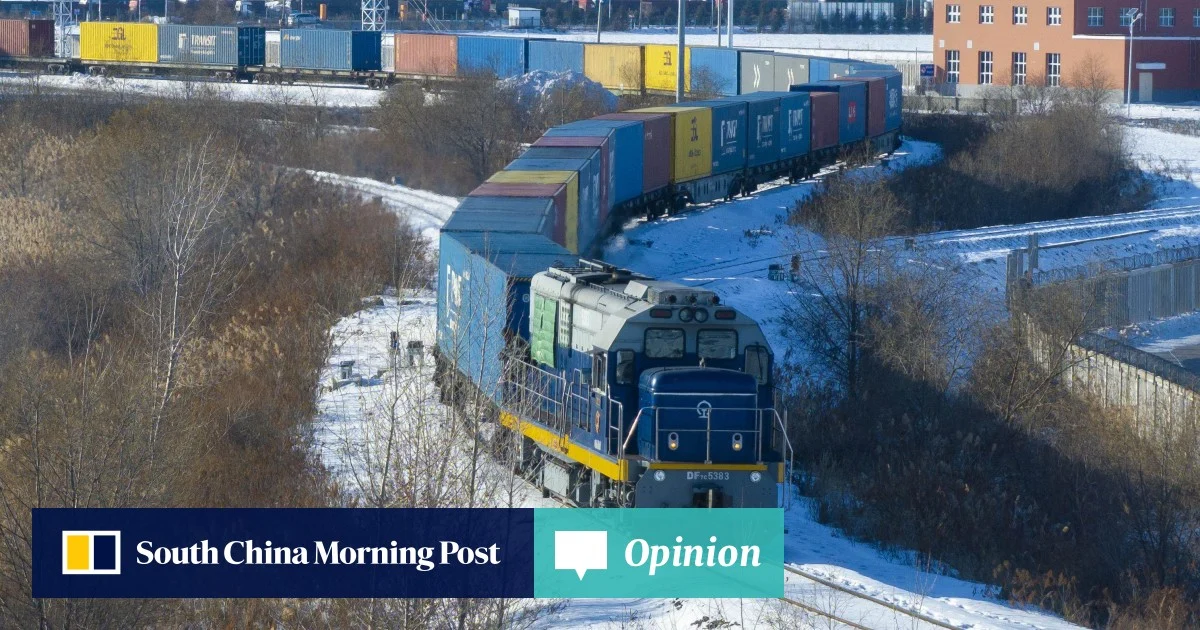
The China-Europe railway network has evolved in the past decade from a nascent logistical experiment into a growing commercial alternative to maritime and air freight. In the wake of the US-Israel war on Iran, it might now be assuming an unanticipated role as a key security provider for transcontinental supply chains.
What began as sporadic trial runs has matured into a sprawling web of rail connections that currently links 235 cities across 26 European countries with more than 120 Chinese cities.
This growth is being propelled by economic calculus as well as strategic infrastructure investments and geopolitical recalibrations. Notably, the rise of the trans-Caspian route, also known as the Middle Corridor, has added resilience and diversification to the network, reducing dependence on Russia and opening new commercial and political possibilities for both China and Europe.
The Covid-19 pandemic acted as a catalyst as air freight capacity collapsed and sea lanes faced port congestion and container shortages. The railway demonstrated some degree of reliability, carrying personal protective equipment and vaccines at critical moments, which enhanced its reputation among logistics firms.
Between 2020 and 2023, the number of China-Europe goods train trips doubled, surpassing 17,000 annually. This commercial uptake was supported by bilateral customs agreements, standardised container tracking and coordinated border procedures.
A key geographic and strategic evolution has been the increasing prominence of the trans-Caspian corridor. Following Russia’s invasion of Ukraine in 2022, sanctions and geopolitical risks prompted Chinese and European operators to accelerate investment in the Middle Corridor, which traverses Kazakhstan, the Caspian Sea, Azerbaijan, Georgia and Turkey before entering Eastern Europe.