World
Lindt’s Easter chocolate bunny suffers sales drop over price hike and Iran war

Lindt’s Easter bunny has less spring in his hop. The Iran war, shoppers feeling less well off and a price hike have all contributed to a drop in sales at the luxury chocolate giant.
Sales by volume over the past six months fell by 7.5 per cent after Lindt had pushed up its prices by 11.8 per cent, despite its half-year sales growing 4.3 per cent organically.
In their half-year report, the Swiss company said that the number of tourists from Asia and the Middle East to Europe has fallen due to the ongoing conflict in the Middle East, which has seen the US and Iran trade strikes for several months.
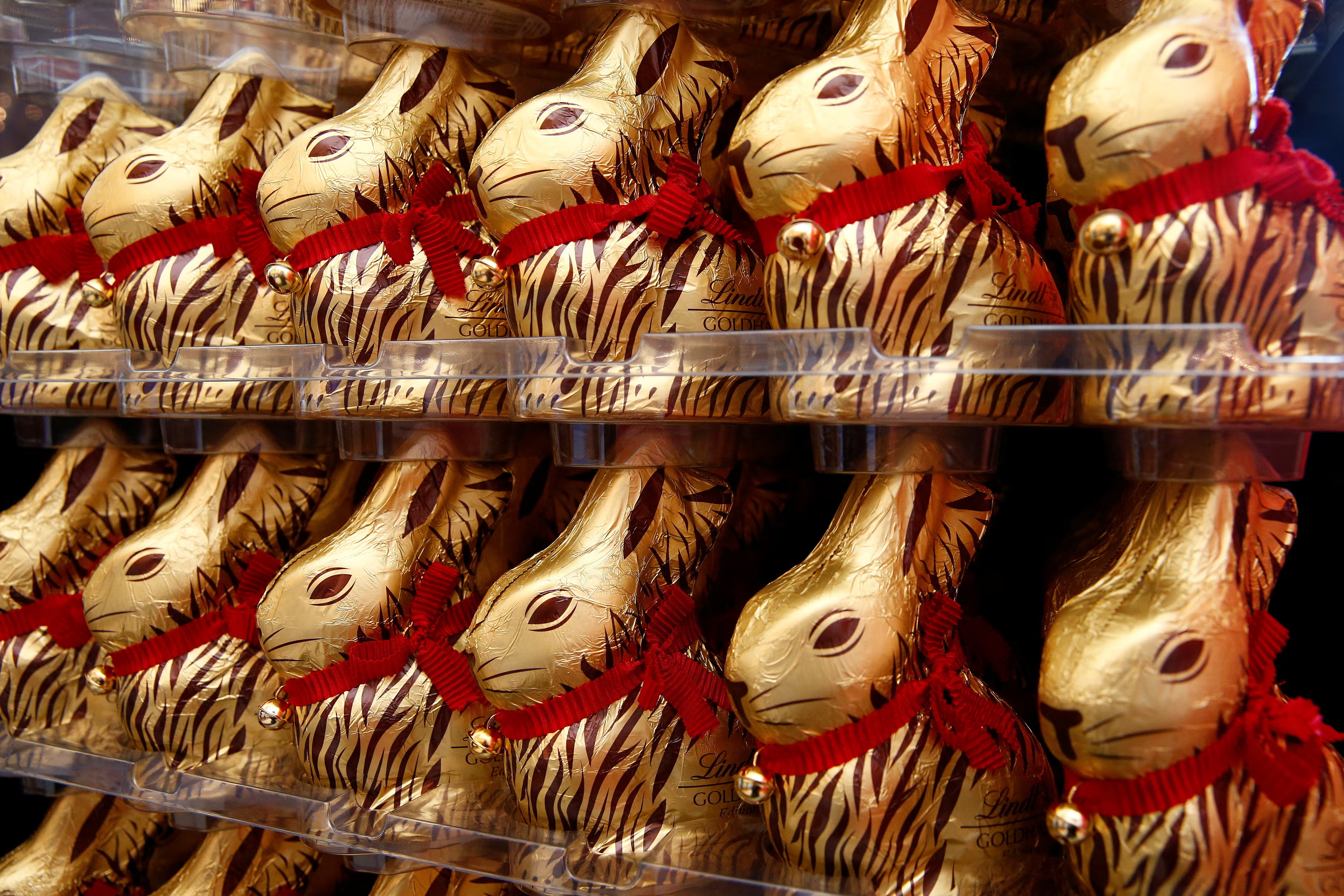
Lindt is known for its chocolate Easter rabbits wrapped in gold foil, with red ribbons and a bell around their necks.
Reporting its results from the first six months of 2026, the company said: “Europe recorded an organic sales decline by 2.1 per cent, reflecting weaker Easter business, softer demand amid lower consumer sentiment and reduced tourism flows from Asia and Middle East due to geopolitical uncertainties.
“After strong double-digit growth in recent years, performance was impacted by more price-sensitive and mature markets such as Germany, Switzerland and the UK.”
It said airport sales dropped because of Middle East conflicts and fewer air passengers, but global sales rose despite fewer tourists and the unprecedented heatwave in Europe.
Lindt said that because of the sales drop it had adjusted prices in selected markets and boosted marketing in certain regions.
The company has additionally found that sales are experiencing a surprising surge among users of weight-loss drugs in the US.
But forecasters say meteorological phenomenon El Niño, which means even higher global temperatures than usual, is likely to develop in the coming months, and its effects are expected to hit cocoa production.
The United Nations weather agency has raised its forecast for the rapid emergence this year of a strong El Niño, which is particularly risky for cocoa.
The company’s chief financial officer Martin Hug that even without El Niño, the next cocoa crop would not be as strong as the current one.
He said chocolate demand was likely to rise while cocoa production falls.