World
Kenyan conservationists reintroduce rare, critically endangered species into the wild

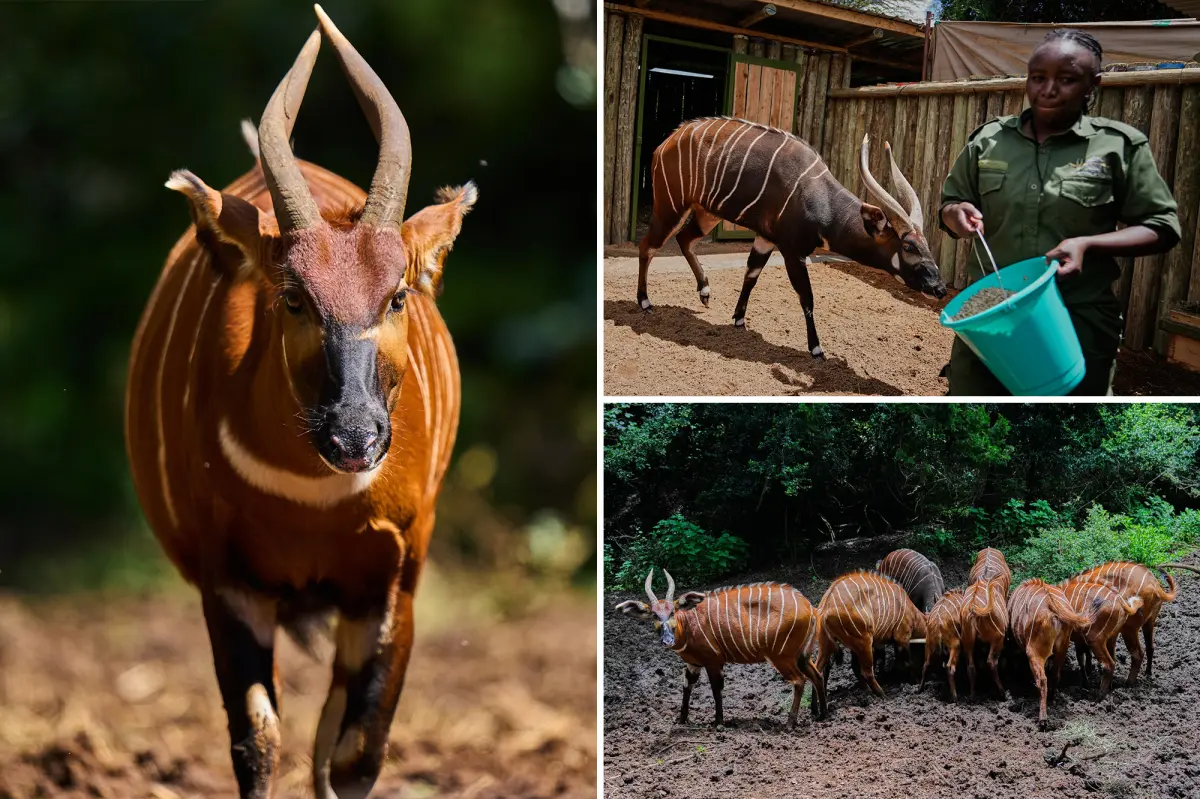
NANYUKI, Kenya (AP) — The mountain bongo has become the ghost of the forest, hard to spot amid the dense shrubs due to its ability to camouflage.
A critically endangered species, the animal is being slowly reintroduced into the wild by conservationists to increase the number of the rare antelope that are indigenous to Kenya’s forests.
The mountain bongo is a rare antelope known for its brown skin and distinct white stripes. With fewer than 100 individuals left in the wild, a conservancy based in Kenya is breeding them and slowly reintroducing them into the wild, with a target of 750 wild bongos by 2050.
Located on the misty slopes of Kenya’s highest mountain, Mount Kenya, and on the edge of the forest, the 1,250-acre Mount Kenya Wildlife Conservancy in the Nanyuki area has been restoring the survival instincts of zoo-bred bongos.
They want to ensure the animals can feed without human assistance, escape from predators, and build a strong immunity against diseases in the wild.
Last week, the conservancy imported a new batch of four male bongos from the European Association of Zoos and Aquaria though the Czech Republic.
These new arrivals, currently quarantined and under constant observation, will interbreed with descendants of 18 bongos that arrived at the conservancy in 2004 from the United States to ensure a more diverse genetic pool.
The conservancy’s head, Dr. Robert Aruho, says inbreeding among bongos with similar genes is discouraged while rebuilding the population of this critically endangered species.
“We want bongos that are not only strong in body, but strong in the genes they pass to the next generation,” he said.
Bongos are native to Kenya’s Mount Kenya, Aberdare, Eburu and Mau forests, which play a key role in protecting the forests that are vital to the country’s water supply.
The last wild bongo was spotted in the Mount Kenya forest in 1994 before the conservancy reintroduced the first ten bongos to the wild in 2022.
Today, they roam among the orange climber vines and shrubs that form part of their favorite plants.
The bongo population dwindled after thousands of them died in disease outbreaks in the 1960s.
In the 1980s, conservationist Don Hunt exported 36 of the species to the US as insurance to be bred in captivity, with a plan to return them to the wild when conditions improved.
When the Mount Kenya Wildlife Conservancy was opened in 2004, 18 descendants of these bongos were imported and have since interbred, bringing the conservancy’s population to 102 bongos.
Caroline Makena, 33, grew up in the Mount Kenya region and remembers hearing stories about bongos from her grandmother, who said they were her community’s favorite bush meat.
However, Makena never got to see one until she came to work as a gardener at the conservancy.
“I never knew the bongos were this beautiful, and I think my community loved them not just for the meat but because of their beauty,” she said.
The bongos are shy and can camouflage despite their distinct white stripes, and these attributes are critical for their survival in the wild.
Andrew Mulani, the bongo program assistant at the conservancy, said the bongos are monitored for months before being reintroduced into the wild to ensure that the shyest ones are selected because docile animals would fall easily to predators.
His most fulfilling moment was when the fourth calf was born in the wild last year, an indication that the bongos are thriving in their native habitat and that their population will certainly increase.
Bongos have a gestation period of nine months, a factor that has negatively impacted their slow population growth.
They are also sensitive and react to some plants and weather conditions compared to other species in the antelope family that thrive in the same ecosystem.
As the team of conservationists in Mount Kenya races to save the critically endangered species, supplementing the bongos’ shrub diet with special nutritious pellets, thousands of tourists who visit the conservancy annually marvel at their spiraled horns, hoping the ghost of the forest will become a more common sight in Kenya’s forests.