Breaking
Justice Can’t Restore My Legs And Eye; Govt Should Go After Terrorism Sponsors— Owo Attack Survivor

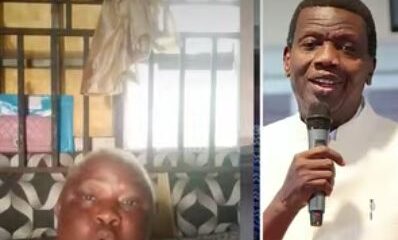
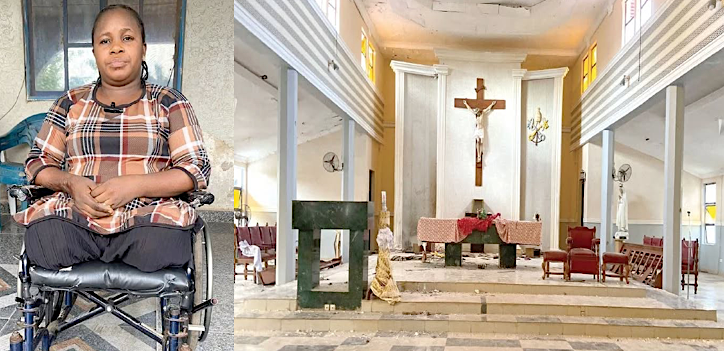
Four years after the deadly terrorist attack on St. Francis Catholic Church in Owo, Ondo State, one of the survivors, Margaret Attah, has urged the government to go beyond prosecuting convicted attackers and focus on identifying and bringing to justice those who financed and orchestrated the assault.
Attah, a registered nurse with the Ondo State Hospital Management Board, made the appeal while reflecting on the June 5, 2022, attack that claimed dozens of lives and left her permanently disabled after losing both legs and her left eye.
Speaking on the recent court judgment against some of the convicted terrorists, she said while the verdict represented a measure of justice, it could not undo the devastating consequences of the attack.
“It is okay by me. From the beginning, I was not bitter because I knew they were not acting alone. Some people sent them,” she said.
“Even if they are jailed, it cannot bring back what has been lost. The dead cannot return, and my legs and eye cannot be restored. However, at least justice has been served, though it came after four years.”
Recounting the horrifying events of Pentecost Sunday, June 5, 2022, Attah said she attended the church service with her husband, three children and mother-in-law and was seated in the choir gallery when the attack began.
According to her, the congregation initially mistook the first gunshots for harmless sounds before panic erupted as church officials confirmed armed men had surrounded the premises.
“Some of the church wardens went outside to check and returned shortly afterwards, saying there were gunmen outside and that everyone should try to hide,” she recalled.
She said worshippers scrambled for safety as the attackers stormed the church, firing indiscriminately and throwing explosives into the building.
“I ran to the altar where many people had already lain down. I lay on top of some of them, while others were on top of me. Gunshots started coming from every direction,” she said.
“Then I heard a loud explosion, which I later learnt was dynamite. After that blast, everything went blank.”
Attah said she regained consciousness surrounded by blood and struggling to speak or hear clearly.
“I realised I was still alive, but when I touched my body, I saw blood everywhere. I touched my eyes and legs, but I could not speak as my voice was gone,” she said.
She was eventually evacuated to the Federal Medical Centre, Ondo, where she received treatment alongside other victims.
The attack left about 41 worshippers dead and scores injured. Due to the severity of her injuries, Attah lost both legs and her left eye and has since relied on a wheelchair and artificial replacements.
Despite the traumatic experience, she said her faith remained unshaken and she continues to attend church services.
“If I do not go to church and something is destined to happen, it will still happen,” she said, noting that fear initially gripped many survivors when the church reopened.
On the broader issue of insecurity, Attah called on authorities to intensify efforts to secure lives and property, rescue kidnapping victims and dismantle criminal networks operating across the country.
“The government must find a way to stop these attacks. They should rescue those still in captivity and strengthen security so citizens can live in peace,” she said.
“If people cannot sleep with their eyes closed or travel without fear, then something is wrong. The government must act decisively on insecurity.”
She maintained that prosecuting the gunmen alone was insufficient, insisting that the masterminds behind the attack remained the real targets that law enforcement should pursue.
“The attackers are just tools in the hands of sponsors. The government should go after those who sponsored the attack,” she stated.
Attah also dismissed calls by some residents for the convicted terrorists to be brought to Owo, arguing that such a move would serve little purpose.
“I do not support that. Bringing them to Owo will not restore my legs or my eye. Nothing can reverse what has happened,” she said.
Reflecting on life after the tragedy, the nurse expressed gratitude to her family, government agencies, humanitarian organisations and individuals who supported victims during their recovery.
She disclosed that treatment costs were fully covered through government intervention and assistance from local and international organisations, including the World Health Organization.
“I thank God for my family and well-wishers. My husband, relatives and Nigerians at home and abroad supported us,” she said.
Although she was provided with prosthetic limbs, Attah revealed that they were not effective for her needs and she eventually abandoned them, relying instead on a wheelchair for mobility over the past four years.