World
Iran war has cost 25 billion dollars so far, Pentagon official tells Congress

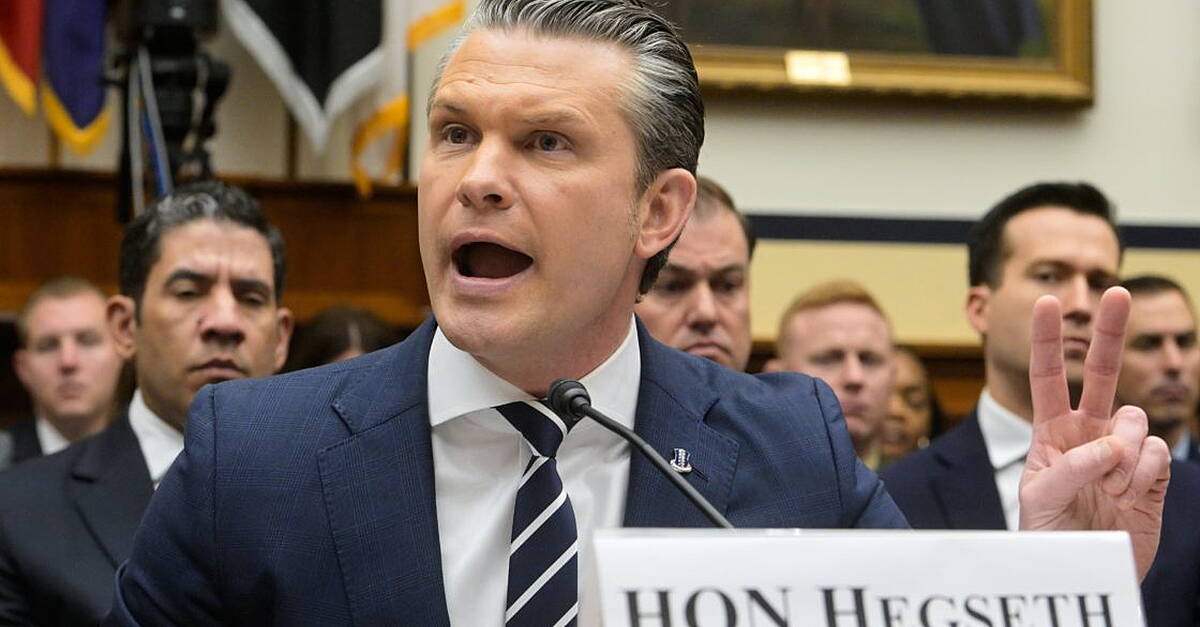
Sceptical Democrats have confronted US defence secretary Pete Hegseth for the first time since the Trump administration went to war with Iran, bringing tense exchanges over a costly conflict that has been waged without congressional approval.
The hearing before the House Armed Services Committee was being held to discuss the administration’s 2027 military budget proposal, which would boost defence spending to a historic 1.5 trillion dollars.
Mr Hegseth and the chairman of the Joint Chiefs of Staff, General Dan Caine, are expected to stress the need for more drones, missile defence systems and warships.
Democrats quickly pivoted to the ballooning costs of the war, the huge drawdown of critical US munitions and the bombing of a school that killed children.
Some politicians may also question President Donald Trump’s dealings with allies and how prepared the military was to shoot down swarms of Iranian drones, some of which penetrated US defenscs and killed or wounded American troops.
“You can win a whole lot of little small battles and lose the war, which is why you don’t stumble into the war in the first place,” said Adam Smith, the top Democrat on the committee.
“As I look at it, the strategy seems to be to use as much violence, as much threats, as much coercion as possible to bend the world to our will. I think that is a very dangerous strategy.”
Mr Hegseth fired back at Democrats,saying their doubts over the conflict are one of the biggest problems facing America’s military operations.
“The biggest challenge, the biggest adversary we face at this point are the reckless, feckless and defeatist words of congressional Democrats and some Republicans,” Mr Hegseth said.

The chief financial official for the Pentagon told politicians that the estimated cost of the war so far is 25 billion dollars.
Jules Hurst III, the acting undersecretary of war for finances, said most of that money was spent on munitions. The military has also spent money on running the operations and replacing equipment.
While a fragile ceasefire is now in place, the US and Israel launched the war on February 28 without congressional oversight.
House and Senate Democrats have failed to pass multiple war power resolutions that would have required Mr Trump to halt the conflict until Congress authorises further action.
Republicans have said they will keep faith in Mr Trump’s wartime leadership, for now, citing Iran’s nuclear programme, the potential for talks to resume and the high stakes of withdrawal.
But they are eager for the conflict to end, and some are eyeing future votes that could become an important test for the president if the war drags on.
Republican Mike Rogers, chairman of the Armed Services Committee, opened Wednesday’s hearing by focusing on Mr Trump’s call to increase military spending.
He pointed to recent increases in defence spending by China, Russia and Iran.
“We don’t have enough munitions, ships, aircraft or autonomous systems to ensure dominance against every adversary,” Mr Rogers said.
“They are spending more of their GDP on defence than we are.”

Iran’s closing of the Strait of Hormuz, a vital shipping corridor for the world’s oil, has sent fuel prices skyrocketing and posed problems for Republicans ahead of the midterm elections.
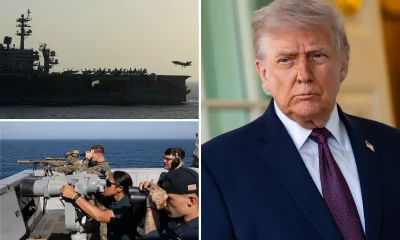
The US has responded with a Navy blockade of Iranian shipping and further built up its military forces in the region. Three American aircraft carriers are in the Middle East for the first time in more than 20 years.
The countries appear locked in a stalemate, with Mr Trump unlikely to accept Tehran’s latest offer to reopen the strait if the US ends the war, lifts its sea blockade and postpones nuclear talks.
Mr Hegseth has avoided public questioning from politicians about the war, although he and Mr Caine have held televised Pentagon briefings.
Mr Hegseth has mostly taken questions from conservative journalists, while citing Bible passages to castigate mainstream outlets.
The committee is also likely to go beyond the budget and even the war to question Mr Hegseth’s ousting of top military leaders.
Besides navy secretary John Phelan’s departure last week, Mr Hegseth recently ousted the Army’s top uniformed officer, General Randy George, as well as several other top generals, admirals and defence leaders.
“Tell us why. You know these are important positions. We are in a war posture with Iran,” said North Carolina senator Thom Tillis.
Mr Tillis, who was a crucial vote to confirming the defence secretary, added that Mr Hegseth’s management of the Pentagon had caused him to have second thoughts on his support.
“He may be able to clean it up, but on its face, you don’t go through the number of highly reputable, senior-level officials, admirals and generals,” Mr Tillis added.
Austin Scott, a Georgia Republican, condemned Mr George’s termination during a House Armed Services Committee hearing last week, saying that “some of us are not through asking the questions about that”.
“I think the firing of General George was an extreme disservice to the United States Army,” Mr Scott said.
“And I think it was reckless conduct.”