World
Trump orders aides to prepare for extended blockade on Iran — as Tehran’s economy collapses

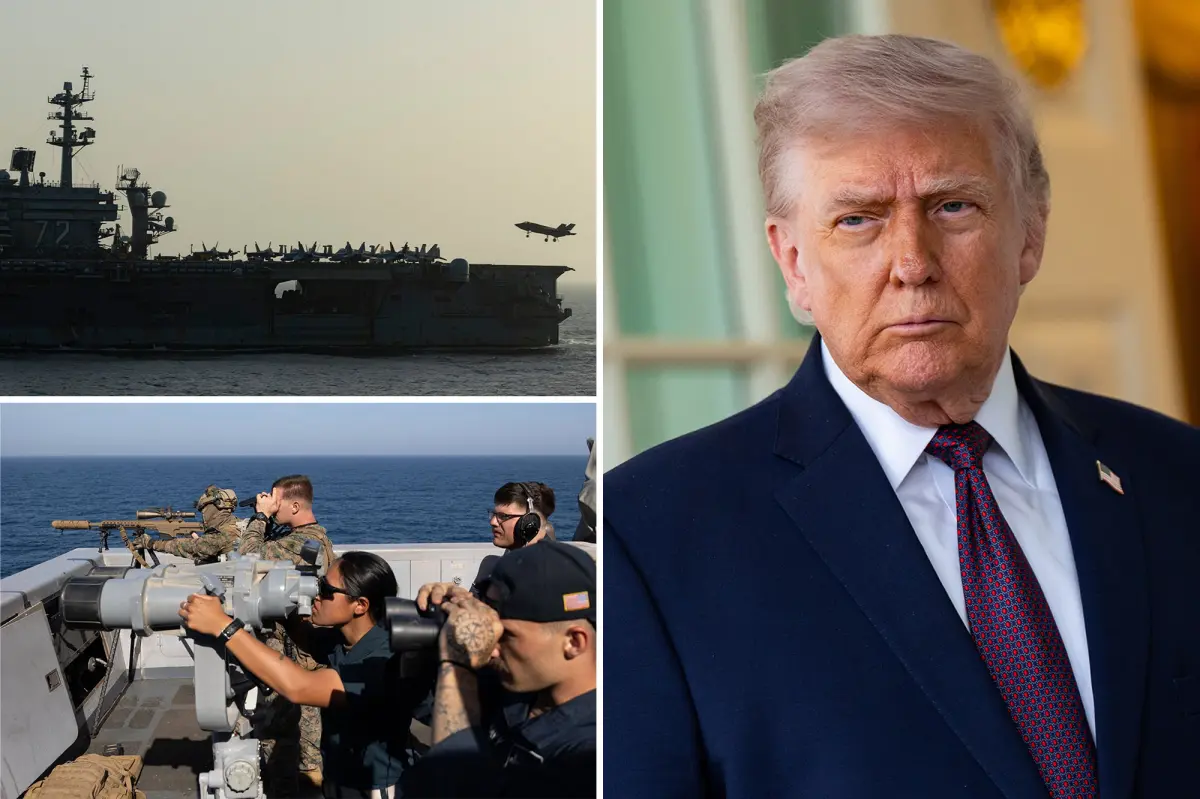
President Trump has instructed his aides to prepare for an extension of America’s naval blockade of Iran to squeeze Tehran’s already struggling economy, officials said.
To force Iran to get serious about negotiating and giving up its nuclear material, Trump is committed to a longer halt of Iran’s oil exports, the lifeblood of the Islamic regime, the Wall Street Journal reported.
The move comes as experts estimate that Iran has at most 12 to 22 days of oil storage left, as Tehran has nowhere to send its crude under the blockade.
Trump believes that an extension of the blockade, one of the key topics of his meeting Monday in the Situation Room, carries the least risk compared to resuming the war or simply walking away from it, officials told the outlet.
The move comes as the Islamic Republic’s economy is in a death spiral.
At least one million people have lost their jobs since the start of the war, according to early estimates cited by Gholamhossein Mohammadi, an official at Iran’s Labor and Social-Affairs ministry, and reported by the WSJ.
The cost of living has also soared, with the annual inflation rate reaching an eye-watering 67% in the month through mid-April, compared to the same period last year, according to Iran’s central bank.
“Living is not affordable anymore,” Mahdi Ghodsi of the Vienna Institute for International Economic Studies told the outlet.
“Iran is at its weakest point.”
Trump allegedly made the decision to extend the blockade after Iran proposed a three-step offer to reopen the Strait of Hormuz, a key oil choke point that Tehran has kept shut since the war began on Feb. 28.
Iran’s offer, however, called for the nuclear talks to be postponed, which Trump believed was proof that Tehran was not negotiating in good faith and was trying to string the US along, according to the WSJ.
Trump has maintained that Iran cannot be allowed to keep its enriched uranium, but the administration has kept the fragile cease-fire intact after Iran’s retaliatory strikes threatened vital energy infrastructure in the Gulf.
Iran, meanwhile, used the Strait of Hormuz to move millions of barrels of oil a day through its shadow fleet, all while keeping the path shut to anyone who refused to pay a toll or aligned with the US and Israel.
The US naval blockade has since shut down the strait completely, with Iran now struggling to store its unsold oil, forcing it to load up tankers as floating storage with nowhere to go.
With its on-shore and tanker storage space being slowly depleted, the Islamic Republic has about two to three weeks left before it’s forced to curb production, the Kpler research firm warned Tuesday.
The regime is believed to have at most seven weeks before it’s forced to shut down oil production, a tricky process that threatens to permanently damage its abundant wells, experts previously told The Post.
With a halt to Iran’s exports set to set gas prices soaring, the situation has boiled down to who is able to withstand more pain, with Trump confident that Iran is already on the brink, as he described the Islamic Republic on Tuesday as being in a “state of collapse.”
“Thanks to the successful blockade of Iranian ports, the United States has maximum leverage over the regime,” White House spokeswoman Anna Kelly told the WSJ.
“The president will only accept a deal that protects the national security of our country,” Kelly added.