World
If Lebanon has no future, neither does the region

Nearly half a century after Israeli tanks first crossed into southern Lebanon, a troubling question hangs over the region: how many times can the same military strategy fail before it is recognised as a political dead end?
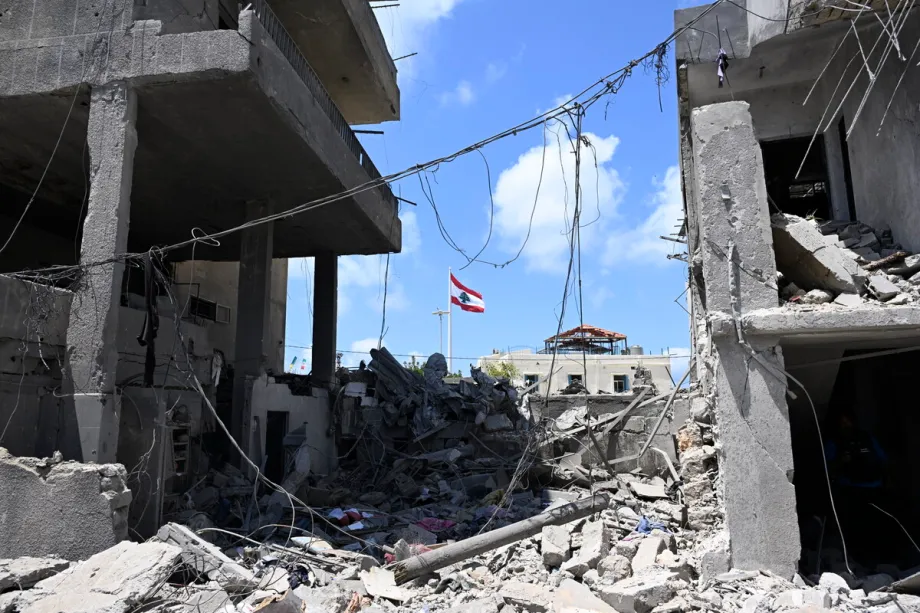
From Operation Litani in 1978 to the invasion of 1982, from the 2006 war to the current 2026 incursion, Israel has repeatedly entered Lebanon under the banner of security. The justification has remained remarkably consistent: neutralise cross-border threats, establish a buffer zone, protect northern Israeli communities, and restore deterrence. Yet the historical record tells a different story. Each campaign has inflicted immense destruction, generated mass displacement, reshaped Lebanon’s political landscape, and ultimately ended with Israeli withdrawal rather than strategic resolution. The cycle continues not because it works, but because no credible alternative has emerged.
The numbers alone are staggering. Israel’s 1978 invasion killed an estimated 1,100–1,200 people and displaced roughly 285,000 civilians. The far larger 1982 invasion deployed around 76,000 troops, culminating in the three-month siege of Beirut, and contributed to civilian death tolls estimated between 17,000 and 19,000. The Sabra and Shatila massacre that followed claimed another 1,300–3,500 lives. The 2006 war killed more than 1,100 Lebanese civilians and displaced approximately one million people. The current 2026 campaign has already reportedly resulted in more than 3,400 deaths, over 10,000 injuries, and the displacement of around 1.05 million people—almost one-fifth of Lebanon’s population.
Yet beyond the statistics lies something even more profound: the steady erosion of confidence in the ability of military power to produce political stability.
United Nations Security Council Resolution 1701 has never been fully implemented. The Lebanese state lacks the capacity—or willingness—to exercise full sovereignty over its southern territories. From this perspective, Israel argues that establishing a security zone and degrading Hezbollah’s capabilities are necessary steps to protect civilians living in northern Israel.
READ: Hezbollah rejects Lebanon-Israel ceasefire agreement
This security narrative resonates with many policymakers concerned about state responsibility and border defence. No sovereign nation can be expected to tolerate sustained attacks on its territory. Yet the deeper strategic question remains unresolved: if repeated invasions have failed to eliminate Hezbollah for nearly five decades, what evidence suggests the outcome will be different this time?
The 1982 invasion also had unintended consequences, helping to create an environment in which Hezbollah would later emerge as a significant political and military actor. The organisation’s legitimacy among segments of Lebanon’s Shiite population was built not despite Israel’s occupation but because of it. History therefore presents an uncomfortable paradox. Military campaigns intended to eliminate threats have repeatedly contributed to the conditions that generate new threats.
This is where the current conflict begins to transcend Lebanon and enter the broader debate about twenty-first-century warfare.
History has repeatedly highlighted the limitations of coercive military campaigns against deeply entrenched non-state actors, particularly when political grievances remain unresolved. Contemporary conflicts increasingly demonstrate that military superiority does not automatically translate into political victory. Russia discovered this in Afghanistan and Chechnya. The United States confronted it in Vietnam and Iraq. Israel itself encountered it in southern Lebanon after maintaining an occupation zone for nearly two decades before withdrawing in 2000.
Israeli forces have advanced through areas laden with historical memory, including the ancient city of Tyre and the strategically significant Beaufort Castle. Beaufort is not merely a medieval fortress overlooking southern Lebanon. It is a monument to the region’s recurring conflicts, having served as an Israeli military position during the occupation years before becoming a symbol of eventual withdrawal. Its recapture in 2026 carries a resonance extending far beyond military geography. It evokes a haunting sense of historical repetition, as though the region has become trapped in a strategic time loop.
Meanwhile, reports of evacuation orders stretching beyond the Zahrani River, strikes affecting hospitals and residential districts, and widespread civilian displacement have deepened international concern. Critics argue that the scale of destruction raises difficult questions regarding proportionality and the effectiveness of current military doctrine. Humanitarian organisations have warned that repeated patterns of displacement and infrastructure damage risk undermining the distinction between military objectives and civilian suffering.
What makes the present moment particularly alarming is that diplomacy appears increasingly detached from events on the ground.
READ: Yemen’s Houthi leader signals military readiness amid regional escalation