World
IDF says Hamas commander, 4 terrorists killed in Gaza for planning attacks on troops

A Hamas commander who “posed a threat” to Israeli forces in the Gaza Strip was killed in a strike on Tuesday, the military announced, as it continued to launch attacks against targets it said were terror operatives endangering troops in the enclave.
The Tuesday strike in southern Gaza killed Adel Jihad Mohammad Asfour, a platoon commander in Hamas’s military wing, according to the IDF statement on Wednesday.
During the war, Asfour advanced sniper and explosive device attacks against Israeli troops, the military said, adding that recently, alongside advancing “imminent” attacks, he also worked to rebuild Hamas’s capabilities.
“The terrorist posed a threat to IDF troops operating in the Gaza Strip and was eliminated in an aerial strike,” the IDF said.
The military also identified on Wednesday four other Hamas operatives who they said were advancing attacks on troops and were killed in strikes in the Gaza Strip in the past week.
The military named the operatives as Wael Mahmoud Ali Labad and Muaz Mohammad Hassan Ahmad, both anti-tank operatives; Sameh Abu Kamil, a platoon commander; and Akram Ashraf Hamad Labad, a sniper operative.
Additionally, several rocket-launching tunnel shafts were destroyed in strikes on Monday, the IDF added.
The military published footage showing some of the strikes.
במספר תקיפות להסרת איום: צה”ל חיסל ארבעה מחבלים והשמיד פירי שיגור של ארגון הטרור חמאס
צה”ל תקף במהלך השבוע האחרון בצפון רצועת עזה, וחיסל ארבעה מחבלים מהזרוע הצבאית של ארגון הטרור חמאס שקידמו מתווי טרור נגד כוחות צה”ל הפועלים ברצועת עזה.
המחבלים שחוסלו:
* ואיל מחמוד עלי לבד -… pic.twitter.com/aw7GA2pCAW— צבא ההגנה לישראל (@idfonline) July 1, 2026
Hamas-affiliated Palestinian media outlets in Gaza also reported on Wednesday that one person had been killed and four were wounded in a strike in the Sheikh Radwan neighborhood of Gaza City.
Earlier Wednesday, another man, identified as Mohammad Jundiya, was reportedly killed in a separate strike in Gaza.
Footage from his funeral shows armed men firing into the air.
As of Wednesday evening, the IDF had not commented on either strike.
شيّع فلسطينيون في مدينة غـ ـزة، جثمان الشـ ـهيد محمد جندية، الذي استُـ ـشهد جراء قصف إسرائيلي استهدف شارع عمر المختار وسط المدينة. pic.twitter.com/nkD4x3FRZ1
— السبيل الإخباري (@assabeeldotnet) July 1, 2026
Alongside the strikes across Gaza, the IDF has slowly been pushing out the boundaries of the area inside the enclave still under its control, saying it now controls at least 60 percent of the Strip, rather than the roughly 53% following its pullback on the first day of the truce. Prime Minister Benjamin Netanyahu said last month he had ordered the military to retake additional territory, amounting to 70% of the enclave.
In the areas not controlled by Israel, Hamas remains in place as the enclave’s de facto government, as power will only be handed over to a transitional authority once the terror group agrees to give up its weapons.
Although battered by war, the terror group is reported to be maintaining its control over the Strip by executing its opponents and those it views as posing a threat to its rule.
A report on Sunday said the IDF assessed that Hamas is producing hundreds of explosive devices and anti-tank missiles every month, recruiting new fighters and rebuilding underground infrastructure.
Over 1,000 Palestinians have been killed since the start of the ceasefire in October 2025, according to the Hamas‑run health ministry in Gaza, which does not distinguish between combatants and civilians.
Five Israeli soldiers have been killed during the same period.
NCAG touts ‘highly productive’ meetings for Gaza plans
The National Committee for the Administration of Gaza (NCAG) said on Wednesday its members held a series of “highly productive” meetings in Cyprus to prepare for the next phase of its efforts to alleviate the suffering of Palestinians in Gaza.
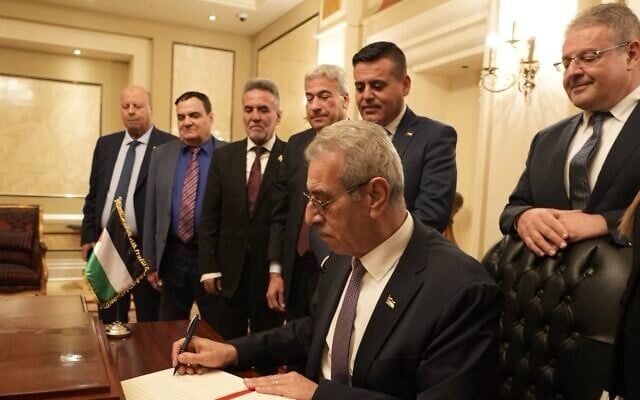
Participating in those meetings were representatives from Nickolay Mladenov’s Office of the High Representative and former UK prime minister Tony Blair’s Institute for Global Change, NCAG said in a statement.
“We concentrated on what can be done immediately, including initiatives and projects to ease conditions on the ground. We reviewed plans for reconstruction, security and governance, and we finalized the institutional arrangements that will ensure the transparency and accountability required by international donors,” the statement continued.
The NCAG statement reiterated the Palestinian technocratic government’s commitment to US President Donald Trump’s 20-point plan for Gaza and says it is “prepared to take all necessary steps — in coordination with the Board of Peace and the Office of the High Representative — in order to assume its responsibilities once the right conditions are met.”
It didn’t specify what those conditions are, but the Board of Peace has conditioned NCAG’s entry into Gaza on Hamas agreeing to disarm, while the terror group argues that Israel must first cease violations of the ceasefire deal reached in October.
This week’s meetings in Cyprus built on a workshop that was held in Cairo last week and “are part of a broader process to ensure we have every tool necessary to serve the Palestinian people of Gaza,” NCAG said.
“Further steps will be set out and announced in due course,” the statement added.
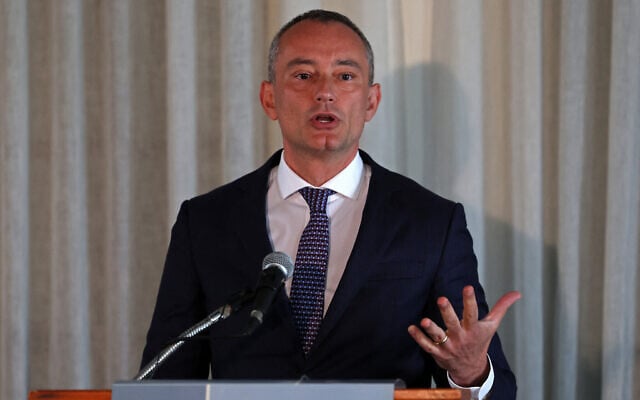
In recent months, the Board of Peace’s Gaza envoy, Nickolay Mladenov, has insisted that the main obstacle preventing the NCAG from entering Gaza is Hamas’s refusal to give up its weapons.
Diplomats from each of the Middle Eastern mediating countries — Egypt, Qatar and Turkey — told The Times of Israel that Hamas has sought to drag out negotiations on the issue. They also argued that Israel’s refusal to adhere to the terms of the first phase of the October 2025 Gaza ceasefire has posed a major obstacle as well.
No role for UNRWA in ‘the new Gaza’
Additionally, on Wednesday, the US-led Board of Peace overseeing the postwar management of Gaza indicated that the UN agency for Palestinian refugees will not be allowed to play a future role in Gaza.
“UNRWA has no place in the new Gaza. We are turning the page on the complex of perpetual aid dependency and conflict. The people of Gaza deserve better,” the Board of Peace tweeted.
It appeared to be the first time that the Board of Peace has voiced its stance regarding UNRWA, which Israel and the US argue has become an irredeemable organization due to its ties to Hamas.
Israel has taken measures to limit UNRWA’s ability to operate in Gaza, the West Bank and East Jerusalem, but its infrastructure continues to be used to facilitate the delivery of humanitarian aid in the Strip.
UNRWA has no place in the new Gaza. We are turning the page on the complex of perpetual aid dependency & conflict. The people of Gaza deserve better. https://t.co/MttkJqX1Np
— Board of Peace (@BoardOfPeace) July 1, 2026
The statement from the Board of Peace sparked outcry from the Palestinian Authority’s foreign ministry, which stressed the importance of UNRWA’s work in providing for Palestinians.
The PA statement also “rejects all terminology aimed at fragmenting Palestinian Territory, including the term ‘New Gaza,’ which seeks to isolate the Gaza Strip from its natural surroundings, as well as the term ‘the people of Gaza.’”
However, the PA statement was careful to reiterate Ramallah’s support for Trump’s 20-point plan as well as the establishment of the NCAG.
Meanwhile, Israel has relocated its screening facility for Palestinians returning to the Gaza Strip from Egypt to the Kerem Shalom Crossing, instead of a military post in Rafah.
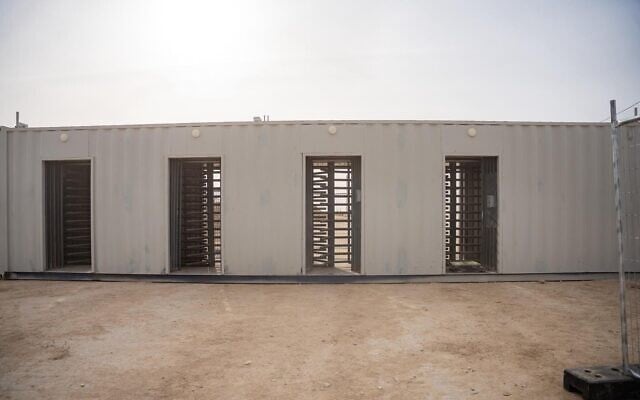
The Coordinator of Government Activities in the Territories (COGAT) announced on Wednesday that as part of the ceasefire agreement, “a pilot has been launched to relocate the Israeli security screening conducted for residents returning from Egypt to the Gaza Strip via the Rafah Crossing.”
Previously, Palestinians returning to Gaza from Egypt would be screened at the IDF’s “Regavim” checkpoint, located in Rafah.
The screening and identification procedures have now been relocated to Kerem Shalom, and they will be conducted by the Defense Ministry’s Land Crossings Authority, alongside other security bodies, according to COGAT.
“This is an operational adjustment intended to streamline the crossing process, enhance screening capabilities, and ensure the continued safe and efficient operation of the mechanism,” COGAT said.
COGAT said this change only relates to the Israeli screening process. The movement through the Rafah Crossing itself remains unchanged, including “coordination with Egypt and the World Health Organization (WHO), Israel’s prior security approval process, the supervision of the European Union Border Assistance Mission (EUBAM), and the mechanism governing the departure of residents from the Gaza Strip to Egypt.”