World
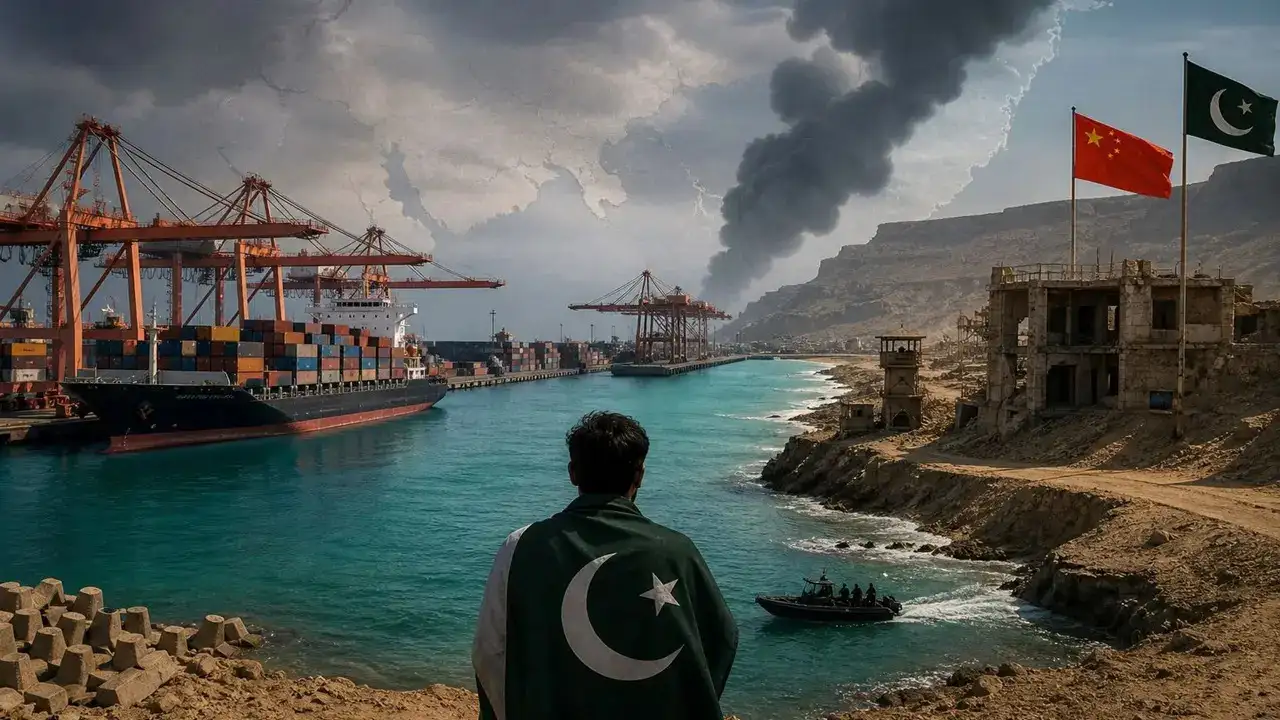
Gwadar’s Boom Is a Mirage: Inside Pakistan’s Fragile Port Surge

Gwadar is getting attention in global media once again. While Pakistan hypes up its latest traffic gains in the port city, meanwhile, Hangeng Trade Company, a Chinese meat-processing company located within the North Free Zone of Gwadar, has announced the closing of its factory due to the unworkable business environment and barriers that left their export shipments stuck. The statement serves as a clear message to potential investors in the context of a booming market Pakistan desperately tries to attract.
The statistics reported for Gwadar are impressive indeed. In April 2026, the port handled more than 11,000 shipping containers in just one month. To compare, Gwadar handled approximately 8,300 containers for the entire year of 2025. According to Pakistani officials, the results should be considered groundbreaking. However, this statement needs a clarification.
There are no strategic moves that resulted in Pakistan’s booming port activities. The reason behind the surge in the number of containers passing through the Gwadar terminal is a crisis in another place. It all started following the joint US-Israeli attack on Iran launched on 28 February. Iran, in its turn, restricted the passage in the Strait of Hormuz, and the US imposed a blockade on Iranian harbors starting from 13 April.
Under such circumstances, the search for alternatives has begun among cargo carriers. The order on the Transit of Goods through Territory of Pakistan Order of 2026 became effective immediately after its issuing on 25 April. The document was adopted on the basis of the bilateral agreement between Pakistan and Iran signed in 2008 on international road transport. Thus, the use of the agreement was initiated when the Strait of Hormuz did not leave much room for maneuvering.
As soon as the Strait of Hormuz stabilizes in the future, the strategy driving the current activities at the Pakistani port falls apart. Cargo that passes through Gwadar port does not go into Pakistan’s internal market; it is processed and kept here temporarily before it goes somewhere else. Thus, currently, Gwadar is working not as a trade point but as a logistic center. Pakistan takes advantage of the crisis in another country.
Also Read: From Land Blockades To Sea Attacks: The Expanding Security Problem Of Gwadar
The technological constraints play a significant role too. The designed depth at Gwadar port is 14 meters, although it can hardly be sustained by now due to expensive maintenance. Actually, the current depth at the port is around 12.5 meters, meaning that the ships with the draft ranging from 13 to 14 meters cannot dock at Gwadar. The only deep-water harbor in Pakistan currently remains Port Qasim at Karachi, keeping the depth of 16 meters.
Moreover, Gwadar port faces the problem of siltation, making the maintenance of the existing depth extremely expensive for the financially constrained Pakistan government. The plan to increase the depth of the port with berths located along the shoreline spanning 4.2 kilometers had reportedly fallen into disarray.
However, the economic side of things is crucial as well. When COPHC processes a container passing through Gwadar, 91% of its earnings goes to the owner of the port (i.e., Chinese company), leaving 9% to Pakistan. The ongoing discussions of the growing traffic figures in Gwadar port tend to ignore the fact that the main part of the earnings still goes to China rather than to Pakistan.
The security situation got even worse lately as the Baloch Liberation Army formed its “Hammal Maritime Defence Force” and carried out its first attack targeting Pakistan Coast Guards in the Jiwani area of Gwadar on April 13. Three crew members died. As can be seen, the movement decided to expand its attacks not only on land but also on water.
Throughout the region, the risk premium for a ship reached 1%, whereas before the conflict broke out, the premium made around 0.2%. Thus, the appearance of the local militant group attacking ships can hardly make the situation favorable for shipping companies.
On top of that, Pakistan’s foreign policy creates additional uncertainty for international businesses. The overland bypass route for Iranian cargo allowed the latter to avoid the Hormuz blockade. Consequently, Islamabad attracted Washington’s special interest since the US considers the bypass route the key method for Iran to bypass the sanctions imposed by the US. Therefore, Pakistan finds itself between two fires: Chinese pressure to keep the CPEC route and American pressure not to provide sanctions-breaking services to Iran.
The northern part of the route is affected too, with Pakistan entering into a full-scale military confrontation with Afghanistan. The operation Ghazab lil-Haq, launched by the Pakistani army against the Taliban regime ruling in Kabul, Kandahar, and Paktika, represents the first time Pakistan openly attacked the Afghan enemy, according to the country’s Defense Minister, who officially declared “the start of open war” with Afghanistan.
Even the brief ceasefire signed in March was broken numerous times, including at the end of April when Afghanistan accused Pakistan of crossing the border, whereas the latter responded with similar accusations in return. Under such circumstances, the northern route to the port gets completely cut.
The Chinese company closed its factory in Gwadar warned its potential competitors of the dangers associated with the investment projects in the Gwadar free zone.
All those factors together, including the temporary reasons behind the port’s increased activity, make the prospects of the port’s success rather questionable. Gwadar will face the problem of its inability to accommodate large container ships, the threat posed by the newly emerged maritime militia, a blocked northern route due to war, and a peculiar share system in which 91% of earnings remain in the hands of the Chinese company.