Topnews
Gowon Distances Self From Northern Pogroms, Backlash Follows Over Military Ruler Who Supervised The Highest Number Of Nigerian Killings Since Independence

ENUGU, NIGERIA – Former military Head of State, General Yakubu Gowon, has ignited nationwide outrage following public remarks attempting to distance himself from personal culpability regarding the anti-Igbo pogroms in the North and the subsequent Nigerian Civil War.
Gowon’s recent defensive posture has triggered a wave of condemnation from historians, regional leaders, and families of victims. Critics have fiercely rejected his attempt at self-exoneration, pointing out that as the commander-in-chief, he directly piloted the bloodiest war in Nigerian history and supervised the largest mass killing of Nigerian citizens since the country’s independence.
A Revisionist Narrative Rejected
During his address, General Gowon claimed that he should not be held personally responsible for the systematic slaughter of thousands of Igbo civilians in Northern Nigeria during the 1966 pogroms, which ultimately precipitated the 30-month civil war.
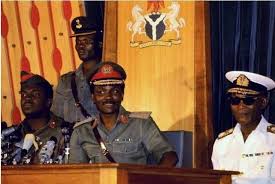
However, public response to his statement has been unsparing. Analysts and civic groups argue that Gowon’s administration failed to protect Easterners residing in the North, choosing political expediency over the constitutional defense of innocent human lives. The sudden push to rewrite his personal legacy is being viewed as an attempt to escape the severe historical judgment that defines his era.
Supervising Nigeria’s Bloodiest Chapter
The core of the criticism against Gowon rests on his direct command of the federal forces during the war, an era marked by unprecedented carnage. Under his supervision, an estimated two to three million people—predominantly Igbo civilians, including women and children—perished.
Historians point out that Gowon did not merely witness a tragedy; he actively presided over the administrative policies that caused it. The federal government’s enforcement of total land, air, and sea blockades against the Eastern region weaponized starvation, leading to the agonizing deaths of over a million children from Kwashiorkor and acute malnutrition. Critics maintain that this deliberate policy of starvation remains one of the worst state-sponsored humanitarian atrocities committed on the African continent.
The Myth of “No Victor, No Vanquished”
Following the surrender of Biafra in 1970, Gowon famously declared a policy of “No Victor, No Vanquished,” alongside his agenda of Reconstruction, Rehabilitation, and Reconciliation.
Decades later, the reality on the ground tells a vastly different story. Critics argue that Gowon’s reconciliation policy was a cosmetic public relations stunt. Immediately after the war, the federal government implemented structural policies that economically crippled survivors, including the controversial banking directive that stripped Easterners of their savings, leaving them with just twenty pounds regardless of their pre-war wealth. The continuous systemic, political, and economic marginalization of the Southeast region is viewed by many as a direct continuation of Gowon’s wartime structural hostilities.
The Unresolved Demands for Justice
Gowon’s remarks have reopened deep, unhealed national wounds, proving that the ghosts of the conflict cannot be buried by simple denials. Across the country, community leaders are demanding that instead of defensive revisionism, aging leaders like Gowon must offer unreserved public apologies and full institutional accountability.
As the debate rages, commentators observe that no amount of historical whitewashing can erase the hard facts of history. General Yakubu Gowon remains permanently etched in the national consciousness not as a peacekeeper, but as the military ruler who presided over the most catastrophic loss of Nigerian lives since the nation gained its independence.
Related