World
Government says $431 million allocated last month for 34 new West Bank settlements

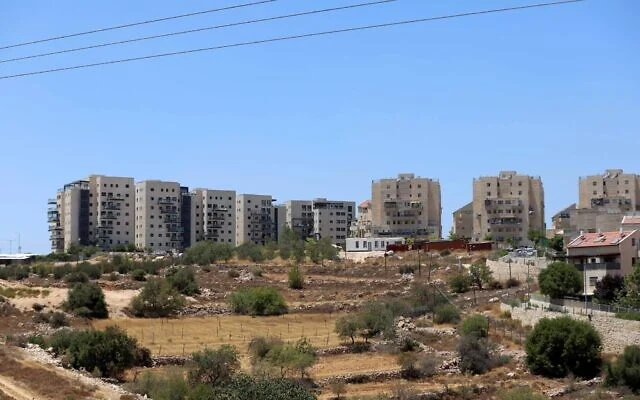
The government announced Tuesday that NIS 1.3 billion ($431 million) was allocated by the security cabinet last month to fund the establishment of dozens of new West Bank settlements approved by Israel over the last three and a half years.
The cabinet decision was formulated by the Prime Minister’s Office, and will be implemented by the Settlements Ministry and the Housing and Construction Ministry.
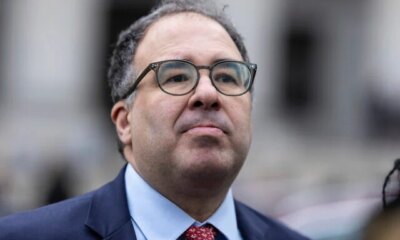
Finance Minister Bezalel Smotrich and Settlements Minister Orit Strock announced the details in a joint press conference, stating that the funds would be used to establish “pioneer neighborhoods” at the sites of newly approved settlements, which will include prefabricated homes, roads and infrastructure.
Smotrich, who has long opposed Palestinian statehood, is the head of the Religious Zionism party that draws much of its support from settlements. He is also in charge of the Defense Ministry Settlement Administration, which oversees settlement activities in the West Bank.
Declaring the cabinet’s decision historic and a “day of celebration for Israel and settlements,” Smotrich thanked Prime Minister Benjamin Netanyahu for his support.
“We are strengthening the security of the State of Israel, killing the idea of establishing a terrorist state in the heart of the country, and strengthening our hold on the homeland in Judea and Samaria,” Smotrich said in a statement, using the biblical term for the West Bank.
“There has never been a Zionist-settlement decision of this size in the whole history of Zionism since it was founded,” Strock said.
החלטה היסטורית להתיישבות: אישרנו 1.3 מיליארד ש״ח להקמת עשרות יישובים חדשים ביהודה ושומרון ????????
יחד עם השרה אורית סטרוק, גיבשנו החלטה שתאפשר להקים את היישובים במהירות באמצעות שכונות חלוץ כבר בימים הקרובים, במקביל להליך פיתוח הקבע של היישוב.
בזמן שאיזנקוט ויאיר גולן מתכננים להרוס… pic.twitter.com/K8z91pMcz6
— בצלאל סמוטריץ’ (@bezalelsm) July 14, 2026
United Nations bodies, Palestinians and most countries view the settlements as illegal under international conventions — a stance rejected by Israel — and as a primary obstacle to peace. Palestinians want the West Bank and East Jerusalem as territory for their own future state.
The government has, during its tenure, approved 103 new West Bank settlements, an unprecedented number in the history of the settlement movement.
The expedited establishment of 34 new settlements will run in parallel to the usual settlement development process, Smotrich said, and appears designed to establish facts on the ground before any potential new government can reverse or stall the establishment of these settlements.
“We are making sure that the decisions we made regarding the legalization and establishment of new settlements in Judea and Samaria do not remain on paper, but are translated into reality on the ground. One after another, we are passing budgetary government resolutions that allocate funding for roads, for infrastructure, and now also for buildings and caravans,” Smotrich said of the new settlement funding.
He said another NIS 1.075 billion ($358.4 million) would be approved to pave roads to the new settlements.
Last month, the Axios outlet reported that the cabinet was set to approve dozens of new settlements.
The move “could significantly reshape the map of the West Bank over the coming years,” the report said, as many of the settlements will be located in “strategically sensitive” areas such as the South Hebron Hills and the Jordan Valley.
By increasing its presence in these areas, Israel will further cement its grip on Area C of the West Bank, where it has full civilian and security control under the Oslo Accords, and which constitutes some 60 percent of the West Bank.
In doing so, it will increase the isolation of Palestinian villages and hamlets and thus complicate any future attempts at implementing a two-state solution.
Israel has not extended sovereignty to the West Bank, while refuting international objections to the settlements and arguing that it is a disputed territory where Jews have lived for thousands of years.