World
G-7 leaders meet in France after US and Iran declare agreement to end war

EVIAN-LES-BAINS, France – Leaders of the Group of Seven (G-7) wealthy nations meet at a French lakeside resort on June 15 shortly after the US and Iran said they had reached a preliminary deal to end their war.
Discussing next steps on Iran will be one of several issues the global leaders will wrestle with during the June 15-17 summit, which will also seek common ground on the war in Ukraine, tackling global economic imbalances and sourcing critical minerals outside of the dominant supplier China.
US President Donald Trump is due to arrive in Evian-les-Bains on June 15 for the gathering at a time when global leaders are increasingly wary of the United States, although French officials were glad to have secured his presence after he left the G-7 summit in Canada in 2025 early.
Many G-7 leaders have been directly impacted by Trump’s volatile moves on the global stage that have upended the Middle East, global trade and diplomacy. His actions have led to larger questions about the US commitment to the postwar global order it helped establish.
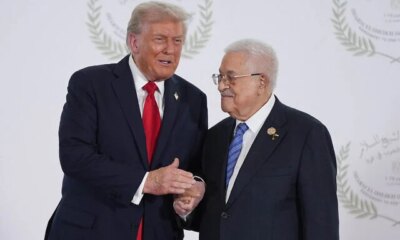
Trump is due to meet with Middle Eastern leaders and attend a working session with Ukrainian President Volodymyr Zelensky during the summit.
The Zelensky meeting on June 16 comes at a time when Russian advances in Ukraine have slowed and Ukraine seeks more military funding from its allies.
Zelensky’s hand has improved since Trump famously told him in the Oval Office in 2025: “You don’t have the cards.”
But he may find greater US support elusive as Trump prioritises drawing a line under the Iran conflict, which has dented his support domestically.
G-7 leaders will be keen to learn the details of the US-Iran deal. A memorandum of understanding is scheduled to be officially signed on June 19 in Switzerland but precise terms were not immediately known.
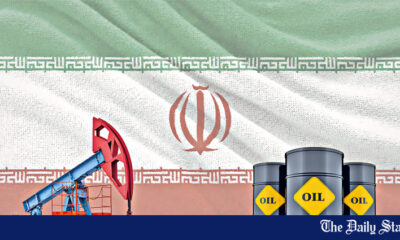
Trump said the Strait of Hormuz, a major shipping route for global oil and gas supplies that Iran has effectively shut down for months, would open on June 19, and that he had ordered the end of the US blockade of Iranian ports.
In a statement, the secretariat of Iran’s Supreme National Security Council said war and military operations on all fronts, including Lebanon, would end permanently starting on the night of June 15.
Iran’s deputy foreign minister, Kazem Gharibabadi, said a more expansive agreement would be negotiated during a 60-day ceasefire period, including sanctions relief for Iran.
Iran’s nuclear programme will be addressed in those later talks, sources had previously told Reuters.
The United Arab Emirates, directly harmed by the war, and key mediators Qatar and Egypt will also attend the G-7 summit.
Trump will be greeted on June 15 by French President Emmanuel Macron, for whom this summit serves as a diplomatic capstone for his second and final term in office, which draws to a close in 2027.
Macron is increasingly seen as a lame duck domestically but he still has pull on the global stage, and was able to get Trump to agree to a glitzy dinner at the Palace of Versailles on June 17.
Macron has sought to use France’s presidency of the G-7 to push for action on global macroeconomic imbalances, a longstanding US concern, before Washington takes the chair of the G20 in 2026 and the G-7 next.
France has framed the issue as a shared responsibility in that China overproduces, the US overconsumes and Europe underinvests.
Brazil, India, Kenya and South Korea have been invited to the G-7 summit to join the discussion, while Macron has urged China to boost its own consumption. REUTERS