World
From Resistance to Statecraft? Iran After the War

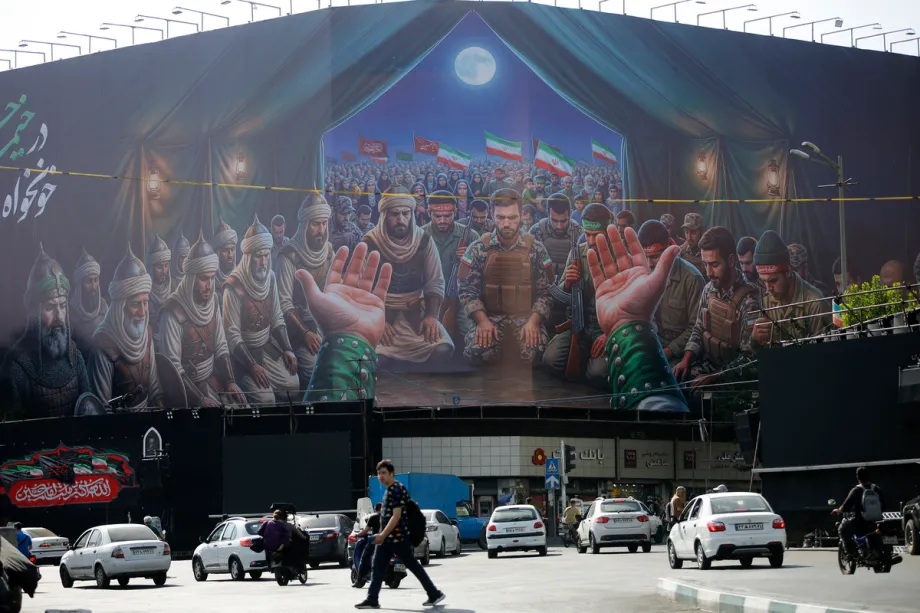
The recent war involving Iran has revived a longstanding debate about the nature of Iranian power and the future of the Middle East. For decades, discussions of Iran in Western policy circles have oscillated between two assumptions: that the Islamic Republic is fundamentally ideological and irrational, or that mounting pressure will eventually bring about its collapse. Yet the outcome of the recent conflict challenges both propositions.
Two prominent scholars, Vali Nasr and Robert Pape, approach Iran from different intellectual traditions but arrive at a remarkably similar conclusion. Iran has proven far more resilient than many of its adversaries expected, and any realistic assessment of the Middle East must begin from that fact.
Nasr’s recent book, Iran’s Grand Strategy: A Political History, explains the historical foundations of Iranian statecraft. Pape’s recent writings on the war examine how survival itself may alter the regional balance of power. Taken together, their analyses offer a useful framework for understanding both the strengths and the dilemmas facing Iran in the postwar era.
Beyond the Myth of Irrationality
Much Western commentary has interpreted Iranian behavior primarily through the lens of Islamism or revolutionary ideology. Nasr does not deny the importance of ideology, but he argues that it alone cannot explain the continuity of Iranian strategic behavior across decades. Instead, Iran behaves much like other states confronting hostile environments: it seeks security, autonomy, and regional influence.
The defining experience for the Islamic Republic was not only the 1979 revolution but also the Iran-Iraq War. That conflict convinced Iranian leaders that international institutions, foreign guarantees, and even international law could not be relied upon for national survival. The result was the emergence of a security doctrine based on self-reliance, deterrence, and strategic patience.
The goal was not necessarily military victory in a conventional sense, but preventing defeat and increasing the costs of external intervention.
This distinction is important. Resistance, in the Iranian conception, is not merely ideological opposition to the West. It is a practical strategy for preserving sovereignty under conditions of military asymmetry.
Nasr therefore rejects portrayals of Iran as an irrational actor. He sees a state whose leadership combines ideological commitments with considerable pragmatism. Revolutionary rhetoric matters, but it often operates within a broader framework of national interest and strategic calculation.
What Survival Changes
If Nasr explains how Iran arrived at its current position, Robert Pape asks what comes next.
Pape’s analysis of the recent war begins with a simple observation: despite suffering serious military and economic damage, Iran survived. The political system remained intact. The state did not collapse. Nor did it surrender its strategic objectives.
For Pape, survival itself has consequences.
History offers many examples of states emerging from major confrontations not weakened politically but strengthened.