Latest
FG plans high-speed rail service from Lagos to Maiduguri

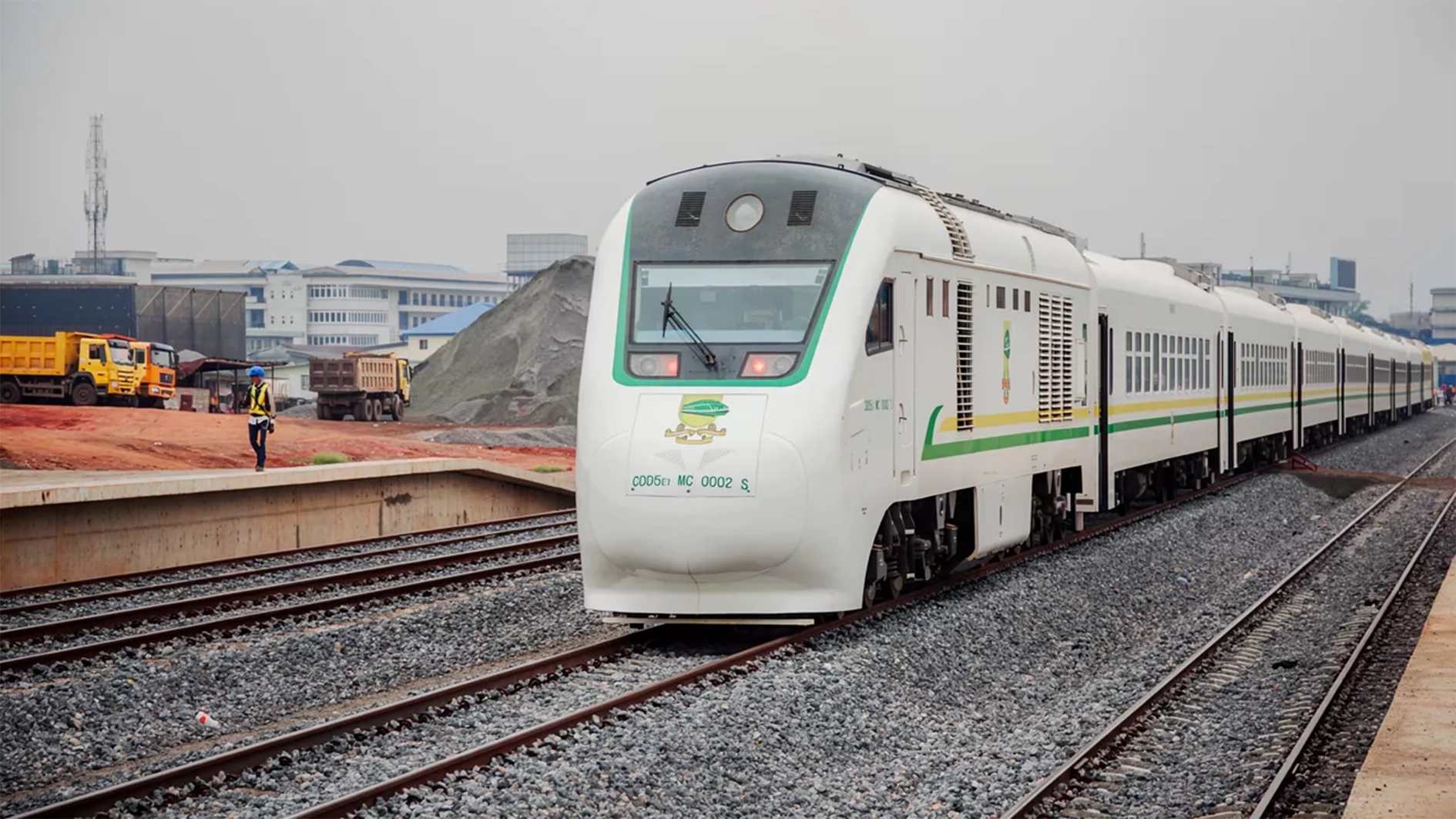
The Federal Government has announced plans to develop a high-speed rail line linking Lagos to Maiduguri, with trains expected to operate at speeds of up to 360 kilometres per hour.
Permanent Secretary of the Ministry of Transportation, Olufunso Adebiyi, disclosed this on Monday in Abuja at the opening of the 19th National Council on Transportation. The four-day event, themed “Developing an Effective Transport System for Nigeria: The Role of Integrated Transportation,” focused on strengthening the country’s transport infrastructure and promoting greater integration across different modes of transportation.
Adebiyi said the proposed Lagos-Maiduguri high-speed rail line formed part of the government’s broader plan to reduce Nigeria’s dependence on road transportation by expanding rail, maritime and air transport infrastructure.
He said the railway sector was undergoing a “rebirth”, noting that several important corridors had already been completed and were operational, including the Port Harcourt-Aba, Warri-Itakpe, Lagos-Ibadan and Abuja-Kaduna rail lines. According to him, work is also progressing on several other railway projects across the country.
“The Kaduna–Zaria–Kano line is nearing completion and should open by December. The Kaduna–Daura–Katsina line is progressing, the Katsina–Jibia–Maradi link is targeted for next year, and work continues on Kano–Dutse,” Adebiyi said.
The permanent secretary also disclosed that light rail projects had been approved for Lagos and Kano, with plans to extend similar systems to other state capitals. “Light rail projects have also been approved for Lagos and Kano with plans to extend similar systems to other state capitals,” he said.
Adebiyi said the government was also promoting rail freight as part of efforts to reduce the number of heavy-duty vehicles using Nigerian roads. He explained that expanding dry ports would enable containers to be moved closer to their final destinations, thereby helping to reduce road congestion, accidents and damage to highways.
The permanent secretary further disclosed that the Federal Executive Council had approved the establishment of a smart national transport data bank under a design-build-finance-operate-and-transfer model.
He said the platform would create a centralised database containing information on drivers, vehicles, number plates and transport operators across the country. “It will also introduce standardised manifests at motor parks to record vehicle, driver, passenger and destination details,” Adebiyi said.
According to him, the system would improve the government’s ability to identify passengers involved in road crashes and track traffic violations. “This means that anytime a vehicle has an accident anywhere, you can pick the manifest and know who is inside and for what purpose, and computerised plate numbers will also make it easier to track traffic violations,” he said.
Adebiyi said the government had also approved six standardised bus terminals as a pilot project. He explained that the terminals would include waiting areas, passenger information systems, police posts, vehicle inspection bays, mechanic workshops, restaurants and restrooms.
He added that transport operators would be required to comply with safety and regulatory standards, with sanctions to be imposed on those who violate the requirements. On the maritime sector, Adebiyi said reconstruction and automation projects were ongoing at Nigerian ports to improve cargo handling, reduce congestion and lower transportation costs.
He said the government’s investments in the transport sector were also creating employment opportunities, with about 9,000 young people currently engaged across two major projects. According to him, approximately 4,000 youths were working on one project, while another 5,000 were engaged on a separate project. Adebiyi also highlighted the Federal University of Transportation as part of the government’s efforts to develop specialised manpower for Nigeria’s growing transportation industry.
He said the administration’s long-term objective was to create a seamless transportation system that would allow people and cargo to move efficiently across road, rail, air and waterways. According to the permanent secretary, an integrated transport system would help lower logistics costs, improve safety, reduce the environmental impact of transportation and increase productivity across the Nigerian economy.