Viral
Details Of US-Iran Peace Deal Emerge

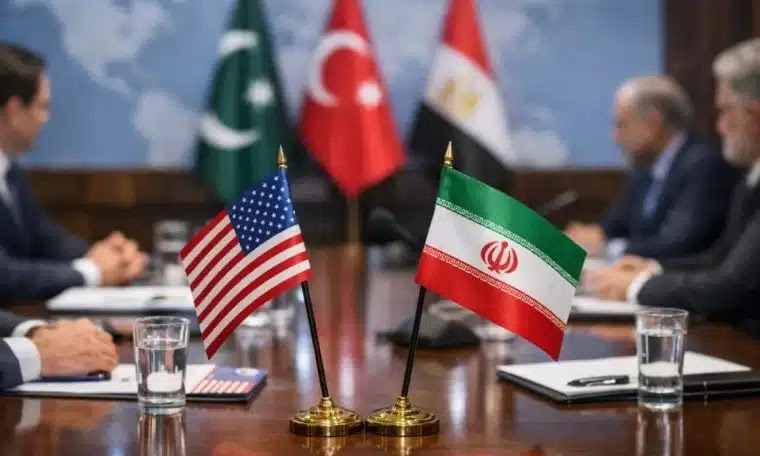
The United States and Iran have reportedly reached a landmark peace agreement designed to end months of escalating conflict in the Middle East, with both nations set to begin a 60-day negotiation process aimed at reaching a comprehensive final settlement.
Naijapunchnews reports that the agreement was formalised after US President Donald Trump signed a memorandum of understanding during a candlelit dinner at the Palace of Versailles following the G7 summit.
The signing ceremony was witnessed by French President Emmanuel Macron and other international leaders.
“Just signed it,” Trump reportedly told journalists shortly after leaving the palace.
Iran later confirmed the development, with Foreign Ministry spokesman Esmaeil Baqaei stating that the document had been completed with the signatures of both presidents.
Pakistan’s Prime Minister Shehbaz Sharif, who was involved in mediating the discussions, announced that the agreement had taken effect immediately.
The agreement seeks to bring an end to the hostilities that began on February 28 after US and Israeli military strikes on Iran triggered retaliatory missile and drone attacks, causing regional instability and disrupting international trade routes.
$300bn Recovery Plan For Iran
A key part of the agreement is a proposed economic recovery programme aimed at rebuilding Iran after the conflict.
The memorandum states that the United States and its regional partners will work on a reconstruction package valued at no less than $300 billion.
The initiative is expected to support infrastructure rebuilding, economic recovery and renewed investor confidence following months of military confrontation.
Iran Gives Nuclear Assurance
The agreement also addresses long-standing tensions over Iran’s nuclear activities.
Under the deal, Tehran reaffirmed that it would not pursue the acquisition or development of nuclear weapons.
The memorandum stated that the future of Iran’s enriched uranium stockpile would be resolved through a mutually agreed framework, with uranium down-blending under the supervision of the International Atomic Energy Agency listed as the minimum requirement.
Until a final agreement is reached, Iran’s nuclear programme will remain under existing arrangements, while Washington pledged not to introduce new sanctions or deploy additional military forces in the region.
End Of Military Operations
The United States, Iran and their allies also agreed to an immediate and permanent halt to military operations.
The memorandum declared that all parties would avoid initiating further armed conflicts or military actions against each other.
The agreement also covers Lebanon and includes commitments to respect national sovereignty and territorial integrity across the region.
“The United States, Iran, and their respective allies declare an immediate and permanent termination of military operations on all fronts, including in Lebanon,” the document stated.
Negotiations toward a wider agreement are expected to continue for 60 days, with the possibility of an extension if both sides agree.
The planned ceremony in Switzerland on Friday will officially open technical discussions aimed at converting the memorandum into a binding peace agreement.
US To Remove Sanctions, Lift Restrictions
The deal also includes measures aimed at easing economic pressure on Iran.
Washington reportedly agreed to remove the blockade placed on Iranian ports in April and pledged to fully end the restrictions within 30 days.
The United States is also expected to withdraw military forces positioned near Iran once a final agreement is reached.
Further provisions include the termination of sanctions against Tehran and the release of frozen Iranian assets.
The US Treasury is expected to issue immediate waivers allowing the export of Iranian crude oil, petroleum products and related services, including banking, insurance and shipping activities.
Strait Of Hormuz To Reopen
Iran has also agreed to support the reopening of the Strait of Hormuz, a crucial global energy route.
Under the arrangement, Tehran will guarantee safe passage for commercial vessels travelling between the Persian Gulf and the Sea of Oman.
Shipping activities are expected to resume immediately, with full restoration anticipated within 30 days after the removal of naval mines.
The temporary closure of the strategic waterway during the conflict affected global oil supplies and contributed to rising energy prices.
The memorandum further provides that any final peace agreement reached by both nations will be submitted for endorsement through a binding United Nations Security Council resolution.
The move is expected to provide international backing and strengthen enforcement of the agreement.
With the deal now signed, attention has shifted to the upcoming negotiations, which observers say could significantly reshape diplomatic relations, security arrangements and economic ties across the Middle East.