World
Despite Entenal Differences: Strong American Support for the US – Iran Agreement

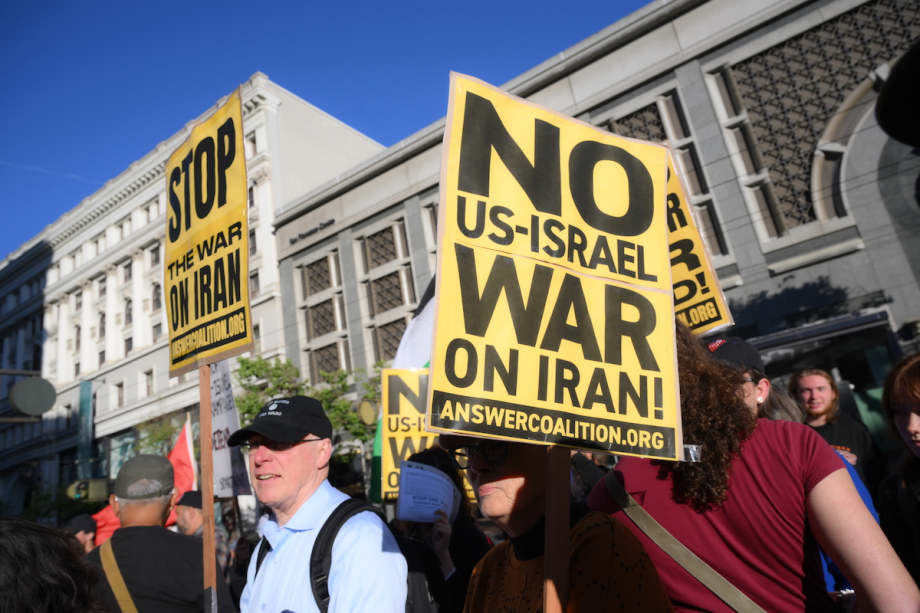
Seventy-eight per cent of Americans support ending the war with Iran, while 57 per cent believe it has created more problems than it has solved. At the same time, the US economy continues to grapple with inflationary pressures linked to the war and energy markets, with inflation remaining elevated owing in part to supply disruptions associated with the conflict in the Middle East. Against this backdrop, the US administration strongly favours an agreement with Iran to bring the war to a definitive end. That preference was reflected in the framework agreed by the two countries and announced a few days ago. Yet the agreement has also fuelled Israeli discontent amid growing divergence over the “day after” arrangements. Against the backdrop of these developments, opinion in the United States remains divided over the agreement, not only between Republicans and Democrats, but also within each party, reflecting the complexities surrounding decision-making in Washington. So where do relations between the two close allies, and political dynamics within the United States itself, now appear to be heading?
The war drove up oil and energy prices, fuelling inflation. In turn, inflation has increased pressure on the Federal Reserve to raise interest rates, automatically pushing up yields on newly issued government bonds amid mounting concerns over the federal budget deficit and public debt. Persistently high inflation has also made the Federal Reserve less inclined to cut interest rates, with institutions such as Bank of America and Deutsche Bank now anticipating a rate increase later this year.
Conversely, if the agreement holds and the war comes to an end, oil and petrol prices are likely to continue declining, allowing overall inflation to ease more rapidly, bond yields to fall gradually, and the US dollar to stabilise.
The Israeli leadership has made little attempt to conceal its dissatisfaction with the agreement, particularly the provisions relating to Lebanon and what it sees as the premature economic relief granted to Iran before its compliance with the nuclear file has been verified. While it has become increasingly clear that ending the war and reaching an agreement with Iran serves US national security interests, several Israeli ministers have stated that their government will not be bound by the agreement. At the same time, the opposition has criticised Benjamin Netanyahu for failing to influence Washington, despite opposing the agreement itself. From Israel’s perspective, the agreement falls short of achieving its strategic objectives.
Israel enjoys the support of members of both the Democratic and Republican parties in the US House of Representatives and the Senate. The American Israel Public Affairs Committee (AIPAC), the principal pro-Israel lobby in the United States, openly endorses a number of them and finances their election campaigns. AIPAC supported the US-Israeli strikes against Iran, describing them as a “historic” campaign that had weakened Iran’s leadership, nuclear programme and military capabilities. It also criticised the agreement, arguing that it “raises fundamental questions” about Iran’s commitments regarding its nuclear programme, which it described as “vague and insufficient”.
The positions taken by members of both parties in Congress following the war reflect a notable shift in attitudes towards support for Israeli policy and AIPAC. Chuck Schumer, the Democratic Senate Minority Leader and a longstanding supporter of Israel, opposes the continuation of the war, although he criticised the agreement, describing it as “the art of surrender, not peace through strength”. Although nine prominent Democratic leaders have publicly received funding from AIPAC, they have also openly criticised the continuation of the war. Bill Cassidy, Susan Collins and Lisa Murkowski, all senators known for their support of Israel, also voted in favour of the War Powers Resolution. Enacted in 1973, the legislation restricts the president’s authority to deploy US armed forces abroad without congressional approval. The Senate vote on the War Powers Resolution on 23 June passed by 50 votes to 48, after the measure had already passed the House, making it the first War Powers Resolution of its kind to secure passage in both chambers of Congress, reflecting a historic shift even among Republican lawmakers who have traditionally supported Israel.
AIPAC appears to be in a weaker position today than it was during the 2015 nuclear agreement. When Israel and AIPAC opposed the Obama administration’s agreement, they enjoyed the full backing of the Republican Party, which held a majority in Congress. Even so, President Barack Obama was able to conclude the agreement through executive action, while its opponents failed to secure the votes required to block it. Today, by contrast, AIPAC no longer appears to command the same cohesive base of support, particularly within the Republican Party, either to sustain the war or to undermine the agreement. With President Donald Trump determined to end the war and implement the agreement, he is unlikely to face sufficient opposition from either Democrats or Republicans to obstruct that course, especially since the agreement, like its predecessor, is being pursued through executive action and does not require congressional approval.
The results of the New York Democratic primary elections also saw the defeat of a number of candidates backed and funded by AIPAC, suggesting that its influence within the Democratic Party has begun to wane as the progressive wing advocating Palestinian rights and greater limits on unconditional support for Israel continues to grow.
Most Americans support ending the war with Iran through an agreement, although a majority also believe that the agreement has not produced the best possible outcome for the United States. The Republican majority in the House of Representatives is commonly described as comprising the “Five Families”, informal factions ranging from the hard right to more pragmatic moderates. These factions are divided over the framework agreement with Iran. The Trump-aligned, or mainstream, faction supports it on the grounds that it would end the war, reopen the Strait of Hormuz, and reduce the economic costs. By contrast, the national security hawks argue that the agreement provides Iran with financial relief and political legitimacy without offering sufficient guarantees to dismantle its nuclear programme. A more cautious faction calls for greater detail and stronger safeguards before lending its support. The America First faction, meanwhile, is critical of US involvement in the war itself and of what it regards as Israel’s extensive influence over American decision-making. Finally, the pro-Israel faction places particular emphasis on Israel’s security, especially with regard to Lebanon. Similar divisions are evident in the Senate, although the boundaries between these factions are less distinct, reflecting senators’ greater independence and their longer terms of office.
In the House of Representatives, the Democratic Party is broadly divided into three principal currents: the Progressive Caucus, comprising 99 members and representing the party’s largest bloc; the centrist or New Democrats, with 94 members forming the party’s traditional mainstream and its moderate economic wing associated with the policies of Presidents Bill Clinton and Barack Obama; and the moderate conservatives, whose numbers have declined sharply and now stand at fewer than ten members. Overlapping with these currents is the pro-Israel wing, which extends largely through the centrist bloc. Although no comparable formal groupings exist in the Senate, these political tendencies remain broadly evident. Chuck Schumer, the Democratic Senate Minority Leader, has argued that Iran appears to be the principal beneficiary of the agreement and that the United States is in a weaker position than it was before the war. Senator Richard Blumenthal described the agreement as an “unconditional surrender” and called for it to be submitted to the Senate for review. Jerry Nadler, a longstanding supporter of Israel, criticised the agreement, arguing that it fails to address Iran’s missile programme or its regional proxies and is weaker than the 2015 agreement. Representative Greg Stanton described Trump’s war as “a disaster” and argued that the agreement offers substantial concessions before securing a lasting Iranian commitment on the nuclear issue.
It has become increasingly clear that the substance of the agreement does not reflect an American victory; if anything, the opposite may be true. The positions taken by the administration, Congress and American public opinion indicate that the priority has shifted towards ending the war and reducing its economic and security costs, even though the agreement with Iran continues to attract criticism across the political spectrum.
Israel’s anger over the agreement reflects an increasing divergence from the US administration in the management of the next phase, and perhaps something more. Although this does not yet amount to a divergence in the strategic objectives of the two allies, it could be leveraged in relation to issues such as Gaza and Lebanon. The prospects for doing so may improve further if the forthcoming Knesset elections produce a different government.
The views expressed in this article belong to the author and do not necessarily reflect the editorial policy of Middle East Monitor.