World
Depleted but dangerous, Hamas is holding its fire against Israel. The quiet may not last

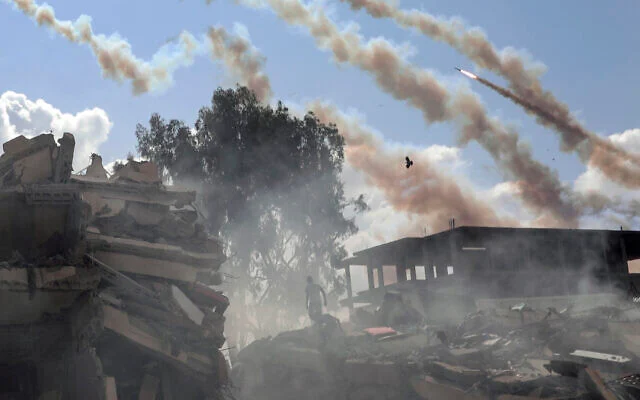
The war that Hamas ignited on October 7, 2023, has since expanded far beyond Gaza, drawing in Iran, Hezbollah in Lebanon and the Houthis in Yemen. But as Israel found itself under attack from multiple fronts in recent months, the group that started the conflict has been strikingly absent from the battlefield, largely holding fast to a ceasefire that halted fighting in October.
That absence, however, should not be mistaken for defeat, experts warn. Despite two years of sustained Israel Defense Forces operations and months of diplomatic efforts aimed at ending the war for good, Hamas remains armed and in control of most of Gaza’s territory east of the ceasefire line.
“On their side of the Yellow Line, [Hamas has] a monopoly on force,” Jonathan Ruhe, a military expert at the Jewish Institute for National Security of America, told The Times of Israel. “That feeds into their whole strategic concept, which, at this point, is to show that they won the war because they survived.”
When US President Donald Trump unveiled his 20-point plan to end the conflict eight months ago, disarming Hamas was one of its central pillars, paving the way for an International Stabilization Force tasked with securing the Strip during a transitional postwar period.
But footage circulating online since the ceasefire took effect in October appears to show the terror group reasserting its presence across parts of Gaza, with armed operatives patrolling streets, staging public displays of force and seeking to demonstrate that its military wing remains intact.
At the same time, Hamas has refrained from launching any significant attacks on Israeli territory since the ceasefire came into force.
The relative quiet has persisted even as the IDF continues to carry out near-daily strikes in Gaza, which Israel says are aimed at thwarting threats to its forces or responding to violations of the truce.
Hamas’s last known attempt to fire a rocket at Israel came in January, when the IDF reported detecting a failed launch from the Gaza City area.
Unable, not unwilling
According to Samuel Ben-Ur, a research analyst at the Foundation for Defense of Democracies, the absence of rocket fire should not be mistaken for a change in Hamas’s intentions.
“If they could carry out another October 7-style attack today, they would,” Ben-Ur said. “Their strategy is to inflict as much pain as possible on Israel… and force it into a concession.”
Instead, he argued, Hamas’s restraint is more likely a reflection of its current capabilities than its ambitions.
That position is backed up by Israeli military officials, who said in March that while the terror group has likely been attempting to rearm amid the ongoing ceasefire, it is nowhere near attaining the strength it had before the war, when it and other terror organizations would regularly fire rockets from the Gaza Strip at southern Israel.
The IDF assessed that Hamas’s efforts to rearm were “very limited,” largely because the group no longer has access to its weapons-smuggling routes, primarily across the Egyptian border.
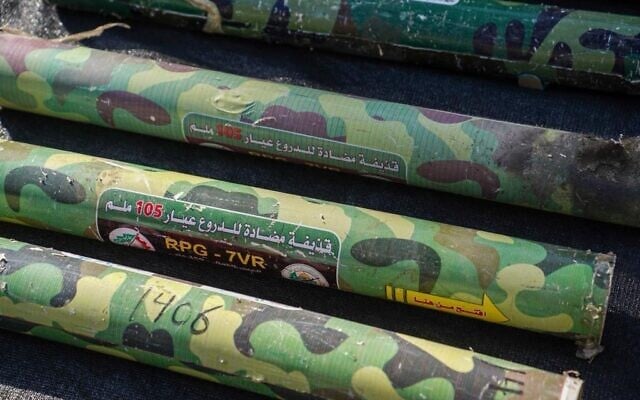
As a result, Hamas has resorted to even more clandestine means. In February, Hebrew media reported that the terror group was employing submersible containers that travel just below the water’s surface to float contraband such as rocket-building materials from the Sinai Peninsula to Gaza.
A weakened military, an intact regime
In light of such efforts, Ben-Ur emphasized that there are still “no reports that suggest they’ve been able to build up their rocket arsenal.”
Before the war, Hamas was believed to possess between 18,000 and 30,000 rockets and unguided missiles, according to estimates by the Institute for National Security Studies.
IDF officials believe that the terror group still possesses hundreds of rockets manufactured before the war that were not destroyed during the IDF’s two-year-long ground offensive, as troops did not reach all areas of the Strip.
Hamas’s “rocket and missile arsenals are effectively zero,” said Ruhe.
Its ability to manufacture rockets has also been largely dismantled after nearly three years of Israeli strikes targeting its production infrastructure.
In an effort to prevent Hamas from restoring its missile production capabilities, the military has recently been targeting commanders in the group’s rocket and missile program, as well as weapons manufacturing operatives.
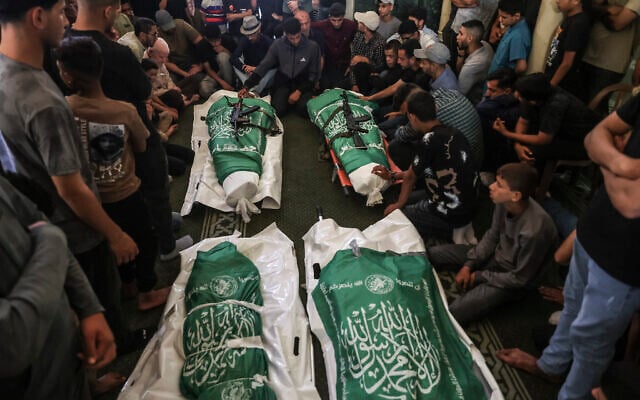
In March, the IDF struck and killed a commander in Hamas’s supply and logistics department who worked to advance the terror group’s “precision missile project.” Two months later, the military similarly killed a key Hamas operative involved in weapons production who served as a major source of technical expertise for the terror group.
Further deteriorating its military wing, the IDF killed Hamas military chief Izz al-Din al-Haddad on May 15, as well as his successor, Mohammed Odeh, 11 days later.
Still, the targeting of Hamas’s military personnel and erosion of its rocket arsenal does not mean the group has been disarmed. Analysts assess that the organization continues to possess small and medium arms, including assault rifles, machine guns and explosives used to manufacture improvised explosive devices, which have remained one of the primary threats facing IDF troops operating inside Gaza.
Hamas has also retained access to drones, many of which are commercially available and can be adapted for military use. However, Israeli restrictions on the entry of dual-use goods into Gaza since the start of the war have likely limited the group’s ability to acquire such systems at the scale it once could.
Last month, an IDF officer told the Walla news outlet that Hamas is believed to possess fiber-optic drones that are resistant to electronic jamming – the same technology Hezbollah has been using in deadly attacks on Israeli troops during the ongoing fighting in Lebanon.
Yet, analysts believe that Hamas is concentrating the use of what weapons it maintains not to fight Israel but rather toward what Ben-Ur described as its “top priority,” entrenching its control over Gazans living under its rule.
**מחבלי חמאס בצעדה צבאית..**
מצעד מחבלי חמאס בזמן הלוויותיהם של מחבלים שחוסלו בזמן הלחימה במחנה אלשאטי, ממערב לעיר עזה. pic.twitter.com/3qZzuyH49r
— מה חדש. What’s new❓ (@Gloz111) February 28, 2025
“There have been more instances in the past couple of weeks of [Hamas] executing Palestinians in the street,” he said, a practice the terror group has implemented during past ceasefires as well. These executions often target members of rival gangs in Gaza, as well as dissidents and Palestinians accused of collaborating with Israel.
No clear path to disarmament
Given Hamas’s continued military presence in the Strip, analysts argue that the question is no longer whether the group will willingly disarm, but who, if anyone, will forcibly take its weapons. Israel says disarmament must take place before plans for the Strip’s post-war rehabilitation can get underway in earnest, leaving the territory in a tense limbo.
Ruhe argued that Hamas is using its remaining military capabilities to send a clear message: any effort to remove the group from power — whether by Israel, local rivals, or the yet-to-be-established International Stabilization Force — will face fierce resistance, and the organization has no intention of voluntarily surrendering its weapons.
“Until you find someone to disarm Hamas by force, none of the rest of [Trump’s 20-point plan] is going to click into place,” he said.
According to Ben-Ur, the IDF remains the only actor currently capable of carrying out that mission, a step that would mean resuming large-scale military operations against Hamas.
While that “has to happen if Hamas is to be disarmed,” it does not necessarily mean a return to the full-scale war that devastated Gaza over the course of two years, he said.
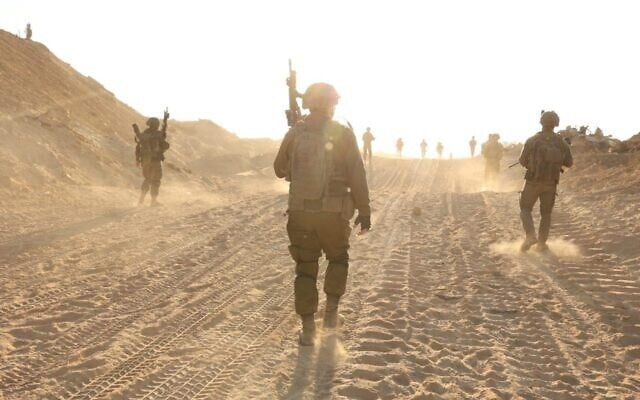
Rather, a similar process seems to be taking place gradually, with Israel expanding its control and squeezing Hamas and Gaza’s civilian population into an ever-shrinking area.
Last month, Prime Minister Benjamin Netanyahu announced that he had ordered the IDF to take control of 70 percent of the Gaza Strip, up from the current 60%, and well beyond the territory Israel was permitted to temporarily hold under the ceasefire agreement.
While critics have portrayed the move as evidence of Israel’s intention to permanently seize territory in Gaza, Ben-Ur argued that it should instead be viewed as an extension of the military’s ongoing campaign to dismantle terror infrastructure in areas under the army’s control.
What comes next for Gaza remains deeply uncertain. But Ruhe stressed that the status quo — a weakened Hamas that remains armed and in power — is unlikely to provide lasting stability.
“If Gaza continues to fester… and falls farther and farther down [Israel’s] list of priorities,” as Jerusalem focuses on more immediate threats elsewhere in the region and once again underestimates Hamas, Ruhe warned, the conditions that enabled the group to surprise the country on October 7 could eventually repeat, raising the risk of another large-scale onslaught from a group still armed and dangerous.
Emanuel Fabian contributed to this report.