World
US launches strikes for second straight night in bid to force Iran to agree on deal

For the second night in a row, the US military early Thursday launched what it called “self-defense strikes” against Iran, as President Donald Trump vowed even more attacks if no peace deal is secured. In response, the Islamic Republic threatened to target any ship going through the Strait of Hormuz.
The US military’s Central Command announced the strikes were complete about four hours after they began shortly after midnight in Tehran, saying in a post on X that the targets included “military surveillance capabilities, communication systems, and air defense sites across Iran.”
“The strikes are in response to Iran’s unwarranted and continued aggression,” CENTCOM said.
Iranian media reported explosions across the country’s south near the Strait of Hormuz, the same area where US forces had already bombarded air defense, radar and other sites on Tuesday. Iranian sources reported new hits by “enemy projectiles” in Qeshm, Kargan and Sirik.
The attacks were the latest development in an escalating exchange of strikes that have further strained the fragile ceasefire reached in early April to halt the US-Israel war with Iran, which began at the end of February.
Iran’s Islamic Revolutionary Guard Corps said in response to Thursday’s strikes that it launched attacks on US military targets at airbases in Jordan, Kuwait and Bahrain.
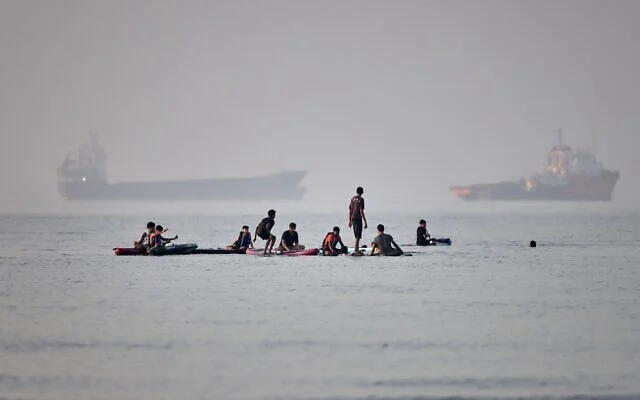
Iran’s top joint military command also warned it would fire on any vessel attempting to pass through the Strait of Hormuz, which has been largely closed for months. Iranian media reported that two ships were fired upon.
CENTCOM denied the strait was closed, saying commercial ships were still transiting the strait despite Iran’s threats. Trump said earlier in the day that vessels have been crossing the strait without Iran’s permission as part of a clandestine military mission.
Amid the strikes, Trump told a Fox News reporter that he spoke directly with Iranian officials who asked him to stop strikes on the country — which he said would happen shortly.
He was quoted however warning that if Iran won’t sign a proposed deal from US negotiators to open the Strait of Hormuz and ensure it cannot acquire a nuclear bomb, “We’ll the bomb shit out of them.”
Trump, who was speaking from the White House Situation Room, stressed that Israel was not involved in the strikes.
Iranian state media subsequently denied that Iranian officials were in contact with the US president, citing a senior official who said “Trump’s false claim that Iranian officials contacted him is a cover to evade war with Iran.”
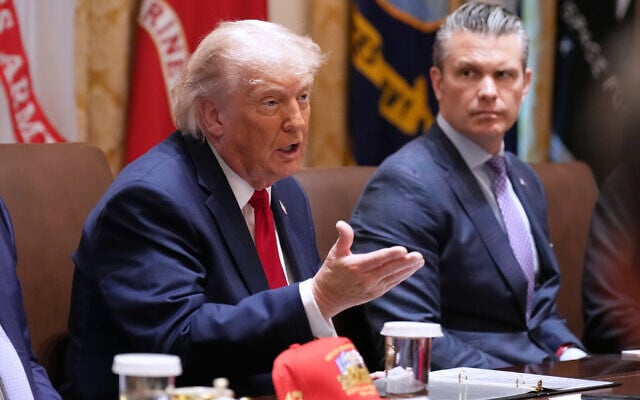
Similar to Trump, US Defense Secretary Pete Hegseth described the US strikes as part of an effort to force Iran into a deal to end the conflict, telling reporters during a visit to Central Command in Florida that the attacks would “advance our military interests and also enhance our diplomatic position.”
“President Trump said we’ll be hitting Iran hard, and we will be because Iran has a chance to make a good deal,” Hegseth said. “You can see when someone is trying to tap, tap, tap on a deal. Instead, they’re going to have tap, tap, tap bombs dropping on key facilities in Iran.”
“We don’t have to restart,” Hegseth continued, saying that Pentagon was “prepared to set the terms to ensure we get the kind of deal that President Trump expects.”
“Those strikes, that will happen tonight, they will be strong, they will be clear. If they happen tomorrow night, they will be strong, they will be clear, and throughout Iran has an opportunity to make a deal — that’s the point.”
He also said the pilots of an Apache helicopter that was shot down Tuesday in the Strait of Hormuz are in “good shape.” The downing of the helicopter led to the first night of strikes, which Iran responded to by attacking Bahrain, Kuwait and Jordan, all of which host US troops.
‘We were told to show restraint’
Along with the two bouts of fighting between the United States and Iran, this week saw Israel and the Islamic Republic engage in back-and-forth strikes after Israeli hit Hezbollah targets in Beirut.
Speaking Wednesday to The Times of Israel, an Israeli diplomatic official pointed to what he calls the “justified” US feeling that it needed to respond to the helicopter downing, though it just called on Israel to show restraint in response to Iranian fire.
“The US understandably felt that not responding would have made them look weak, but when we said the same thing following attacks from Iran and Hezbollah, we were told by the administration to show restraint,” the Israeli official said.
While US officials have regularly expressed their frustration with Prime Minister Benjamin Netanyahu in anonymous conversations with reporters in recent weeks and months, such ire has been almost unheard of from the Israeli side, as Jerusalem seeks to keep Trump in its corner.
The decision by the Israeli official to speak out, even anonymously, highlighted growing angst in Jerusalem with the Trump administration’s handling of the Iran conflict.
While Trump did indeed express frustration both privately and publicly with Israeli decisions to aggressively respond to attacks from Iran and Hezbollah, he did not explicitly demand ahead of time that Netanyahu not carry out those strikes, the Israeli official acknowledged.
Accordingly, the Israeli official admitted there were limited practical implications to the US warnings to Israel about not retaliating harshly against Iran and Hezbollah.
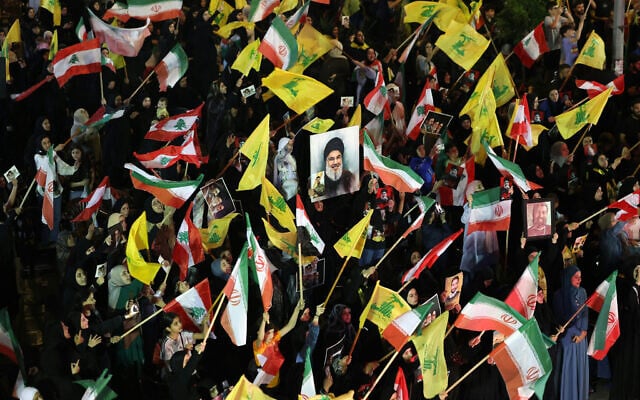
Underscoring the frustrations between the sides, US Vice President JD Vance told ThePress Nigeria in an interview aired Wednesday that Netanyahu has “certainly gotten some things wrong” in his relations with Washington amid the war, but called him a “good partner.”
Vance also said that when US and Israeli interests diverge, the US must pursue its own interests, “unfortunately for the Israelis,” after declaring earlier in the week that the potential US-Iran deal was a “home run for the American people,” though Israel may not like it.
“Even when we’ve been close partners, sometimes we have interests that are perfectly aligned, and sometimes we have interests that are misaligned,” Vance said of Israel and the US. “And what I’ve seen with the prime minister is that he aggressively asserts the interests of his country.”
Vance added, “We have to fundamentally be focused on what is in the United States’ best interest. So they’ve been a great partner in a lot of ways, but we also have to focus on what is in America’s best interest, and where that diverges, we, unfortunately for the Israelis, have to choose the side of the American people, which we always do.”
Asked if Netanyahu has made mistakes in his relations with the US regarding Iran, Vance responded, “Look, he’s certainly gotten some things wrong,” but declines to elaborate.
“He’s been a good partner, we’re going to keep on working together, but where interests diverge, the United States is going to pursue the best interests of our nation, and that’s how it’s going to be.”
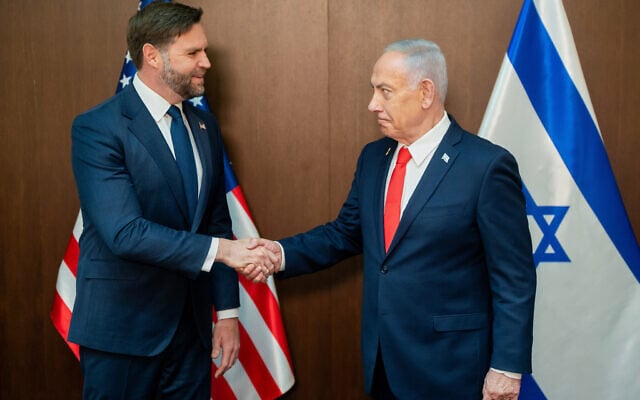
Despite the comments from Vance, a source in the Prime Minister’s Office insisted that Trump and Netanyahu were “fully coordinated.”
“The PM and President speak every other day, sometimes every day, and are fully coordinated,” the source told The Times of Israel.
US claims secret mission to protect ships traversing Hormuz
The war has disrupted roughly one-fifth of the world’s supply of oil and natural gas, sending prices sharply higher. Iran has blocked traffic through the Strait of Hormuz, while the US has maintained its own blockade on Iranian ports.
The conflict has become a political headache for the White House, with public polls showing Trump’s approval ratings sinking amid voter anger over high gasoline prices. Some Republicans have openly worried the war’s unpopularity could cost them control of Congress in November’s midterm elections.
Oil prices rose nearly $3 following Trump’s threat of escalation, and extended gains in early Asian trade on Thursday.
Trump told reporters at the White House on Wednesday that vessels carrying 100 million barrels of oil have defied Iran to travel through the strait as part of a secret military mission.
Hegseth said ships have been transiting the strait “in the middle of the night, protected by the United States in a way that Iran can’t stop, they can’t see it.”
Separately, the US military said it disabled an oil tanker transporting Iranian crude in the Gulf of Oman on Tuesday for a second consecutive day