World
Cabinet set to approve funding for establishing 61 West Bank settlements — reports

Israel’s cabinet is set to approve a plan on Thursday to fund the establishment of 61 new settlements in the West Bank over the next few years, according to Axios, which cited a draft copy of the proposal.
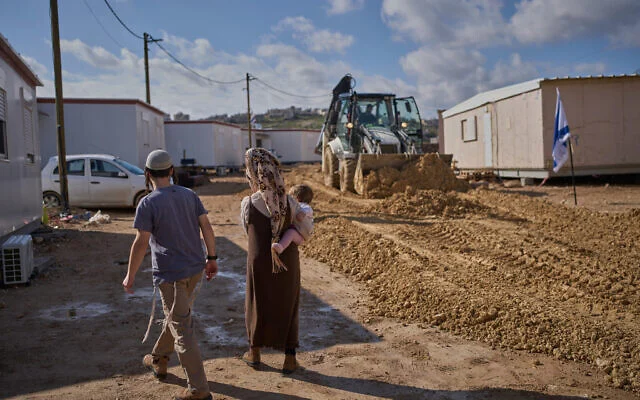
According to the report, the endeavor is expected to cost more than $350 million, with the government covering the cost of everything from mobile homes to roads and public infrastructure.
If approved, the report said, the plan would be “one of the most significant settlement expansion moves in decades.”
The report was corroborated by Israeli anti-settlements group Peace Now, which said the settlements included in the proposal had all been approved by Netanyahu’s government over the past three years.
The push by Israel to gain greater control over the West Bank comes at a time of largely unchecked settler violence against Palestinians, which has left thousands of people displaced and unable to return to their communities, some of which have been entirely taken over by settlers establishing illegal outposts on Palestinian land.
According to Axios, the proposal is the brainchild of far-right Finance Minister Bezalel Smotrich and is being pushed through now to ensure the funding is approved before the Knesset is dissolved.
The proposal, if passed, will allow the government to bypass the standard settlement planning process, Peace Now said.
Reached for comment by Reuters, a spokesperson for Smotrich did not provide specifics but said the cabinet vote would strengthen Israeli settlements and confirmed that these are not new settlements, but rather existing sites.
The plan will be implemented over several years, Axios said, with the government first financing temporary housing and public and community infrastructure as it waits for planning permission to establish a more permanent presence. Once obtained, the funds will be used for roads, utilities, and other infrastructure necessary for a permanent settlement.
The move “could significantly reshape the map of the West Bank over the coming years,” the report said, as many of the settlements will be located in “strategically sensitive” areas such as the South Hebron Hills and the Jordan Valley.
By increasing its presence in these areas, Israel will further cement its grip on Area C of the West Bank, where it has full civilian and security control under the Oslo Accords, and which constitutes some 60 percent of the West Bank.
In doing so, it will increase the isolation of Palestinian villages and hamlets and thus complicate any future attempts at implementing a two-state solution.
In addition to the expected cabinet vote later on Thursday, the Haaretz daily reported on Tuesday that the government held a telephone vote last week to approve around $34 million for the planning of dozens of new settlements.
According to the report, the funding approved by telephone vote was earmarked for 69 settlements and outposts. The extent to which these overlapped with the 61 planned settlements reportedly up for a vote on Thursday was unclear.

The government has been pushing ahead with its agenda for the West Bank despite significant international backlash, and the imposition of sanctions on a number of settlement organizations and settler activists.
On Wednesday, Amnesty International accused Israel of conducting a years-long “state-sponsored” campaign of ethnic cleansing in the West Bank designed to accelerate the annexation of the territory. The IDF rejected the charge.
Under the authority of Smotrich, whose secondary position in the Defense Ministry gives him wide influence over West Bank policy, the government has authorized settlement construction and legalized wildcat outposts at an unprecedented pace. From late 2022 to April 2026, the government approved or legalized 103 settlements, a major increase over previous years.
France, earlier this week, announced that Smotrich would be barred from entering the country due to the policies he has implemented in the West Bank.
At the same time, critics have accused government and law enforcement of turning a blind eye to violent attacks by settler extremists, which have become increasingly brazen and deadly in recent years and occur on a near-daily basis. Arrests are rare and prosecutions are even less common.
The military recorded 867 incidents of nationalistic crime and settler violence in 2025, up from 682 incidents in 2024.