
World
Backed and armed by Israel, Gaza militias talk big but make little headway against Hamas

Late last month, an anti-Hamas militia in Gaza published footage on Facebook showing one of its operatives using a several-meter-long drone, seemingly marking the first known public documentation of one of Gaza’s militias using a military-grade UAV.
“The People’s Army led by Ashraf al-Mansi announces the successful introduction of several drones into service,” the statement read.
“Maj. Gen. Ghassan Dehini has already announced the successful execution of several operations using them,” the announcement crowed, referring to the leader of another militia who is seen as the unofficial leader of the entire network of armed groups.
For the past year, Israel has provided groups like The People’s Army with weapons, air support, intelligence, food, and cigarettes, and has airlifted wounded militia members into Israel for medical care. It has also provided them with light weapons, largely rifles, but the video showed the militias may now be receiving more sophisticated arms as well.
A year after Prime Minister Benjamin Netanyahu first acknowledged that Israel was arming militias in Gaza, much about Jerusalem’s backing for the array of small armed groups operating in defiance of Hamas, including criminal gangs, remains vague and opaque, including what strategy, if any, Israel is pursuing.
“Gaza has become the capital of Israeli fantasies. And that includes the operation of these militias,” said Michael Milshtein, an expert on Palestinian affairs and a longtime critic of the idea of backing the armed groups.
In the year since Netanyahu’s announcement, the Israeli government has largely avoided publicly addressing the issue, and the IDF has repeatedly declined to answer questions about the militias’ activities.
At the same time, the militias themselves have increasingly publicized their activities on social media, providing a limited window into Israel’s Gazan allies.
Footage and statements released by the groups point to forces numbering at most a few hundred armed men. Their operations appear sporadic but ongoing, involving clashes with Hamas alongside efforts aimed at boosting their popularity among Gaza residents, such as distributing food ahead of Muslim holidays.
The militias do not appear to have posed any major challenge to Hamas’s continuing rule in populated parts of Gaza, and their broader operational goals remain unclear.
The IDF Spokesperson’s Unit declined to answer The Times of Israel’s questions about the militias, including whether the drones were supplied by Israel, as is widely suspected. The Prime Minister’s Office did not respond to requests for comment on the militias’ ties to Israel. The Defense Ministry referred questions to the IDF.
Milshtein, head of the Palestinian Studies Forum at Tel Aviv University’s Moshe Dayan Center, told The Times of Israel that giving the groups UAVs was a major mistake and liable to backfire.
The militias “will eventually turn to terrorism themselves, or Hamas will get its hands on the drones and use them against us,” he predicted.
Many groups, few civilians
According to Milshtein, who studies Gaza closely and remains in contact with residents there, the militias have had little meaningful impact on the situation in the Strip, beyond damaging Israel’s interests.
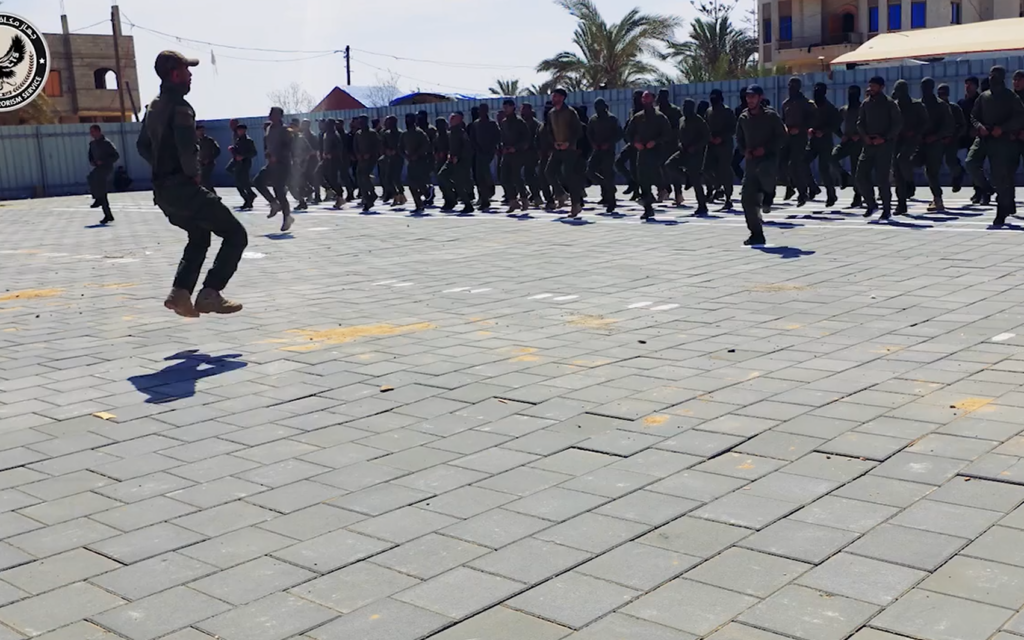
Michael Barak, a senior researcher at Reichman University’s International Institute for Counter-Terrorism, agreed that the militias had had little tangible impact in Gaza over the past year.
However, he argued that the groups provided value to the IDF as an allied force willing to work with it against Hamas.
“It’s good for us as long as there is a Gazan population willing to cooperate with Israel, clear areas of mines or Hamas operatives,” he told The Times of Israel.
There appear to be five separate armed militias active in Gaza, based on social media posts. The groups, all of which were established between April and September 2025, are based in areas under Israel Defense Forces control, though they occasionally launch operations, including armed raids, into areas controlled by Hamas.
Some of the groups have previously said they were seeking to set up enclaves where civilians would live under their protection, free from Hamas.
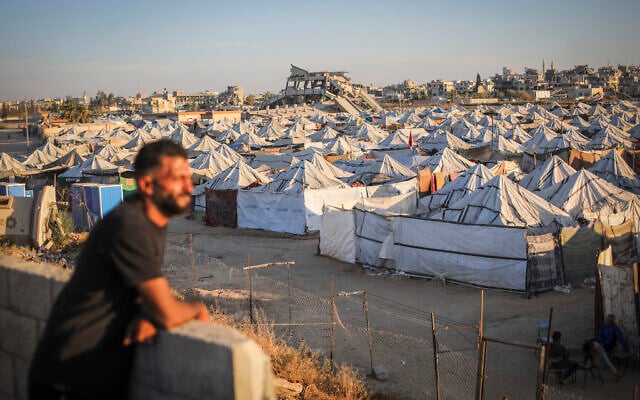
In practice, however, nearly all of Gaza’s approximately 2 million residents live in the 40 percent of the enclave where Hamas continues to exercise governing power.
Last year, a senior member of the al-Shabab militia told The Times of Israel that about 5,000 civilians were living under the group’s protection in an area east of Rafah.
With the IDF barring Gazan civilians from crossing the Yellow Line demarcating the de facto border of the area controlled by Hamas, Palestinians have no way to reach the militia-controlled zones even if they wanted to.
“The Palestinian street today does not want Hamas,” said Hussam al-Astal, who leads a militia operating east of Khan Younis. “People are exhausted from all of this, they do not want Hamas anymore, people want to live. Thousands are telling us they are waiting for the IDF to tell them they can move into the Yellow Line areas because they want to come.”
However, Milshtein said that Gazans he spoke with expressed hostility toward militia members.
Gazans living in areas of the enclave under Hamas rule have also told The Times of Israel they do not support the groups, though it is impossible to know if their comments are skewed by Hamas repression of public dissent.
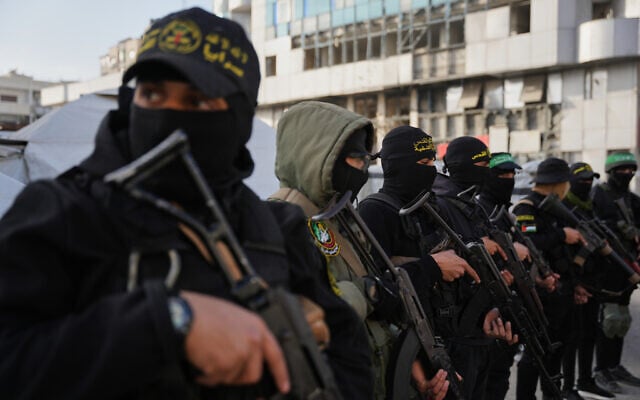
Saif Odeh, a resident of Gaza City, told The Times of Israel in May that the groups would not help Israeli authorities build trust with Gaza’s residents.
“The militias in Gaza are something all factions oppose — both Fatah and Hamas,” he said, seemingly referencing the idea that the armed gangs were not representative of Palestinian national interests.
Al-Astal previously told The Times of Israel that the militias hope to become part of a “new Gaza” rebuilt after the Hamas era. Plans for Gaza’s rehabilitation under US President Donald Trump’s 20-point ceasefire proposal, which does not include the militias, are currently stuck due to Hamas’s refusal to disarm.
Much of the militias’ activity on social media appears aimed at conveying the message that Hamas is weak and that Gazans support the armed groups, who are acting on their behalf.
In the days leading up to Eid al-Adha, one of the two major Muslim holidays, several militias published videos showing members distributing sweets to children and preparing aid packages. The videos showed both children and adults praising the militias.
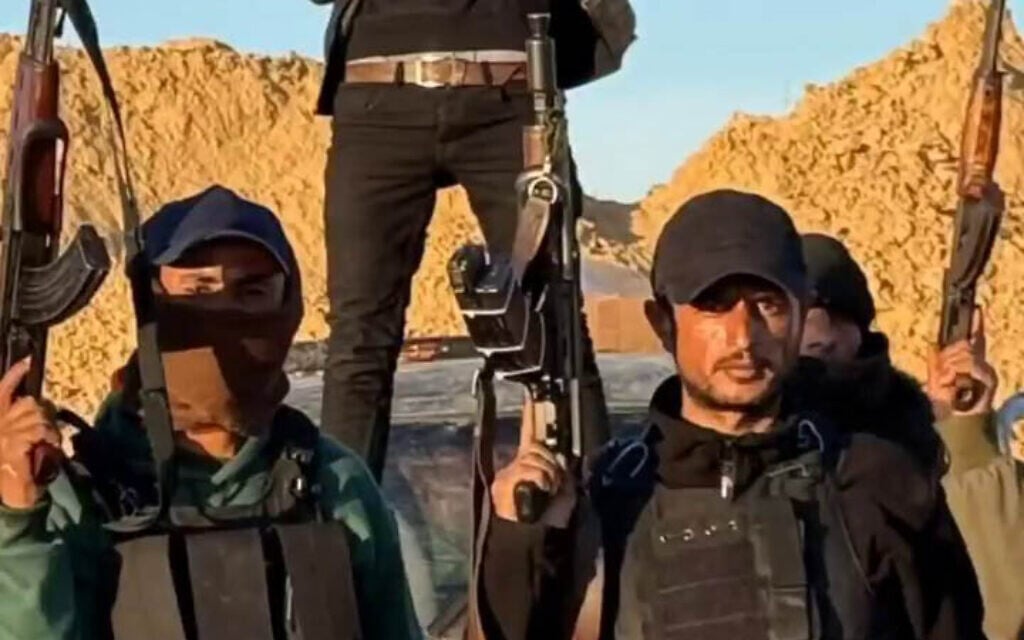
In footage published by al-Mansi’s militia from what it described as a “logistics center” for humanitarian aid, products bearing Hebrew labels from Israeli companies could be seen, including Elite-branded Nescafe and Materna baby formula — suggesting the supplies originated in Israel.
Yet there are also allegations that the groups have been used by Israel to force civilians from their homes in areas being taken over by the IDF, which has been ordered by Netanyahu to expand its control to 70% of Gaza.
According to reports, the al-Shabab clan, the oldest and largest militia and today headed by Dehini, is used by Israel to secure passage for Gazan civilians entering from Egypt via the Rafah Crossing and transiting through IDF-controlled territory into the part of the enclave controlled by Hamas.
Milshtein said Gazans who spoke to him after making the journey described harsh treatment by militia members, including sexual harassment, theft and beatings.
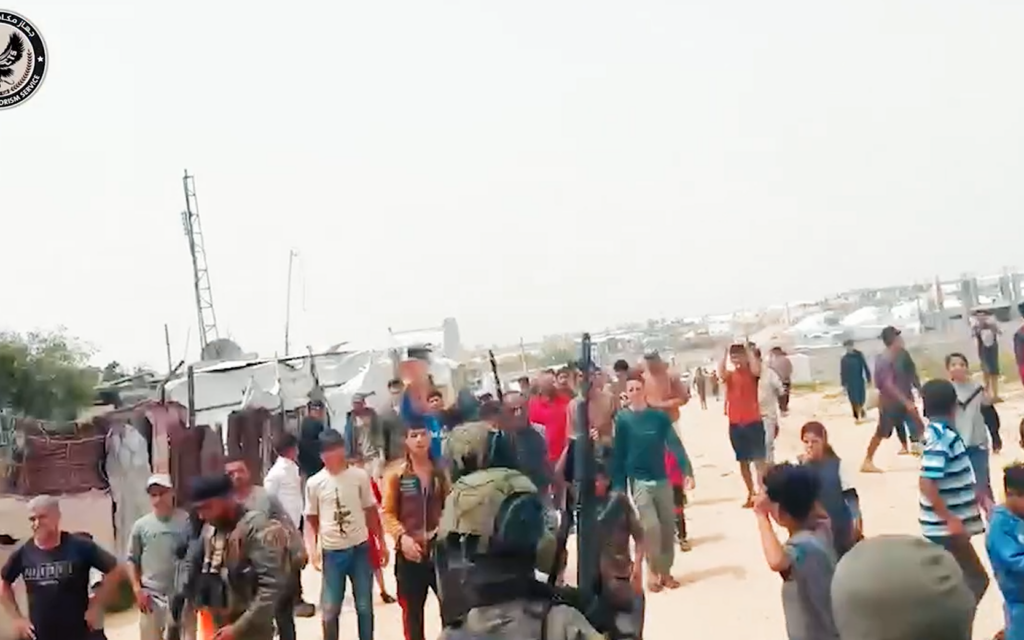
Further damaging the Gazan public’s perception of the militias has been an influence campaign by Hamas portraying the groups as ineffective and destined to collapse sooner or later, Barak said.
“Hamas has Telegram channels where it claims to have infiltrated the militias with agents and showcases militia members who supposedly repented and abandoned the groups,” Barak told The Times of Israel.
None of the militia leaders currently operating in Gaza were previously well-known or widely respected figures in Palestinian society. Yasser Abu Shabab, who led the eponymous militia before being killed in an internal dispute, was previously accused of criminal activity, including smuggling and looting, and allegedly had past ties to the Islamic State group.
“It is completely clear that we took the bottom tier of Palestinian society,” Milshtein alleged. “People who are criminals, dubious figures, involved in terrorism against Israel — under the belief that they could become an alternative to Hamas.”
Militias from north to south
Al-Astal, whose militia operates east of Khan Younis, told The Times of Israel that each group has its own home territory, but they work together and regularly communicate with each other.
“Relations between us are good and there is ongoing contact,” he said by phone from Gaza. “There is coordination on all needs, including with regard to the media.”
A review of Facebook pages maintained by the militias and their commanders indeed shows that the groups frequently amplify each other’s statements and activities.

The militias have never publicly declared a clear long-term objective, though they are all focused on fighting Hamas and seeking to end its rule over Gaza.
When asked by The Times of Israel about the militias’ goals and the progress of the fight against Hamas, al-Astal largely avoided the question, saying only that Hamas had weakened and was now composed of “small groups operating on the ground.”
On May 21, al-Mansi posted on Facebook that “we will neither eat nor rest until Gaza is liberated, area by area” from Hamas.
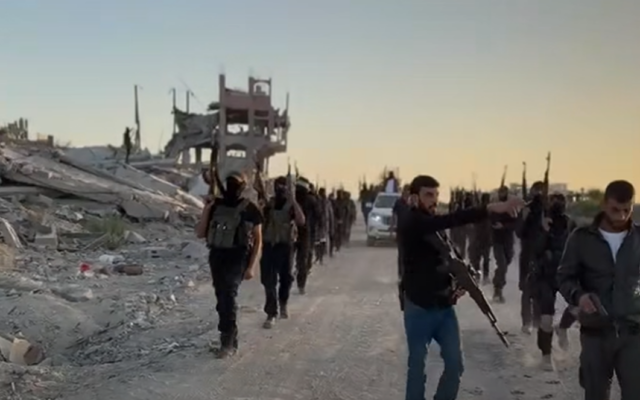
On May 25, his group, which operates mainly in northern Gaza, published footage on Facebook showing several dozen masked gunmen gathered at Sudania Beach in northwestern Gaza, declaring, “There are no Hamas members here.”
Sudania Beach lies on the Hamas-controlled side of the Yellow Line, though the video appeared to be taken in an area near the Israeli line of control.
Other videos show al-Mansi, about whom little is known, driving a jeep alongside armed men through areas filled with heavily destroyed buildings and relatively empty streets. The commander “pledged continued efforts to consolidate security, stability, protect citizens and strengthen the rule of law,” the group wrote in one video showing him touring an area seemingly devoid of citizens.
Another militia operating in northern Gaza is led by Rami Khalas, a member of a large, well-known family who is reportedly affiliated with Hamas rival Fatah.
According to reports, members of the Khalas clan were among several dozen people executed by Hamas in Gaza City shortly after the ceasefire with Israel took effect in October.
The group has become less active on social media in recent months, though on May 5, Khalas called on residents of Gaza City to come to humanitarian aid distribution points run by the militia, suggesting the group is still operational.
The heads of some of the groups have also been linked to the Palestinian Authority, the Fatah-dominated body ousted from Gaza by Hamas in a bloody 2007 coup.
According to reports, Shawqi Abu Nuseira, who runs the Free Homeland Forces militia in the central Gaza Strip, was an officer in the PA’s security forces before Hamas seized control.
The group’s social media posts suggest it operates between the Deir al-Balah area in the central Strip and Khan Younis in the south of the enclave.
Al-Astal has said that he served in the PA security forces in Gaza, and was imprisoned and sentenced to death after Hamas took over because of his support for the PA.
He previously told The Times of Israel that the militia, consisting of several dozen armed men, was based in the village of Qizan al-Najjar, south of Khan Younis, an area currently situated near the Yellow Line and likely under IDF control.
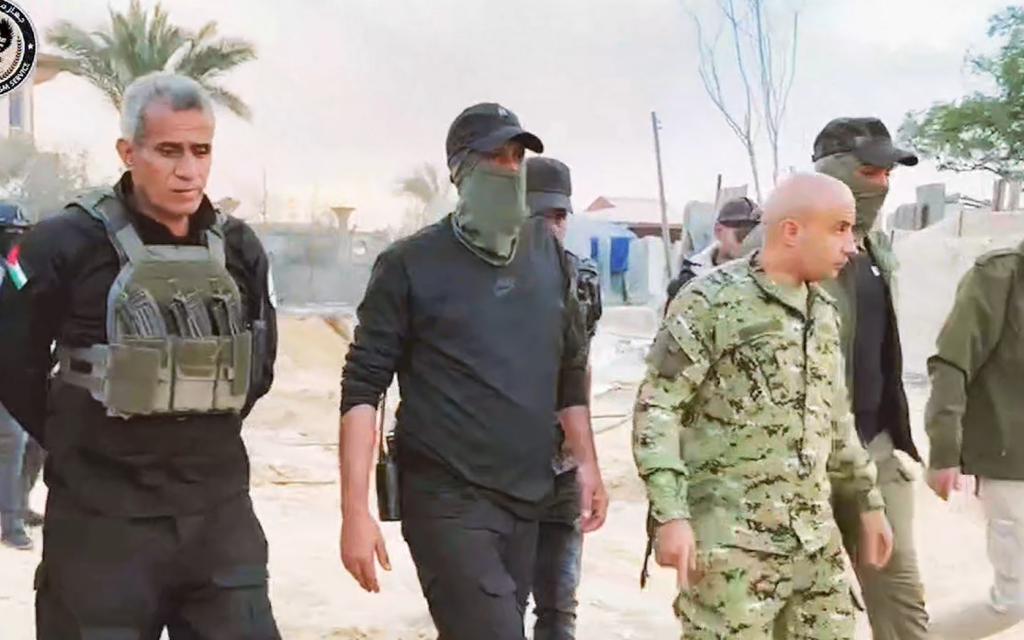
The most organized group, al-Shabab which was led by al-Shabab before he was killed, according to Israel, in a December clan feud, is now led by his deputy Dehini.
The militia, known as the Counter-Terrorism Apparatus or the Popular Forces, is also thought to be the largest of the groups, with reports estimating the group’s size at anywhere from several dozen to a few hundred gunmen. In videos, Dehini is often seen alongside dozens of armed fighters, who at times wear uniforms bearing the Palestinian flag.
The group operates east of Rafah and near the Rafah crossing.
On May 26, Dehini published a video on his Facebook page showing several dozen armed men patrolling in jeeps with a border fence visible in the background. Weeks earlier, Dehini published footage showing himself and several militia members in civilian clothes, tagging the location as the Rafah Crossing. The post confirmed earlier Israeli reports that Dehini’s group was participating in security arrangements on the Gaza side of the crossing.
On the ground, the militias occasionally engage in clashes with Hamas operatives. The confrontations publicized so far have taken place in areas on the Hamas-controlled side of the line and, according to the militias, were mostly initiated by Hamas.
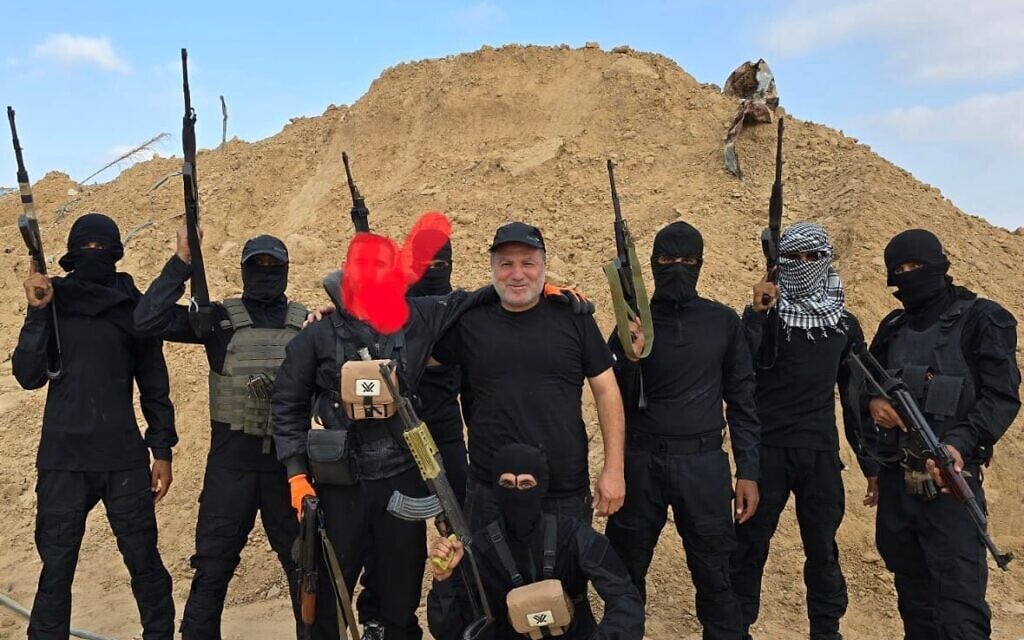
On April 20, al-Astal told The Times of Israel that while members of his militia were distributing food to residents in Khan Younis, Hamas operatives attacked them and killed one of the group’s members.
He described a similar incident on May 6, saying Hamas operatives attacked the militia in Musa Square in Khan Younis while they were assisting civilians. In a video filmed afterward, al-Astal claimed the militia members were unharmed and had shot two Hamas operatives dead and seized their weapons.
At the same time, Hamas-affiliated media outlets claimed the incident was a planned ambush carried out by Hamas against the militia, during which “three Israeli agents” were killed — apparently referring to militia members cooperating with Israel.
At least some of the militias are built around the network of powerful extended families that continue to wield authority on a local level in parts of Gaza. Hamas, which coordinates with many of the enclave’s clans, including those linked to some of the militias working with Israel, has attempted to use these ties to pressure militia members to disband, Barak said.
Among them, he noted, is that of al-Astal.
Collaboration questions
Al-Astal acknowledged that the militias operate in coordination with the IDF, but declined to elaborate further.
During a media tour organized by the military last year, IDF combat officers operating in the Rafah area were unable to comment on the anti-Hamas militias in their area, saying they were only aware of their presence and location. Coordination between the militias and Israel is reportedly handled by the Shin Bet security agency.
The IDF and Shin Bet declined to comment on the matter.
Hamas-affiliated media reports on May 14 suggested that the militias were helping the IDF deal with civilians as the army expanded its zone of control inside Gaza, taking over areas where Palestinian civilians had been living under Hamas rule.
One unusual activity documented recently has been the militias’ involvement in evacuating civilians, reportedly under IDF instructions.
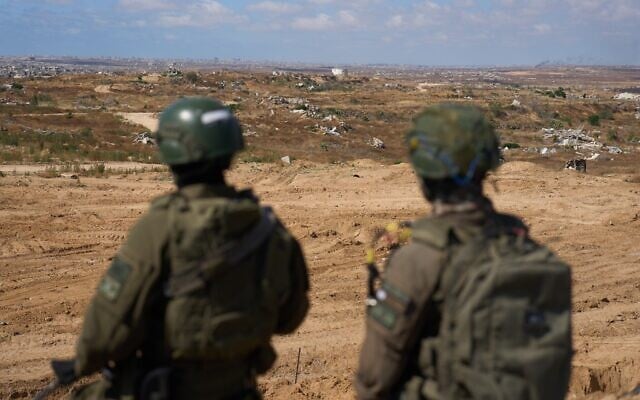
According to the reports, militias cooperating with Israel had forced residents to evacuate areas near Deir al-Balah, close to the Yellow Line, for unclear reasons.
On the same day, a video published by Abu Nuseira’s militia showed him briefing armed men, alongside text blaming civilians’ suffering on Hamas’s refusal to cede the enclave to transitional authorities as laid out in the Trump plan.
“We do not want to expel them, we are with them,” Abu Nuseira tells the armed men in the video, referring to Gazan civilians. “This is a message we are conveying from the Israeli side, that people should evacuate the area.”
One of the gunmen responds that residents understand this, while the armed men chant: “Death to Hamas.”
Israel has not officially commented on the evacuations, and the IDF declined to address the issue in response to questions from The Times of Israel.
Milshtein criticized the strategy of taking over more territory, noting that it was pushing civilians to crowd into Hamas’s shrinking area of control, rather than bringing more Gazans into the expanding territory where the IDF and the militias hold sway.
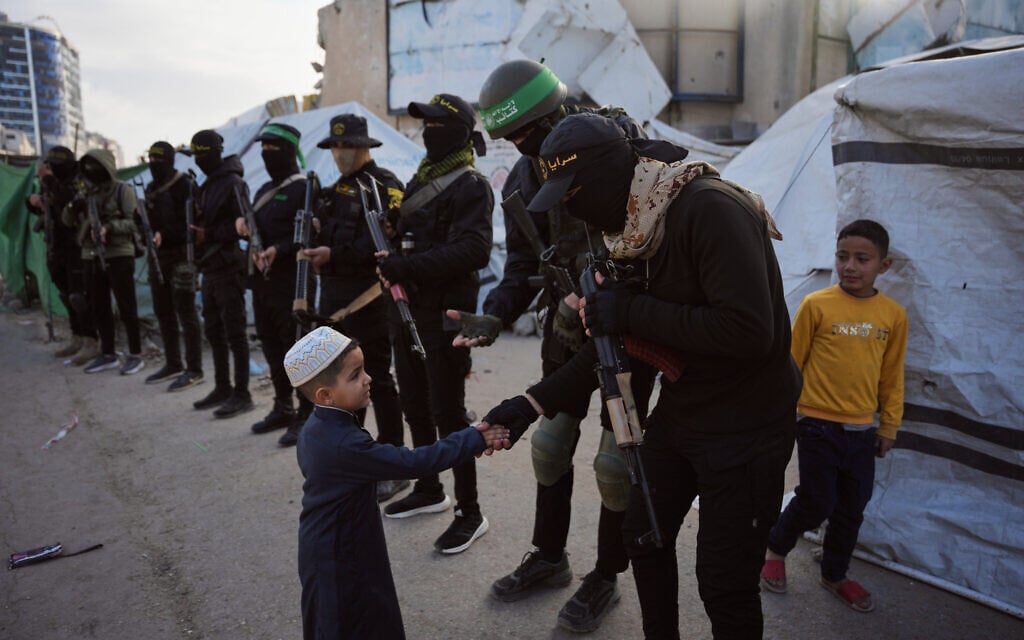
According to Milshtein, Israel has pursued a strategy of working with anti-Hamas groups in Gaza since early 2024, but the effort has been marked by repeated failures.
Initial attempts appear to have involved establishing contact with the Durmush clan in an effort to explore whether it could serve as a governing alternative to Hamas. Several senior members of the clan were later executed, a development that only became public months afterward through Arab media reports.
In March 2024, the Saudi newspaper Asharq Al-Awsat reported that efforts to enlist Gaza clans as an alternative governing force had largely failed. According to the report, many clans rejected proposals to take responsibility for securing specific geographic areas of the Strip out of concern that doing so would bring them into conflict with Hamas forces that remained active.
In June 2024, Prime Minister Benjamin Netanyahu appeared to disclose the project, telling Channel 14 that Israel had tried several months earlier to empower clans that would replace Hamas rule, but that Hamas had killed the clan members involved.
Milshtein said the lack of transparency over the project had precluded any official accounting of the use of militias in Gaza, and stymied meaningful public debate over the strategy.
“No one stops and asks where all this nonsense is heading,” he said. “Is it helping? Is it harmful? Should it be changed or canceled? For two years there has been no review of this entire affair — not by the Shin Bet, not by the IDF. There is no review, and when there is no review, mistakes get repeated again and again and again.”