World
As talks sideline Israel, Netanyahu says ‘we need to free ourselves of dependence’ on US arms

Prime Minister Benjamin Netanyahu said Tuesday that Israel needs to be “free” from military dependence on the United States and develop its own weapons-production capabilities, arguing that this is needed to support the ongoing fight with Iran and its terror proxies.
Speaking during a meeting with reserve combat officers in the West Bank’s Gush Etzion settlement bloc, Netanyahu said: “I greatly appreciate the support we have received — and that I have secured over the years — from our American friends.”
“But today I say: We need our own independent weapons-production system. We must manufacture our own armaments,” he said.
“We are now confronting Iran and its proxies. We have struck them hard. It is not over yet, but it depends on our strength. Where we will be in 30 years depends on our strength,” the premier continued.
“We need to free ourselves from dependence, continue building more and more strength, incorporate more and more technology, and train more and more generations of commanders like you — because ultimately, that is what will determine our position,” Netanyahu said.
US and Israeli officials have said that recently-begun talks on a new 10-year US-Israel security cooperation framework seek to “gradually transition” the relationship “from aid to a completely reciprocal partnership.”
The prime minister has vowed for months to end US military aid to Israel over the next decade, but Tuesday’s remarks came at a particularly tense moment, amid increasing concern in Jerusalem over the US placing limitations on its freedom of action.
After launching a war against Iran together with the US in February, Israel has been frozen out of a subsequent negotiating process between Washington and Tehran.
Israel had no part in negotiating the memorandum of understanding reached between the US and Iran last week. Nevertheless, the terms of the opening clause — permanently ending the war and ruling out any resumption — indicate that it is binding on the US, Iran and “their allies.”
The MOU refers to “all fronts, including Lebanon,” and Tehran has demanded that Israel withdraw its forces from that country, where troops are battling the Hezbollah terror group, which attacked Israel on March 2 in support of Iran.
Israel, which is engaging in separate US-brokered talks with the Lebanese government, has refused to withdraw from the country until the threat of Hezbollah is removed.
However, when US President Donald Trump was asked last week whether he’d be able to “control Israel from attacking Lebanon” if he wanted to, the US leader said he would, adding: “They have a lot of respect for me, and they do as I say.”
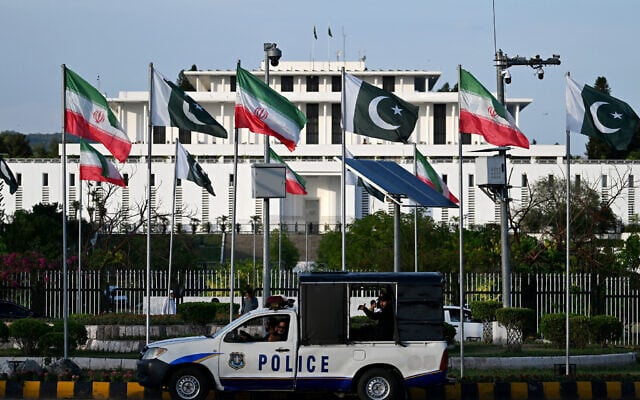
Some Israeli officials, however, have openly spoken out against the MOU, which went into effect without any of the war’s key goals having been achieved — notably, eliminating Iran’s nuclear and ballistic missile programs, and creating the conditions for the fall of the regime. Netanyahu has claimed that the latter goal has been achieved, though there are no signs that the Islamic Republic’s rule is in jeopardy.
Washington has said it is committed to preventing Iran from getting a nuclear weapon, and that fighting could resume if, at the end of the current negotiation period, the Islamic Republic has not made a commitment sufficient to avert the possibility.
US Vice President JD Vance last week, defending the deal, noted that “two-thirds of the defensive weapons that have protected [Israel]” in recent wars were US-made and funded by American tax dollars.
Responding to far-right ministers who called on Israel to disregard the MOU, Vance said: “If I was in the cabinet of the Israeli government, I might not be attacking the only powerful ally that I have anywhere left in the entire world.”