World
Annex in Israel-Lebanon deal assures IDF freedom of action in security zone — source

The Israel-Lebanon framework agreement, signed last week, explicitly preserves the Israel Defense Force’s full freedom to act against threats in the southern Lebanon security zone, an official familiar with its contents told The Times of Israel on Sunday.
The classified security annex of the deal reached in Washington, DC, also reiterates that there will be no automatic IDF withdrawals, though Jerusalem remains wary that pressure from Tehran could derail the agreement, the official said, confirming an unsourced Channel 12 report.
The security annex, referenced in the published text of the agreement, has been kept classified at the request of the Lebanese government, according to the details.
Article 4 of the annex includes a provision that the IDF will retain freedom of action against both emerging and immediate threats within the security zone — a top priority for Israel amid recent fears that US-Iran negotiations would limit its ability to respond to threats on troops from Hezbollah.
The article also includes an explicit commitment by both Israel and Lebanon that no IDF withdrawals will take place automatically or according to set schedules; rather, any redeployments will be based on conditions on the ground. The main agreement similarly says the pullout will be performance-based.
The annex was also said to specify that the two pilot withdrawal zones announced on Saturday will remain the only such areas for the foreseeable future, with no immediate plans to expand the arrangement.
Israel’s current assessment is that the pilot project, under which the Lebanese army will enter those initial two designated areas after training and vetting, will take several weeks to implement, while the Lebanese forces prepare to assume responsibility there, according to the details.
Israeli officials remain concerned that Iran could seek to undermine the arrangement through its parallel talks with Washington, pressing the US to demand a full Israeli withdrawal from southern Lebanon as part of a broader US-Iran agreement, the Channel 12 report confirmed by the official added.
The framework agreement between Israel and Lebanon aimed at paving the way for an eventual peace deal between the two long-time Middle East adversaries. It includes a pilot effort in which Lebanese soldiers take control of some small areas currently held by Israeli troops, and includes a process aimed at disarming Hezbollah. Hezbollah swiftly rejected the agreement, and Israel has said it will continue to take action against the Iran-backed terror group.
IDF Chief of Staff Lt. Gen. Eyal Zamir on Sunday said the agreement signed with Lebanon is “historic and significant,” and that the military achievements “are what created the conditions for it.”
“We will honor the agreement and work to ensure its success. The test now is one of action by both sides, and the coming period will determine the future,” he said, according to remarks provided by the military.
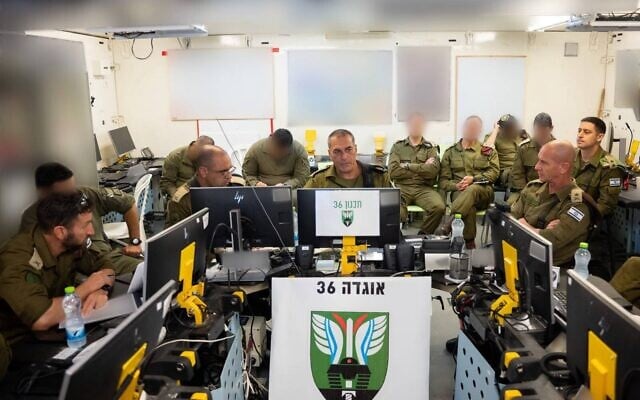
Zamir visited the Northern Command to approve plans for future operations in Lebanon, as the IDF is set to partially withdraw as part of the deal.
Meanwhile, Hezbollah lawmaker Hassan Fadlallah warned of “internal conflict” in Lebanon over the agreement, which the Iran-backed terror group rejects, predicting that the deal would not be implemented.
Fadlallah spoke a day after Lebanese President Joseph Aoun told US President Donald Trump in a phone call that the Lebanese state “will assume its responsibilities” in implementing the framework agreement, but made no mention of Hezbollah or disarming the terrorist group.
Lebanon was drawn into the broader Middle East war on March 2 when Hezbollah fired rockets at Israel in support of its Iranian sponsors, as the Islamic Republic came under US-Israeli strikes.
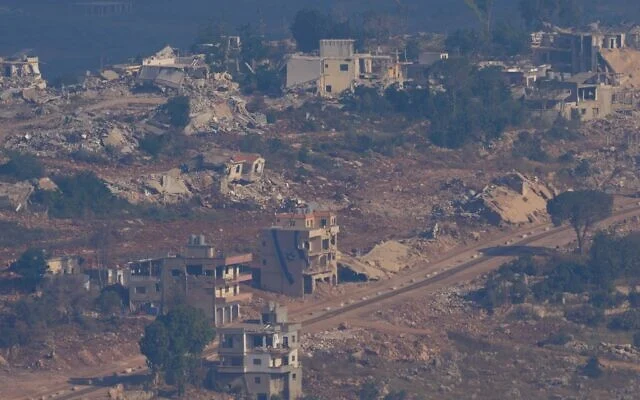
Israel responded with heavy airstrikes and a ground invasion in southern Lebanon, where its troops hold swaths of territory and have been carrying out extensive demolitions of homes and other buildings, saying the infrastructure was being used by Hezbollah as it built its forces along the Israeli border.
Separately, the IDF demolished a large Hezbollah underground facility in the southern Lebanon village of Majdal Zoun on Sunday, Prime Minister Benjamin Netanyahu and Defense Minister Israel Katz announced.
The tunnel, which ran some 200 meters and reached depths of over 25 meters under the village, was used by Hezbollah to assemble, store, and launch Iranian-made unmanned aerial vehicles, according to the military.
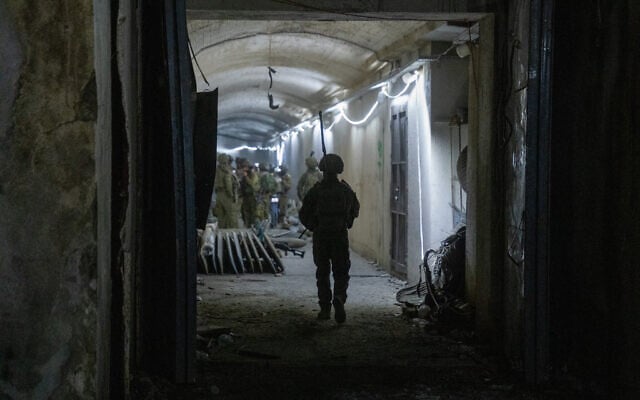
Journalists were given a tour of the tunnel earlier this month.
In a statement, Netanyahu and Katz said that Israel updated the US and the American representative in Lebanon ahead of the tunnel’s demolition.
The IDF later released video of the demolition, after warning residents of northern Israel earlier that a large explosion would be heard.
The IDF publishes footage showing the demolition of a major Hezbollah tunnel under the southern Lebanon village of Majdal Zoun this evening. pic.twitter.com/ZvQmkHXPY3
— Emanuel (Mannie) Fabian (@manniefabian) June 28, 2026
The IDF had previously postponed the tunnel’s demolition amid pressure by the US on Israel to halt all military activity in southern Lebanon amid the ceasefire.