World
All Eyes on Israel After US-Iran Peace Deal: What’s Its Position?

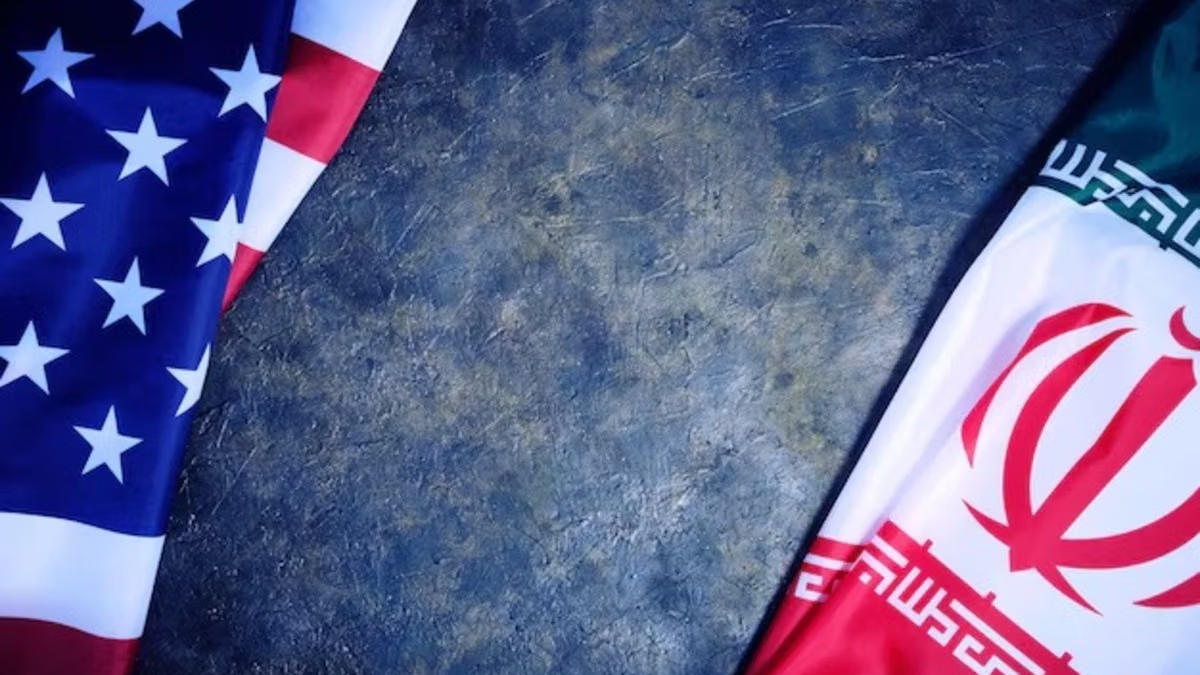
The sudden announcement of a peace deal between the United States and Iran has shifted the world’s attention to one key player left out in the cold – Israel. While international leaders are celebrating a potential end to hostilities, Israel’s next move is the single most volatile factor threatening to collapse the newly brokered June 2026 Peace Framework.
To understand why Israel’s reaction matters most, you have to look at how this war began. This wasn’t a conflict fought from a distance, Israel and the United States launched this war as active, joint combat allies on February 28, 2026, initiating massive combined airstrikes and the assassination of Supreme Leader Ali Khamenei. Now, after months of a brutal naval blockade and a global fuel crisis, Israel’s fierce opposition places it at direct odds with Washington’s exit strategy.
As details of the agreement emerge, four major friction points show why Israel’s position could completely shatter the fragile truce:
1. Israel Was Entirely Excluded from the Bilateral Peace Pact
Despite launching the war side-by-side with the U.S., Israel was not a party to the intense, secret negotiations brokered by Pakistan, Qatar, and Turkey. This sidelining has triggered severe political defiance inside Jerusalem. Breaking the country’s official silence, National Security Minister Itamar Ben-Gvir issued an aggressive rebuke on social media.
Ben-Gvir explicitly stated that the American-led initiative does not dictate domestic or military policy, writing, “Trump’s agreement does not bind us. Israel is not subject to the United States, and we are an independent and sovereign nation!” He went on to emphasise that Israel is not a partner to a deal that fails to ensure its security, directly noting, “The State of Israel is not a banana republic.” If Israel refuses to halt its operations, the regional war cannot truly end.
2. The Active Sabotage of the Lebanon/Hezbollah Truce
A core pillar of the U.S.-Iran memorandum of understanding is an immediate, permanent ceasefire across all fronts, which explicitly includes the stability and sovereignty of Lebanon. However, Israel is actively disrupting this framework. Just hours before the peace deal was finalised, a major Israeli airstrike on Hezbollah targets in Beirut delayed the diplomatic signing and caused fierce behind-the-scenes friction. U.S. President Donald Trump angrily told reporters that the morning’s attack on Beirut should not have happened and had temporarily delayed the agreement.
Israel insists on retaining “freedom of operation” in Lebanon to completely dismantle Hezbollah, a stance that Iran treats as a complete dealbreaker. Ben-Gvir clarified this unyielding military stance by outlining a strict balance of deterrence: any launch of a drone, UAV, or missile toward Israel from Lebanon will be met with an immediate Israeli strike in the Dahiya district of Beirut. He insisted that Israel must not give up this tactical leverage under any international pressure.
3. Conflicting Definitions of “Victory”
The United States and Israel are operating on entirely different strategic timelines. President Trump’s primary goal is an immediate economic exit strategy: lifting naval blockades, reopening the blocked Strait of Hormuz to restore global oil flow, and calming energy markets.
Israel, on the other hand, views the war as an unfinished campaign. Ben-Gvir argued that whenever Israel historical succumbed to international containment pressure citing the Oslo Accords and the 2006 Lebanon agreement, it ultimately paid a “blood price with interest”. Israeli leadership fears the proposed peace framework, which includes the phased release of $24 billion in frozen assets, will allow a battered Iranian regime to easily rebuild its military and replenish its missile stockpiles directly on Israel’s borders. Consequently, the right-wing bloc insists they will not compromise on anything less than the total dismantling of Hezbollah, refusing to withdraw from captured territories where terror infrastructure has been cleared.
4. A High-Risk 60-Day Countdown
The framework provides a narrow, 60-day window for intensive negotiations to secure a final, permanent accord regarding Iran’s nuclear constraints. Trump has made it clear that military options will restart if Iran fails to comply with the final terms. This 60-day buffer is highly vulnerable to spoiling. If Israel uses this period to launch independent assassinations or targeted strikes against Iranian infrastructure, it will provide Tehran with the perfect justification to collapse the talks, resume uranium enrichment, or re-block the Strait of Hormuz.
Where the Two Sides Stand Now
While a formal signing is scheduled for June 19 in Switzerland, the immediate fate of the deal hangs on a tense silence from Jerusalem juxtaposed against cautious messaging from Tehran.
- Iran’s Position: Rather than declaring a total peace, Iranian state media is framing the memorandum of understanding as a strategic, tactical pause. Top Iranian national security bodies have agreed to the framework primarily to secure immediate economic relief, including the unfreezing of assets and the removal of the U.S. maritime blockade. However, hardliners in Tehran have explicitly warned negotiators against a full retreat, and military leaders have cautioned that any continued Israeli aggression in Lebanon will instantly collapse the fragile process.
- Israel’s Position: Rather than staying silent, key figures in the Israeli leadership have broken their silence with aggressive defiance, framing their refusal to back down through historical duty. Pointing to thousands of years of persecution and exile, Ben-Gvir declared that the Jewish people do not fear a long road, adding, *”The days are over when the Jew took blows and kept silent. Never again!”* Mainstream Israeli officials continue to quietly reiterate that they were completely cut out of the U.S.-Iran negotiations and are under no legal obligation to stop defending their borders or cede territory.
The full impact of the deal hinges entirely on whether the White House can force its primary wartime ally to stand down. With Jerusalem openly stating that Trump’s peace framework does not bind them, the world is watching to see if this deal is a genuine breakthrough or just a brief pause before a much larger escalation.
Read More: US-Iran Peace Deal: What’s Inside 14-Point MoU Set To Be Signed On June 19?