World
Airfares will take longer than expected to return to normal levels, says global airline body

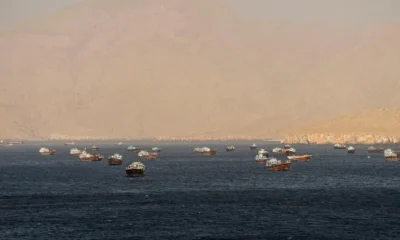
Higher air fares will linger for a period “longer than what many people think”, as the closure of the Strait of Hormuz continues to disrupt oil exports from the Middle East, said the global airline body on June 7.
Speaking at an industry outlook briefing focusing on the energy crisis, the International Air Transport Association’s (IATA) senior vice-president for sustainability and chief economist, Marie Owens Thomsen, said this is because all the elements of a “refining crisis” were already present before the Middle East conflict broke out.
The “very unevenly distributed” refining capacity around the world means that certain regions such as Europe are more dependent on fuel imports, particularly those from the Gulf region, she added.
“Everybody will continue to struggle with this for a long time, and I predict that prices will be higher… It will take a long time before we get back to the US$60 per barrel of brent that we had in January,” said Thomsen at IATA’s annual general meeting in Rio de Janeiro, Brazil.
According to IATA’s latest figures, jet fuel prices are forecast to reach US$152 (S$196.2) per barrel in 2026, up from less than US$100 per barrel in 2025. In the week ending May 29, average jet fuel prices stood at US$141.64 per barrel.
On how much longer airlines would hike airfares, Thomsen said they will increase fares to an extent that they can cover costs and not go bust.
Citing historical data, she noted that airlines typically absorb half of jet fuel price increases on their slim profit margins, while passing on the other half to passengers in the form of higher ticket prices.
Singapore Airlines (SIA) said in May it would not raise airfares to the extent that it passes the full increase in fuel costs on to passengers.
The SIA Group noted that while the national carrier and its budget arm Scoot had raised fares across their network, “the adjustments do not fully offset the rise in the price of jet fuel”.
In a separate media briefing on jet fuel on the second day of IATA’s annual general meeting, Eleanor Budds, research director of global fuels and refining at commodities analytics firm S&P Global, said the situation could get worse before it gets better.
She predicts that oil prices could increase again during the summer peak travel season.
With the World Cup taking place from June 11 to July 19, she said there will be huge demand for gasoline to power vehicles, so refineries would have to allocate more resources to process gasoline instead of jet fuel. This will further push up aviation fuel prices.
This will be followed by some stability after the summer when demand falls as jet fuel supplies are rebuilt, though prices will remain high at least until the end of the year, added Budds.
Even if the Strait of Hormuz – a critical waterway through which about a fifth of the world’s oil supply flows – is reopened in the near future, Budds noted that oil prices will not instantly fall back to their original levels.
A restart of the entire logistics system needs to happen, said Budds, and a minimum of four or five months is needed to resume refinery production and recover damaged infrastructure.
Following the outbreak of the Iran war on Feb 28, Middle Eastern carriers also lost ground on routes connecting Europe and Asia.
Their passenger share on these routes tumbled from 26 per cent to 13 per cent between March 2025 and March 2026.
Asia-Pacific and European airlines have filled the void.
Asia-Pacific airlines’ passenger share on these routes climbed from 37 per cent in March 2025 to 45 per cent in March 2026.
IATA’s director-general Willie Walsh believes this is not a structural change, as “there is no way” European and Asian airlines can replace capacity in the Gulf region, given the aircraft shortages they are facing.
He said Middle Eastern airlines will regain their position once there is stability and an end to the military action, and that the rerouting of traffic flows is “short term”.
Thomsen is of the view that it will be a challenge for these airlines to bounce back and reclaim the share of global traffic they had before the conflict.
“Because once you have lost traffic, it takes a lot of money and effort to try to get it back… because people’s behaviours have already adjusted in a different way,” she said.
On the ongoing aircraft and engine delays, Walsh said the airline industry’s emissions are higher than they should be due to these hold-ups on the part of original equipment manufacturers.
Calling this “unacceptable”, he said these delays have added to fuel and maintenance bills, leasing costs and led to operational disruptions.