Society
AI in Newsrooms: Nigerian editors tackle transparency, trust

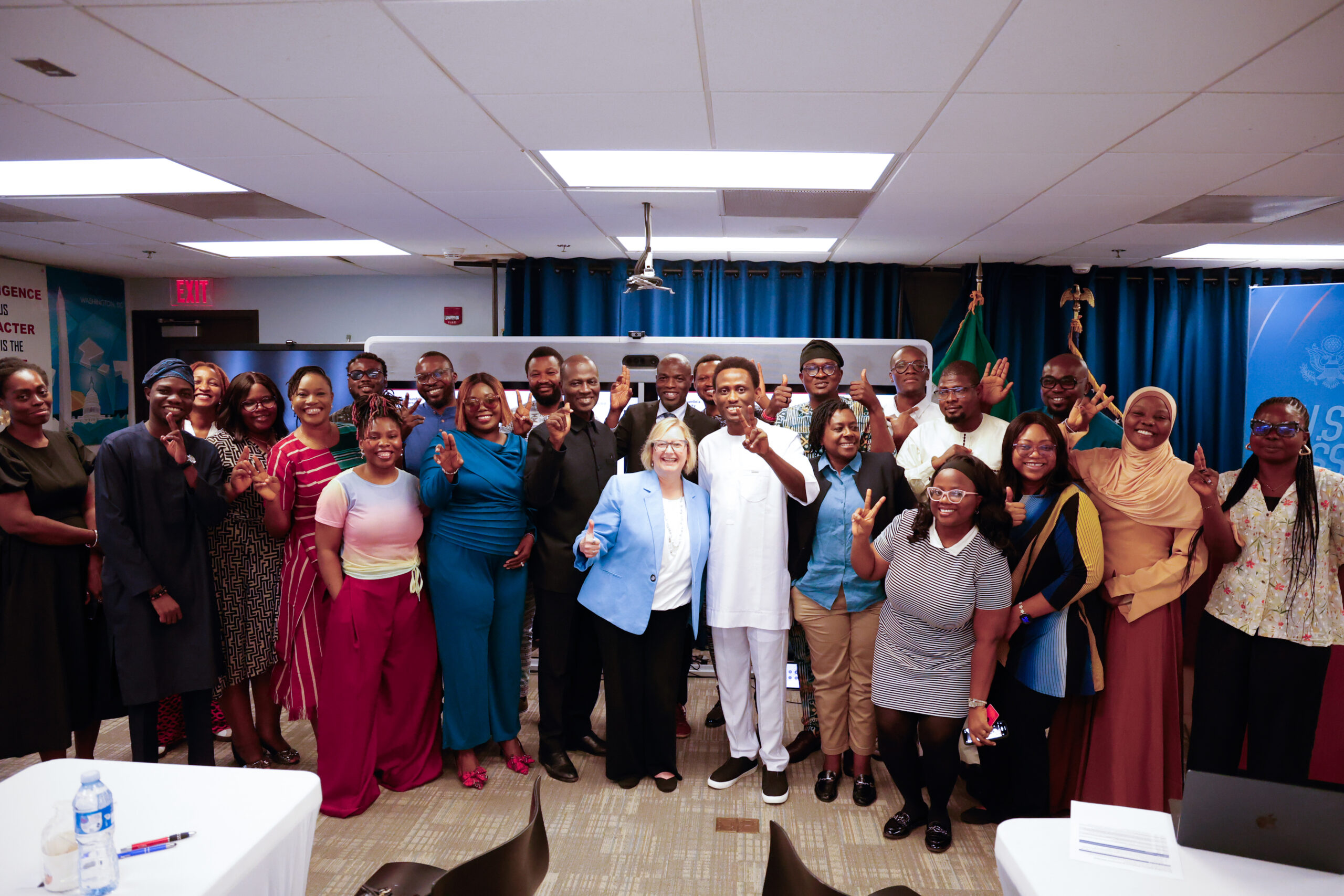
Senior journalists and editors from Nigeria’s leading news organisations gathered at the United States Consulate General in Lagos on Tuesday to begin building a shared standard for how newsrooms disclose their use of artificial intelligence to audiences.
The co-design workshop, convened by Oluwamayowa Tijani, an alumnus of the United States’ International Visitors Leadership Programme, brought together newsroom leaders across print, digital, television, and radio to tackle one of the most pressing credibility questions facing journalism today: not whether newsrooms use AI, but how honestly and clearly they tell their audiences about it.
The session drew on almost three years of research into AI adoption in Nigerian newsrooms, which surfaced what Tijani calls a “transparency paradox.”
According to Tijani, while an overwhelming majority of journalists across Nigerian newsrooms believe AI use should be disclosed, very few do so consistently.
“Journalists do not consistently disclose use of AI for three major reasons: First, is the materiality threshold; journalists often question what is material enough to be disclosed as AI use?” Tijani said.
“The second is an articulation problem: how do journalists capture what AI has done clearly enough for the audience to understand, and the third is anticipated audience stigma, how do we ensure that our audiences do not lose trust in us when we say we have used AI?”
He added that his research with news audiences found that Nigerian news consumers do not necessarily lose trust when a newsroom discloses AI use, provided the disclosure is specific and clear about what the AI actually did and what remained in human hands.
Delivering remarks at the workshop, Julie McKay, U.S. Consulate Public Affairs Officer, noted that the United States leads the world in AI, powered by the innovation and excellence of U.S. companies, universities, researchers, and entrepreneurs.
She explained that the U.S. Mission is proud to see its exchange alumni like Tijani at the forefront of promoting free speech, driving innovation, and advancing U.S.-Nigeria collaboration in technology.
“We are pleased that Mayowa Tijani, one of the over 14,000 Nigerian alumni of U.S. government exchange programs, has taken on the challenge of convening this workshop to help develop a Nigerian-led newsroom AI disclosure standard,” McKay added.
Participants, including senior journalists and editors from leading newspapers, reviewed a set of disclosure designs to co-design what is most appropriate for their varied audience.
The disclosure methods include editors’ notes, end-of-story footnotes, on-image labels for AI-generated visuals, and published AI policies.
After working in groups and exploring the consequences of each design choice, the journalists made the following recommendations for possible industry-wide adoption:
1.Publications of public-facing AI policies telling their audience how they use AI
2. Caption-level disclosure of use in AI-generated images and videos
3. Task-specific AI use should be disclosed in form of an editor’s note at the end of a report
4. Negligible AI use, such as spelling correction, punctuation, need not be disclosed individually.
“If Nigerian journalists can agree on a common language for disclosing AI, one that audiences recognise and trust, we will be ahead of much of the world on disclosure, not behind it,” Tijani added.
Some of the organisations represented at the event include Punch Newspapers, Pulse, ThisDay, Media Career Development Network, PMNEWS, Nairametrics, TheCable, BellaNaija, RadioNow, The Nation, TechCabal, FIJ, DevReporting, The Guardian, SciDev, Business Metrics and AFP.