World
After a bitter split, European leaders play nice with Trump

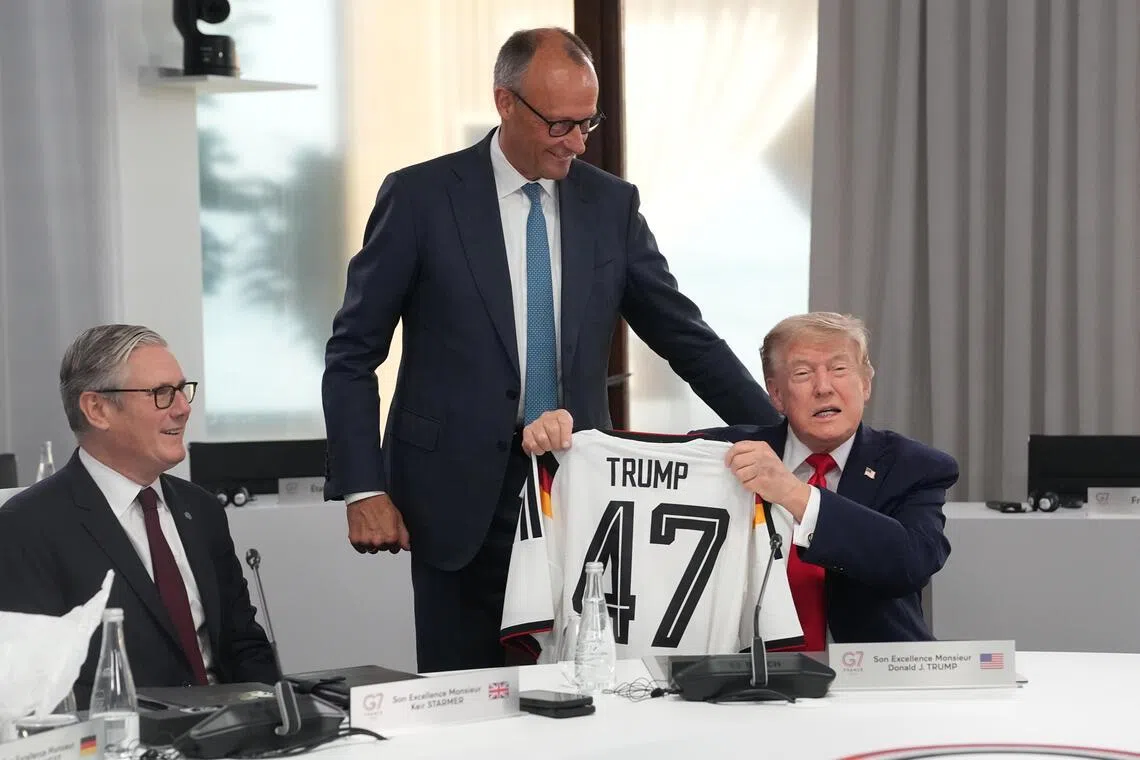
EVIAN-LES-BAINS, France – When Chancellor Friedrich Merz of Germany presented President Donald Trump with a soccer jersey emblazoned with the number 47 on June 16, it was the kind of gesture that a foreign leader might have made during his first term: flattering, emollient and calculated to please.
But Merz was doing it after a rancorous stretch, in which he and other European leaders condemned the war in Iran, provoking Trump to announce that the United States would pull some US troops from the Continent.
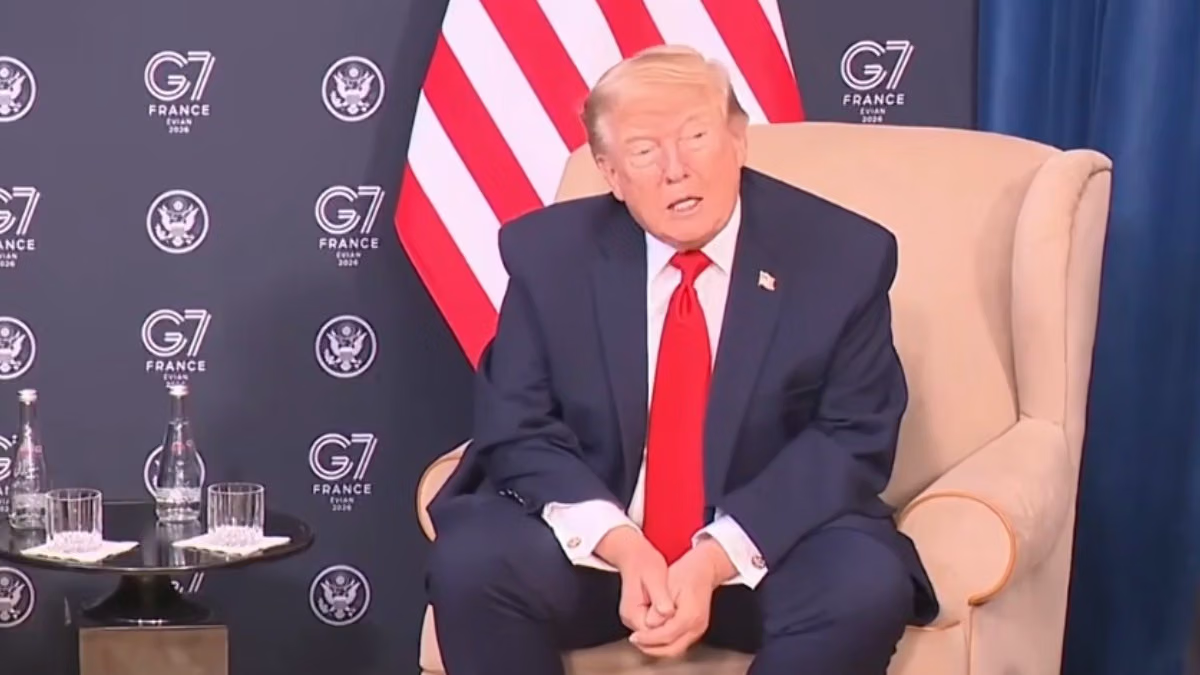
Europe’s alliance with the United States may still be on the rocks, but on the first full day of a Group of 7 summit at this Alpine spa town in France, the leaders showed they remained ready to behave politely toward Trump.
For all the sharp elbows of the last year, they appear to have concluded that the best way to deal with a disruptive president is to court him, particularly since they still hope to engage the United States on thorny issues such as the war in Ukraine.
“We’re on the same team,” Merz said of the president on social media, wishing him a belated happy 80th birthday.
Such conciliatory words would have seemed improbable even a week ago, given the bitter split over Iran, Trump’s threats to take over Greenland and his regular hectoring of Europe’s centrist leaders – all of which convinced several of them that the US was no longer an ally, and was even, in some cases, a threat.
Now, though, Trump has presented at least the contours of a peace deal with Iran, and Europe’s leaders have gone back to charming him.
“That’s how diplomacy delivers,” said Ursula von der Leyen, the president of the European Commission, congratulating Trump on the framework. She said it would reopen the Strait of Hormuz, drive down oil prices and perhaps even ultimately put an end to Iran’s nuclear ambitions.
“Europeans in private now broadly accept that they can’t wait out Trump and that something quite fundamental in the trans-Atlantic relationship has changed,” said Jeremy Shapiro, a director at the European Council on Foreign Relations, a research group with offices in Berlin and London.
“But of course the rupture does not give Europeans an alternative plan,” Shapiro said. “So, they have to play nice with Trump.”
This article originally appeared in The New York Times.