Breaking
5 Things You Should Do When Visiting Maastricht

Maastricht is one of the oldest cities in the Netherlands and is located in the southern part of the country, close to Belgium and Germany.
The city has a long history and its location has given it strong Belgian and French influences, especially when it comes to food.
People have lived in the area for thousands of years. Celts were there as far back as the 5th century BC, while the Romans later arrived and built a bridge across the Meuse River.
Maastricht also played an important role during the Carolingian and Holy Roman empires. Because of its location, different powers fought for control of the city between the 16th and 18th centuries. Some of the old fortifications can still be seen today.
During World War II, Maastricht became the first Dutch city to be liberated by Allied forces.
Decades later, the city became internationally famous for the Maastricht Treaty, which helped pave the way for the European Union and the euro.
Today, Maastricht has around 125,000 residents, including thousands of students studying at Maastricht University.
Five things to do in Maastricht
- Explore the city’s history
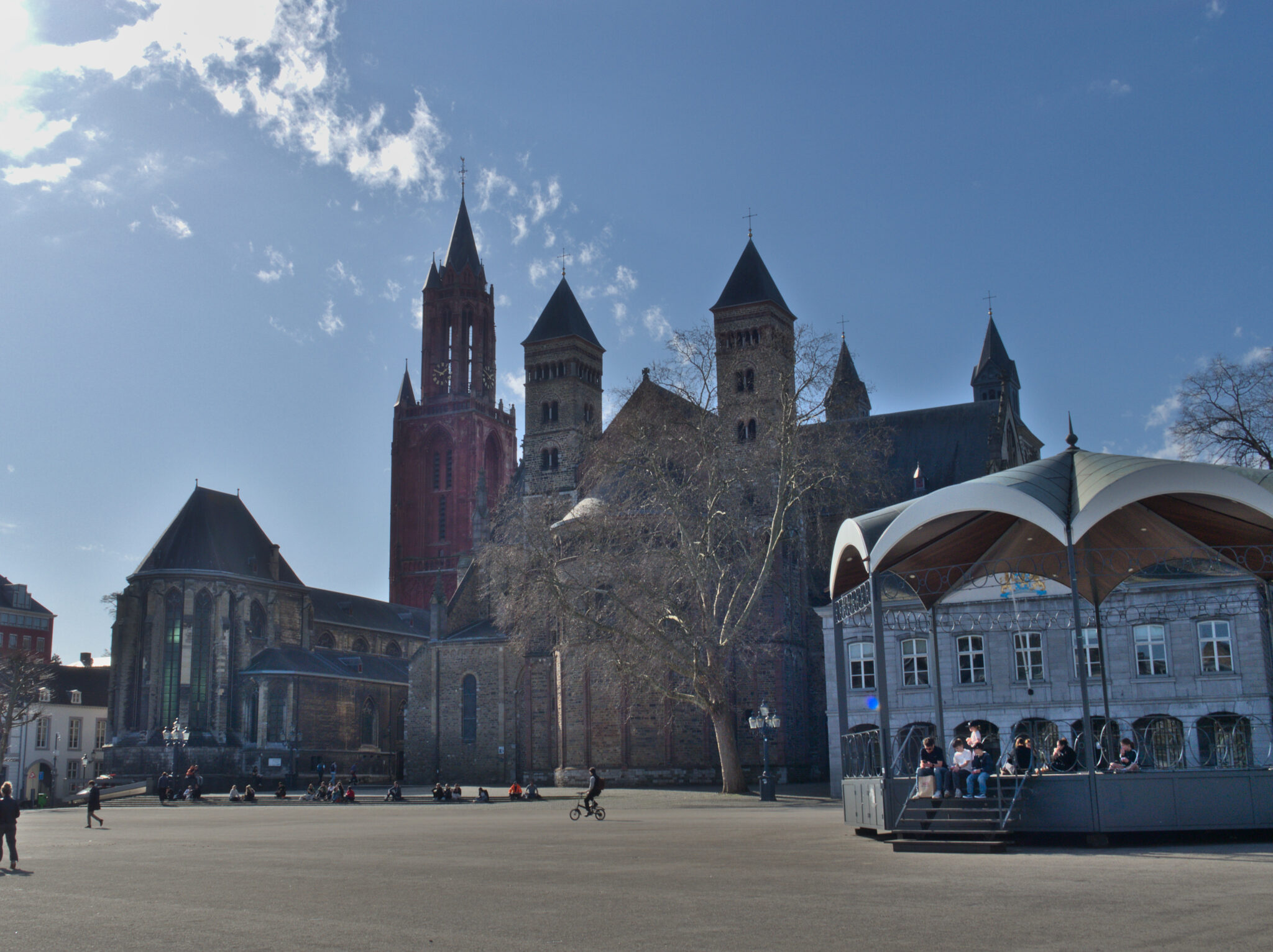
Start your trip at Vrijthof, one of Maastricht’s most famous squares.
Dutch conductor André Rieu holds his popular summer concerts there, while the square is transformed into a Christmas market during winter.
Vrijthof is also home to the Basilica of Saint Servatius. Maastricht’s patron saint, Servatius, is believed to have died there in 384 AD.
You can also visit the Basilica of Our Lady and see the famous wooden statue of Mary known as Star of the Sea, which dates back to the 15th century.
Another place worth seeing is Helpoort, or Hell’s Gate, which is the oldest surviving city gate in the Netherlands.

From there, you can walk through Stadspark, explore parts of the old city walls and see a statue of the famous musketeer d’Artagnan.
D’Artagnan died during the French siege of Maastricht in 1673. Archaeologists recently announced that skeletal remains discovered beneath a nearby church could possibly be his.
- Go underground
If you want to explore another side of Maastricht’s history, head underground.
Visitors can tour the caves of Mount Saint Peter, a huge network of limestone quarries dating back to the 13th century.
During World War II, the caves were used to hide weapons and valuable items from German forces.
Rembrandt van Rijn’s famous painting The Night Watch was among the artworks kept there for protection. The painting was removed from its frame and rolled into a cylinder.
You can also explore Maastricht’s underground casemates, a network of defensive corridors beneath the city.
- Visit a church turned into a bookstore
Book lovers should visit Boekhandel Dominicanen.
The bookstore is located inside the approximately 700-year-old Dominicanenkerk.
Over the centuries, the building has been used as a church, warehouse, archive, printing house and even bicycle storage.
Napoleon also used the building to store military equipment and house personnel during the 1790s.
After a major restoration, it was transformed into a spectacular bookstore in the mid-2000s.
Another option for book lovers is De Tribune, which was named the Netherlands’ best literary bookstore in 2024.

- Go shopping
Maastricht is also known for shopping.
The city has plenty of boutiques, art galleries, vintage shops and attractive shopping streets, including Rechtstraat.
Markets are held on Wednesdays and Fridays, while an antiques market with hundreds of sellers takes place on Saturdays.
- Visit the highest part of the Netherlands
A short trip outside Maastricht will take you to Vaalserberg.
At just over 322 metres, it is the highest point in the European Netherlands.
The area is also home to Drielandenpunt, where the borders of the Netherlands, Belgium and Germany meet.
Visitors can climb lookout towers for views across the three countries.
Where to eat
One food you should try in Maastricht is Limburgse vlaai.
The traditional Limburg speciality is somewhere between a pie and a pastry and comes in many different varieties.
De Bisschopsmolen offers several types of vlaai at its bakery and cafe. It also organises workshops for people who want to learn how to make their own.
Onze Lieve Vrouweplein is another popular place to relax with a coffee or beer.
For something more luxurious, L’Auberge is located in the former stables of Château Neercanne.
Grand-Café Buitengoed Slavante is another option outside the city, while Marres Kitchen offers lunch in the same building as Marres, House for Contemporary Culture.
Where to stay
Visitors looking for a boutique hotel can try Townhouse Hotel Maastricht.
For something more luxurious, Kruisherenhotel is located inside a 15th-century monastery and has 60 individually designed rooms.
EasyHotel is another option for travellers looking for something more affordable.
How to get there
Maastricht’s main railway station is close to the city centre, making it easy to explore on foot after arriving.
The train journey from Amsterdam takes around three hours.
Driving from Amsterdam can take around two and a half hours, depending on traffic.
Anything else to know?
Maastricht is in Limburg, where Carnival is a major celebration.
Visitors should also remember that André Rieu’s summer concerts attract huge crowds to the city. Hotels can become difficult to find and parking can be limited during these events.
So if you plan to visit during Carnival or the André Rieu concerts, booking early is a good idea.