World
Zero hour in Baghdad

Something has detonated in Baghdad. Not a missile. A quieter blast, felt in bank vaults and cabinet rooms. Its radius may prove wider than any single strike this region has absorbed in twenty years.
At the center sits one date: 30th September. By then, every militia must disband and surrender its weapons to the state. By then, too, American combat troops are due to leave — everywhere except Erbil, the one piece of ground Washington will not give up. Iraq’s oil, its banks, its courts, and its sectarian compact are all being rewritten at once, under a man most Iraqis had never heard of eighteen months ago.
Ali al-Zaidi is the prime minister. Tom Barrack holds the power.
Barrack, the property mogul turned US ambassador to Turkey and envoy to Syria, added Iraq to his portfolio in May. He does not need troops in Baghdad. Iraq’s oil revenue, roughly 90 percent of the state budget, is held in an account at the Federal Reserve Bank of New York. In April, Washington froze nearly half a billion dollars of it in a single stroke. A senior Kurdish official called the freeze “the nuclear option” in the Treasury’s arsenal. Barrack’s appointment signalled Washington was done holding it in reserve.
Barrack’s brief is narrow on paper: dismantle the militias and sever Iraq from Iran. In Washington’s reading, these are one task. Iraq has functioned for two decades as Iran’s lung — a channel for laundering money and slipping past sanctions. Close that lung, and Tehran suffocates a little more each month.
The instrument is the same dollar pipeline that put al-Zaidi in office.
Cut their payroll, and fighters go home, even if the ideology does not. Two smaller factions have already agreed to place their weapons under state control. The Iran-loyal holdouts have not, and Washington has signalled what awaits them.
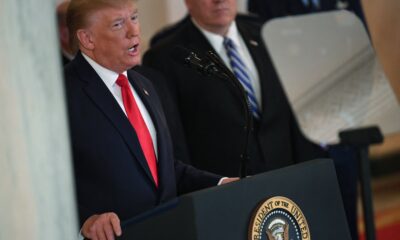
Nine years before he sat behind the Resolute Desk, Trump sat across from CNN’s Anderson Cooper and made a promise that would follow him into two campaigns and a presidency: “I would bomb the hell out of those oil fields,” he said, adding, “I would take away their wealth. I would take away their oil.” Pressed on the cost, he doubled down. He had told Wolf Blitzer the same thing, more bluntly, years earlier: “We weren’t smart enough to take the oil.”
General Raymond Odierno warned at the time that this was a fantasy of easy power: “There are limits to military power.” Thucydides said it without the euphemism, twenty-four centuries earlier: the strong do what they can, and the weak suffer what they must. That 2015 bravado reads differently now that Trump holds the office, and his envoy holds the leverage. Chevron is negotiating an expanded role in Iraq; other US firms are pursuing gas, power, and export contracts. The green-room boast has become a policy file.
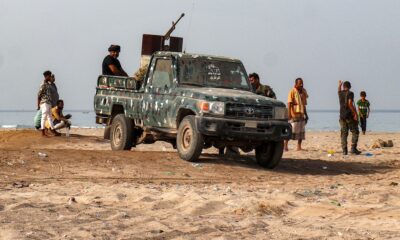
For militias that miss the deadline, Washington has shown its hand. Strikes killed dozens of PMF fighters this spring; the Treasury has sanctioned seven commanders by name. Special operations units are expected to keep targeting irreconcilables directly. Elsewhere, Washington may draw down. Erbil stays, an anchor to watch Iran and keep the Kurdistan Regional Government in Washington’s orbit rather than Baghdad’s.
The pressure has a domestic mirror. In early July, Counter-Terrorism Service sealed the Green Zone and moved through its compounds by morning light. Forty-seven people were detained, including twelve sitting MPs. Corruption has drained an estimated $776 billion from Iraq’s economy since 2003. More trials are coming, aimed at former premiers and militia commanders, with asset freezes to follow. It is Barrack’s second lever in miniature: expose the ledger, then decide whether to use it.
Step back, and the wider design comes into focus. In 2004, Jordan’s King Abdullah II warned of a “Shiite Crescent” arcing from Tehran through Baghdad and Damascus to Beirut. That arc is now being dismantled link by link. Syria has already been pulled from the sectarian alliance in the middle. Iran has absorbed military pressure; its own commanders privately call an attempt to reframe the confrontation as a civilisational, not political, one. Lebanon is next: President Joseph Aoun visits the White House on 21st July, pressing for an Israeli withdrawal while Hezbollah still refuses to disarm.
Iraq is the crescent’s last vertebra, and Washington intends to remove it this year. Whether what follows is a sovereign state or simply a different patron — Washington instead of Tehran — is a question the transition hasn’t answered. That is opinion, not fact. Fact: the clock reads 30 September, and in Baghdad, the hand on it is not an Iraqi hand.
The views expressed in this article belong to the author and do not necessarily reflect the editorial policy of Middle East Monitor.