News
“You Cannot Expect Amotekun to Confront AK-47-Carrying Criminals With Dane Guns and Governments Keep Creating Agencies Without Funding Them to Work” — Falana

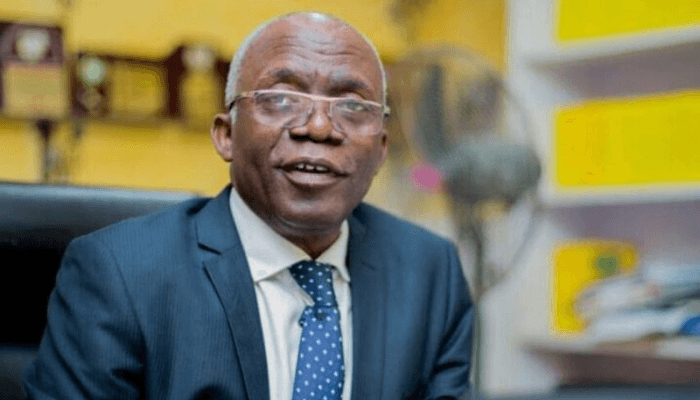
Femi Falana Questions State Police Push, Demands Funding and Arms for Existing Security OutfitsSenior Advocate of Nigeria, Femi Falana, has argued that Nigeria’s security challenges cannot be solved merely by creating new policing structures, insisting that existing security agencies must first be properly funded, equipped, and empowered to confront heavily armed criminals.
Speaking on Politics Today, Falana reacted to recent indications from federal authorities and National Assembly leaders that the country is making progress toward establishing a constitutional framework for state policing.
While acknowledging the ongoing discussions, he expressed concern that governments often focus on creating new agencies without providing the resources needed for them to function effectively.
According to him, Nigeria already operates a policing structure that constitutionally involves both the federal and state governments through the Nigerian Police Council.
Falana maintained that state governors have, over the years, failed to fully exercise their constitutional responsibilities in the administration and oversight of the police, leaving much of the control concentrated at the centre.
The senior lawyer noted that virtually every state already has some form of local security arrangement, citing regional outfits such as Amotekun in the South-West, neighbourhood watch groups in Lagos, civilian task forces in the North-East, and similar organisations across other parts of the country.
Falana argued that the major challenge is not the absence of local security agencies but their inability to access adequate weapons and resources.
He questioned how personnel deployed to forests and rural communities could effectively combat criminals carrying sophisticated firearms when many local operatives are restricted to using locally made weapons.
“How can you ask security personnel to go to the forest and confront criminals armed with AK-47s when those protecting communities are only allowed to carry Dane guns?” he asked.
He further warned that establishing state police without addressing funding mechanisms could create additional problems, stressing that policymakers must first explain how any new security structure would be financed and sustained.
Falana’s remarks come amid renewed national debate over state policing as insecurity, kidnappings, and violent crimes continue to challenge security agencies across the country.
His intervention adds to growing calls for a comprehensive reform strategy that combines constitutional changes with adequate funding, equipment, and coordination among existing security institutions.
Femi Falana Questions State Police Push, Demands Funding and Arms for Existing Security OutfitsSenior Advocate of Nigeria, Femi Falana, has argued that Nigeria’s security challenges cannot be solved merely by creating new policing structures, insisting that existing security agencies must first be properly funded, equipped, and empowered to confront heavily armed criminals.
Speaking on Politics Today, Falana reacted to recent indications from federal authorities and National Assembly leaders that the country is making progress toward establishing a constitutional framework for state policing.
While acknowledging the ongoing discussions, he expressed concern that governments often focus on creating new agencies without providing the resources needed for them to function effectively.
According to him, Nigeria already operates a policing structure that constitutionally involves both the federal and state governments through the Nigerian Police Council.
Falana maintained that state governors have, over the years, failed to fully exercise their constitutional responsibilities in the administration and oversight of the police, leaving much of the control concentrated at the centre.
The senior lawyer noted that virtually every state already has some form of local security arrangement, citing regional outfits such as Amotekun in the South-West, neighbourhood watch groups in Lagos, civilian task forces in the North-East, and similar organisations across other parts of the country.
Falana argued that the major challenge is not the absence of local security agencies but their inability to access adequate weapons and resources.
He questioned how personnel deployed to forests and rural communities could effectively combat criminals carrying sophisticated firearms when many local operatives are restricted to using locally made weapons.
“How can you ask security personnel to go to the forest and confront criminals armed with AK-47s when those protecting communities are only allowed to carry Dane guns?” he asked.
He further warned that establishing state police without addressing funding mechanisms could create additional problems, stressing that policymakers must first explain how any new security structure would be financed and sustained.
Falana’s remarks come amid renewed national debate over state policing as insecurity, kidnappings, and violent crimes continue to challenge security agencies across the country.
His intervention adds to growing calls for a comprehensive reform strategy that combines constitutional changes with adequate funding, equipment, and coordination among existing security institutions.