World
Yemen’s Iran-backed Houthis announce maritime blockade of Saudi Arabia

Yemen’s Iran-backed Houthi rebels on Monday announced a maritime embargo of their foe Saudi Arabia, raising the stakes in their conflict after the pair traded fire last week for the first time in years.
The Iran-backed terror group declared “a maritime embargo against the criminal Saudi enemy, based on the equation of ‘an eye for an eye,’ effective immediately upon the issuance of this statement,” military spokesman Yahya Saree said in a video statement.
He said the move was in response to Saudi Arabia’s blockade of Houthi “ports and airports” and the targeting of Sanaa airport last week, adding that they would respond to “the blockade with a blockade.”
“Any foolish act committed by the reckless Saudi enemy through all escalation will be met with a comprehensive and decisive escalation,” Saree added.
Last week, hostilities flared in Yemen’s long-dormant internal conflict as Iran, through its Houthi ally, appeared to challenge Saudi Arabia’s hegemony over Yemeni skies.
The Houthis fired missiles at an airport in the southern Saudi Arabian city of Abha last Monday, after the Yemeni government said it hit Sanaa airport to block a flight from Iran carrying a Houthi delegation. The Houthis have blamed the attack on Riyadh, which backs Yemen’s recognized government.
For more than a decade, aircraft entering Yemeni airspace have needed prior clearance from the Saudi-led coalition that backs Yemen’s government and says it enforces the restriction at its request.
According to a report last week, citing several Iranian and regional sources, Iran asked the Houthis to prepare to close the Red Sea oil route if the United States strikes Iranian power infrastructure as part of its recently resumed bombing campaign. That would further choke off the region’s energy pathways, as Iran is also blocking the Strait of Hormuz.
The sources did not give further details on how it had been conveyed or whether it was after US President Donald Trump’s threat to attack Iranian power infrastructure on Tuesday.
A source close to the Houthis said the group had completed preparations to attack shipping by deploying missiles and drones near the Bab el-Mandeb Strait, the gateway to the Red Sea, in Yemen’s highlands overlooking Hodeidah and the Gulf of Aden, and was awaiting the order to begin.
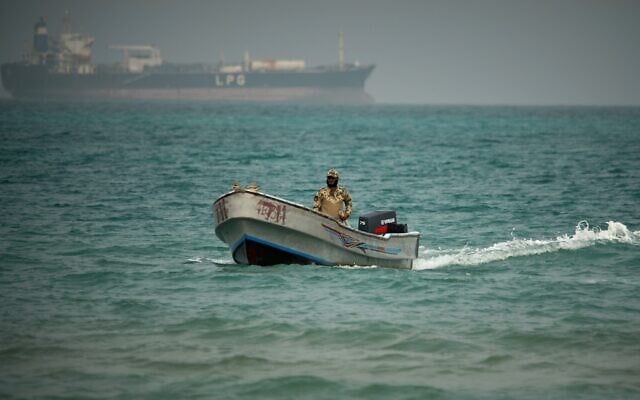
Any threat to the Red Sea and its Bab el-Mandeb gateway underscores the explosive risks stemming from a new round of warfare.
With the Strait of Hormuz already shut, any Houthi attacks on vessels or ports in the Red Sea would leave the Middle East’s two main oil export routes disrupted simultaneously, opening a new front in both the energy crisis and Iran’s wider conflict with the United States.
During the Gaza war, the Houthis attacked shipping in the Gulf of Aden and Red Sea, which leads to Europe via the Suez Canal, forcing ships to take lengthy detours around Africa. It has also launched hundreds of missiles and drones directly at Israel. Israel has responded with airstrikes.
Iran views the Houthis as part of its regional “Axis of Resistance,” an alliance that also includes Hamas, the Hezbollah terror group in Lebanon, and Iraqi Shiite armed groups that have already joined the regional conflict between Tehran and Washington.