World
Witkoff and Kushner to travel to Pakistan for fresh Iran talks

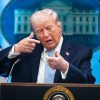
US President Donald Trump is sending his envoys Steve Witkoff and Jared Kushner to Pakistan on Saturday to continue talks with Iran, the White House said.
White House press secretary Karoline Leavitt said in an interview on Fox News Channel that the two will have talks with Iranian Foreign Minister Abbas Araghchi.
“We’re hopeful that it will be a productive conversation and hopefully move the ball forward to a deal,” Ms Leavitt said.
She said Vice President JD Vance would not be travelling but that he remains “deeply involved”.
Ms Leavitt said he will be in the US, along with Secretary of State Marco Rubio and the president’s national security team, on “standby” to fly to Pakistan “if necessary”.
Iran’s state-run IRNA news agency confirmed earlier on Friday that Iranian Foreign Minister Abbas Araghchi was travelling to Pakistan for talks.
IRNA said Mr Araghchi would also go to Oman and Russia.
The trip to Pakistan comes as officials there have been trying to get the United States and Iran to a second round of ceasefire negotiations.
The IRNA report said Mr Araghchi’s trip is focused on “bilateral consultations and discussions on ongoing regional developments, as well as the latest situation surrounding the imposed war by the United States and Israel against Iran”.
Separately on Friday, the White House said US President Donald Trump has issued a 90-day extension to the Jones Act waiver, making it easier for non-American vessels to transport oil and natural gas in the wake of the Iran War.
Mr Trump first announced a 60-day waiver in mid-March and the move has been seen as helping to stabilise energy prices and making it easier for more ships to travel to the US following the effective closure of the Strait of Hormuz.
The post on social media by a White House press aide said: “New data compiled since the initial waiver was issued revealed that significantly more supply was able to reach US ports faster.”
Tensions in the stand-off between the US and Iran over the Strait of Hormuz have intensified after Mr Trump ordered the American military to “shoot and kill” Iranian small boats in the key waterway.
Iran has also rejected Mr Trump’s claim there was a leadership rift in the Islamic Republic.
“In Iran there are no ‘hardliners’ or ‘moderates’. We are all Iranians and revolutionaries,” Iran’s president Masoud Pezeshkian and speaker of parliament Mohammad Bagher Qalibaf wrote in almost identical social media statements.
Since the killing of Supreme Leader Ali Khamenei in the first strike of the war on February 28, it has been unclear who in Iran wields ultimate authority over its collection of civilian figures and powerful generals who appear to be in charge.
.@POTUS: “What we’ve done with the blockade is amazing… We have complete control.” pic.twitter.com/PwB8ru9puX
— Rapid Response 47 (@RapidResponse47) April 23, 2026
Pakistan has been trying to get American and Iranian officials back to the negotiating table in Islamabad, where they had hoped to have talks earlier this week that did not materialise.
Pakistan’s Foreign Minister Ishaq Dar spoke to his Russian counterpart Sergei Lavrov and in a statement the foreign ministry said Mr Lavrov appreciated Pakistan’s “constructive role” in facilitating dialogue between Iran and the United States.
US Defence Secretary Pete Hegseth called the war in Iran a “gift to the world”.
Speaking to reporters on Friday at the Pentagon, Mr Hegseth said the US blockade of Iranian shipping will continue “as long as it takes” to accomplish America’s “bold and dangerous” mission to end Iran’s threat to global security.
Mr Hegseth said the US military is prepared to deal with any Iranian ships that “recklessly and irresponsibly” lay more mines.
But he said he would not speculate on reports that it will likely take six months to clear mines in the strait.
US officials say that so far the blockade has turned back 34 ships, but ship-tracking data shows Iran has still been able to move some of its sanctioned oil.
Lloyd’s List Intelligence said “a steady flow of shadow fleet traffic” has passed in and out of the Persian Gulf, including 11 tankers with Iranian cargo that have left the Gulf of Oman outside the strait since April 13.
The maritime intelligence firm Windward said this week that Iranian traffic continues to flow “via deception”.
Iranians are able to evade the blockade by faking tracking data and by travelling through Pakistani territorial waters.
Mr Trump said on Thursday evening that Israel and Lebanon have agreed to extend a ceasefire between Israel and Hezbollah by three weeks after talks at the White House.
It came as the UN peacekeeping force deployed in southern Lebanon, or Unifil, said a 31-year-old Indonesian peacekeeper had died at a Beirut hospital after he was critically wounded following a projectile explosion in his base in Adchit al-Qusayr, southern Lebanon, on March 29.
Hezbollah legislator Ali Fayyadh said the extension of ceasefire is ‘meaningless’ as long as Israel continues its attacks, targeted killings and strikes on Lebanese villages.
Since the 10-day ceasefire went into effect last Friday it has been repeatedly violated by both sides.
The stand-off between the US and Iran has effectively choked off nearly all exports through the Strait of Hormuz, where 20% of the world’s traded oil passes in peacetime, with no end in sight.

European Union foreign policy chief Kaja Kallas said peace negotiations between the United States and Iran are at risk of forging a “weaker” agreement than one struck a decade ago.
“If the talks are only about the nuclear (issue) and there are no nuclear experts around the table, then we will end up with an agreement that is weaker than the JCPoA was,” she said on Friday in Cyprus, referring to a 2015 deal struck during the Obama administration that Trump pulled the US out of in 2018.
Ms Kallas said if negotiators do not table Iran’s “missile programmes, their support to proxies, and also hybrid and cyber activities in Europe”, there is a possibility “we will end up with a more dangerous Iran”.
Meanwhile, a medical aid convoy has left Turkey for Iran, an official told Turkey’s state-run Anadolu news agency on Friday.
The six trucks departed Van in eastern Turkey to pass through the Gurbulak border crossing, Van health director Muhammed Tosun said.