World
Will Trump and Xi try to slow the AI arms race?

Follow our live coverage here.
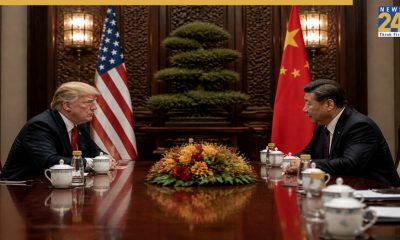
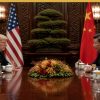
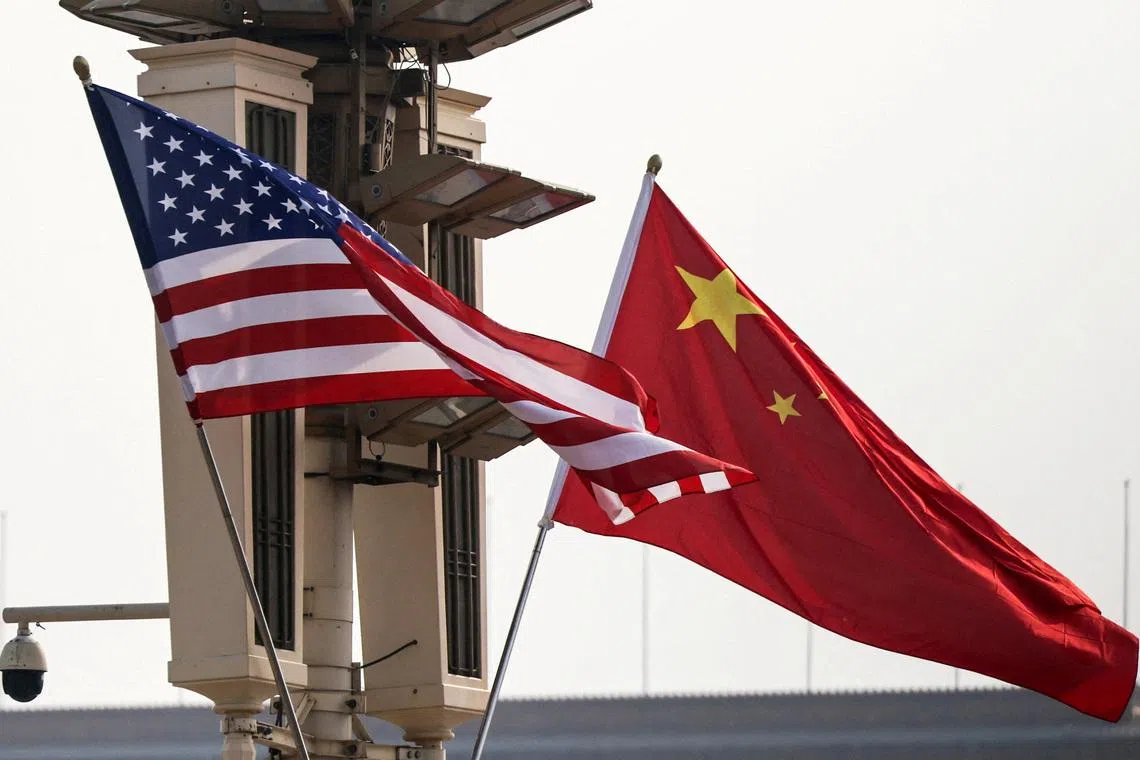
When US President Donald Trump and President Xi Jinping of China meet in Beijing this week, they are expected to discuss, for the first time, how to manage the risks of artificial intelligence. But in many ways, the two countries seem farther apart than ever on that question.
The United States and China are racing to develop AI-powered weapons that could wreak immense damage without human involvement. Powerful new AI models could enable cyberattacks that might cripple the world’s banks and power grids.
Experts have also raised the alarm about how AI could be misused by terrorists or even become sentient and wipe out humankind.
But the United States and China are locked in a battle for supremacy in AI that has left policymakers and some researchers increasingly wary of engagement, even as they warn of the technology’s risks. In both countries, many policymakers fear that imposing guardrails on AI development – for example, curtailing the technology’s ability to create bioweapons – would give the other country an opportunity to race ahead.
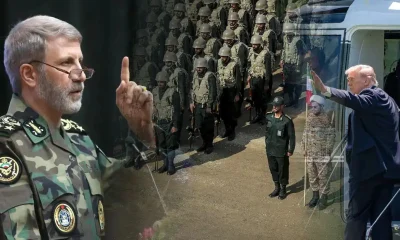
In recent weeks, US officials have boasted that AI is helping them choose targets in the US war in Iran. China, in a giant military parade in 2025, showed off drones designed to fly autonomously alongside fighter jets.
Even those who favour cooperation must tread lightly for fear of political blowback, amid fraught geopolitical ties between the two countries.
For example, the organisers of NeurIPS, a major academic forum for AI development, announced in 2026 that they would not accept papers from researchers at institutions subject to US sanctions, including multiple major Chinese institutions and companies.
The organisers eventually backtracked, but many Chinese scholars said they would boycott the forum in protest anyway.
When Senator Bernie Sanders of Vermont brought Chinese and American AI researchers together for a public forum in Washington about how the countries could cooperate on preventing AI-related risks, he drew fierce criticism, including from Treasury Secretary Scott Bessent.
Mr Bessent, who is taking a leading role in shaping American AI policy, wrote on social platform X that Mr Sanders should not be “inviting foreign nationals to tell the United States how to regulate AI”.
The two governments have clashed openly over technology in the weeks before Mr Trump’s trip. The White House recently accused Chinese AI companies of “industrial-scale” theft of intellectual property from US companies.
China blocked Meta’s attempted acquisition of Manus, an AI start-up founded by Chinese engineers, citing national security concerns.
Some experts are cautiously optimistic that Mr Trump’s visit could kick-start renewed efforts to work together. The Trump administration, which previously had emphasised deregulating AI, has in recent weeks expressed concern about the threat that AI could pose to cybersecurity, after the US company Anthropic announced its powerful new model, Mythos.
Cooperation on AI regulation is different from past efforts to manage global challenges. During the Cold War, the United States and the Soviet Union agreed on the need to avoid unauthorised or accidental use of nuclear weapons, so they shared information to reduce that threat.
With AI, it is unclear exactly what risks the technology will pose or how best to mitigate them.
UA scholars have generally sought to discuss existential risks – such as AI-designed pathogens or accidental nuclear war – and the possibility of super-intelligence, or artificial intelligence with capabilities that exceed the human brain.
Chinese researchers and officials have more often highlighted risks to social stability and state security. That includes AI-fueled misinformation and chatbots producing answers that challenge the country’s strict internet controls.
“It’s already hard enough to get cooperation on a strategic technology,” said Professor Jeffrey Ding from George Washington University who studies AI competition between the US and China. “It’s even harder when we don’t necessarily have a clear and harmonised view on what problem we’re trying to tackle.”
Those diverging priorities have dogged efforts at cooperation from the start. In November 2023, then-President Joe Biden and Mr Xi announced an agreement to discuss AI-related risks – the first time the countries’ leaders had publicly acknowledged the topic.
About six months later, representatives from both sides met in Geneva. US officials wanted to discuss the possible misuse of AI, including by China. Chinese officials instead focused on US export controls that they thought were designed to hamper China’s AI development.
Officials had initially described that meeting as the first of several. No more materialised.
In late 2024, Mr Xi and Mr Biden, in their last meeting of Mr Biden’s presidency, did agree to ensure human control over nuclear weapons, rather than leaving it to artificial intelligence. But there have been no more details on that issue, either.
The United States was not worried, at first, about including China in AI safety discussions partly because it was confident of its technological lead, said Dr Scott Singer, who studies China’s AI policy at the Carnegie Endowment for International Peace.
It was not until early 2025, with the arrival of DeepSeek, the Chinese start-up with its own powerful AI model, that US policymakers fully recognised that Chinese AI could affect US national security, too, he said.
That recognition has hardened Washington’s competitive mindset. The Trump administration has explicitly named “winning the race” against China as a reason to loosen regulations on AI.
Still, even as formal talks on AI have stalled, scholars from both countries have held informal discussions, often through academic conferences or think tanks.
Participants described these meetings as vibrant, and said they have produced many suggestions for cooperation, such as an emergency hotline in case of an AI-related accident, or shared standards for testing whether AI has the ability to synthesise biohazards.
But these conversations have not been immune from political pressures.
Proffessor Jiang Tianjiao at Fudan University in Shanghai who has participated in many discussions with US scholars, said that many Chinese scholars, especially in the security and defense communities, were skeptical of their US counterparts’ intentions.
They pointed to Mr Trump’s efforts to loosen domestic restrictions on AI at home as proof that safety discussions were a trap to slow China’s development.
“These people believe the US is talking about one thing but doing the other,” Prof Jiang said, noting that he personally supported continued engagement. In their minds, he said, “China should never trust the United States on any proposals of bilateral AI cooperation for all humankind. That’s just some fantasy.”
On the American side, many scholars and officials believe that China is secretly racing toward artificial super-intelligence, though Beijing has made little public mention of it, and Chinese scholars insist that it is not a focus. Beijing has, instead, publicly emphasised practical, real-world applications of AI.
Then, there are more basic disagreements. For long-running discussions hosted by the Brookings Institution, a Washington-based research institute, and Tsinghua University in Beijing, the participants created a glossary of terms. There was no consensus on the meaning of fundamental terms such as “loss of control” of AI systems, said Dr Kyle Chan, a fellow at Brookings.
“Even though these dialogues are helpful, in some ways we are still starting from a pretty early starting point,” Dr Chan said. “There’s a lot of room to go.”
Perhaps the most important outcome for the meeting between Mr Xi and Mr Trump would simply be to make clear that cooperation on AI was politically acceptable, Prof Ding said.
“I don’t think we need a comprehensive, binding bilateral pact between both sides,” he said. “You just need to send a signal that this is a space where Chinese and US stakeholders can continue to cooperate.” NYTIMES