World
Why Trump’s threat to pull even more US troops out of Germany is causing unease in Europe

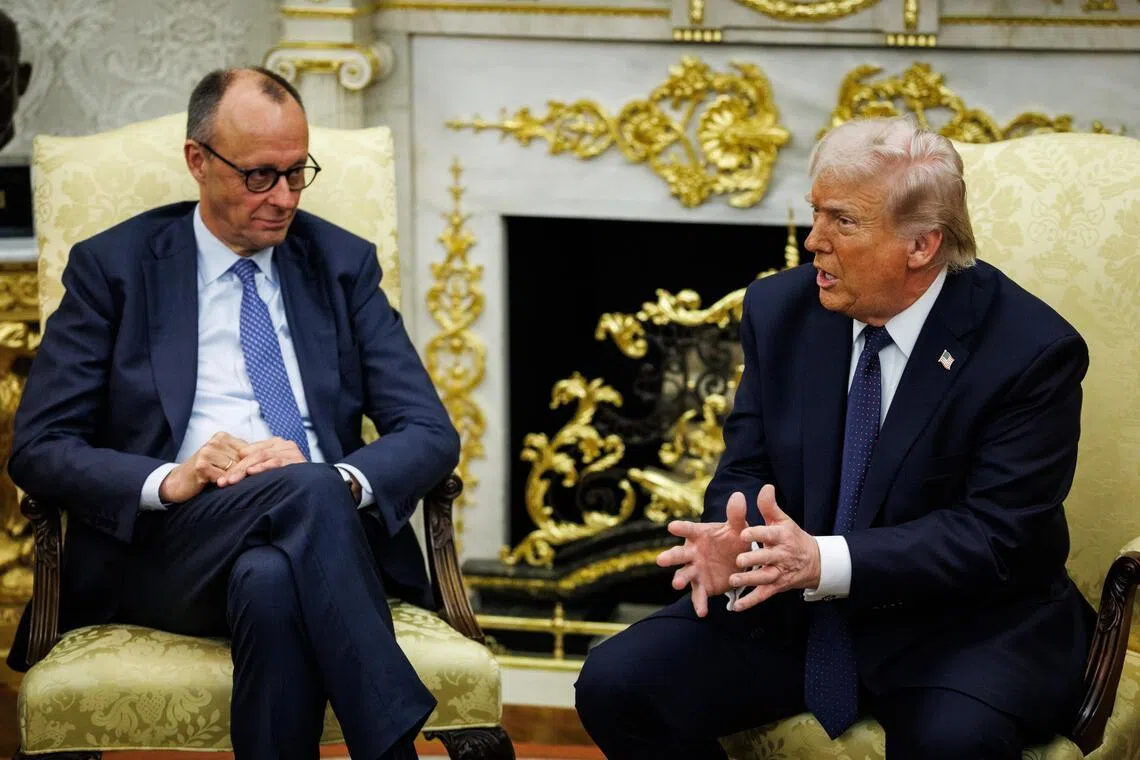
BRUSSELS – US President Donald Trump has threatened to pull even more American troops out of Germany after he ordered the Pentagon to withdraw approximately 5,000 US service personnel from the country.
“We are going to cut way down, and we are cutting a lot further than 5,000,” Mr Trump told reporters on May 2, intensifying his public clash with German Chancellor Friedrich Merz and other European allies over their criticism of the US military operations against Iran.
Officially, the German government is trying to minimise the political impact of the US announcement. The troop withdrawal “had been foreseeable”, German Defence Minister Boris Pistorius told the DPA news agency.
Meanwhile, German Foreign Minister Johann Wadephul said his country was prepared for a reduction in US troops and was “discussing it closely and in a spirit of trust” with its European partners.
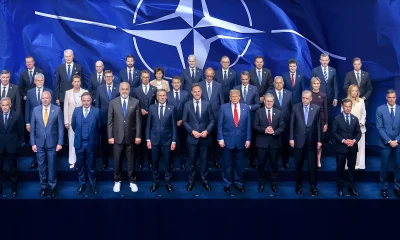
The Nato military alliance, which has its headquarters in Brussels and relies heavily on US cpontributions, remains equally tight-lipped. Nato spokesperson Allison Hart merely told journalists in the Belgian capital that the alliance “is working” with the US to “understand the details” of its decision for the drawdown.
But behind the scenes, there is growing fear in European capitals that the row between Europe and the United States over the Iran war could well inflict the final and irreversible blow to a trans-Atlantic military alliance that has maintained peace and stability on the European continent for almost eight decades.
From the moment it became clear that the US’s bombing of Iran was not yielding the quick results Mr Trump had expected, he started complaining about the lack of military help from Europe.
In vain did the Europeans explain that NATO was created to defend Europe’s territory rather than engage in military adventures around the world, and that European countries cannot be expected to contribute to a war unleashed without any consultation. As the military deadlock in the Middle East deepened, Mr Trump’s anger only grew.
Initially, Mr Trump directed his ire mainly at Britain and Spain, which denied use of their bases for the US operations against Iran.
But the Brits quickly changed their stance by allowing the US to operate from their soil, and then sent King Charles III, the British monarch, on a state visit to Washington last week, with the explicit task of mending relations.
Mr Trump’s anger turned to Germany after Mr Merz recently told a meeting of students in a small town in western Germany that the Americans had “quite obviously gone into the Iran war without any strategy whatsoever”, adding that the Americans “are being humiliated” by the Iranian leadership.
A long history of political gaffes plagues Mr Merz, and he is often blissfully unaware of the impact his words have in the digital age. Still, his criticism of the US action, although privately shared by most other European governments, went far beyond what any European leader would say in public, and quickly made Germany Mr Trump’s key target.
In addition to pulling some troops from Europe, Mr Trump also announced on May 1 that tariffs on cars and trucks from the European Union will be raised to 25 per cent starting from this week, a move that would hit the all-important German auto industry particularly hard.
Germany is home to around 40,000 US troops. The US combat unit slated to leave Germany is likely to be the 2nd Cavalry Regiment, stationed in Vilseck, Bavaria, the southern part of the country.
In theory, therefore, this pullback – scheduled to take anything between six months and a year – does not seriously dent the overall US military presence in either Germany or elsewhere in Europe, which now stands at around 70,000 personnel.
And despite Mr Trump’s latest threats, the assumption in Europe is that the US will not rush to withdraw more soldiers. After all, the military operations against Iran depend on US critical logistical and refuelling hubs in Britain and Germany, as well as staging areas for deployments to the Middle East and Africa at the Rota naval station and the Morón Air Base in Spain.
Still, the latest US pullback comes on top of a previous withdrawal of 4,500 US troops from Romania, just near Ukraine’s borders.
Furthermore, the Pentagon’s decision to thin its forces in Germany also included an announcement that a US battalion equipped with intermediate-range missiles will not be deployed to Germany as planned later this year.
This missile deployment was originally designed as a response to Russia’s decision to station shorter-range missiles near Nato’s borders. So, the cancellation of the US counter-deployment significantly weakens European defence capabilities and the continent’s ability to deter further threatening moves by Russia.
And what European officials fear most is a phased US approach that starts with the current cuts in Germany and Romania, and then moves to more strategically-significant US drawdowns from the Baltics and elsewhere on the continent, leaving key EU states even more exposed to Russia.
This military “salami slicing” – minor, incremental changes to achieve a larger goal gradually – could steadily erode the credibility of the US security guarantees to Europe.
The Europeans continue to claim that they are ready to plug the gaps created by the US. But this could take years to accomplish and will require far more than what governments in Europe are planning to spend on their defences.
For the moment, therefore, all the Europeans can hope for is that the US Congress will temper Mr Trump’s impulse.
On May 2, Senator Roger Wicker, who chairs the US Senate’s Armed Services Committee, and Representative Mike Rogers, who heads the House Armed Services Committee, issued a joint letter expressing concern about the White House’s actions.
It was a highly unusual and significant move for both lawmakers, who belong to Mr Trump’s ruling Republican Party. Both will also be instrumental in approving the US military’s next budget, as well as continuing to fund Mr Trump’s Iran war.
So, at least in theory, Mr Trump now needs to watch the opposition from Congress. Whether the President will choose to do so remains, of course, another matter.